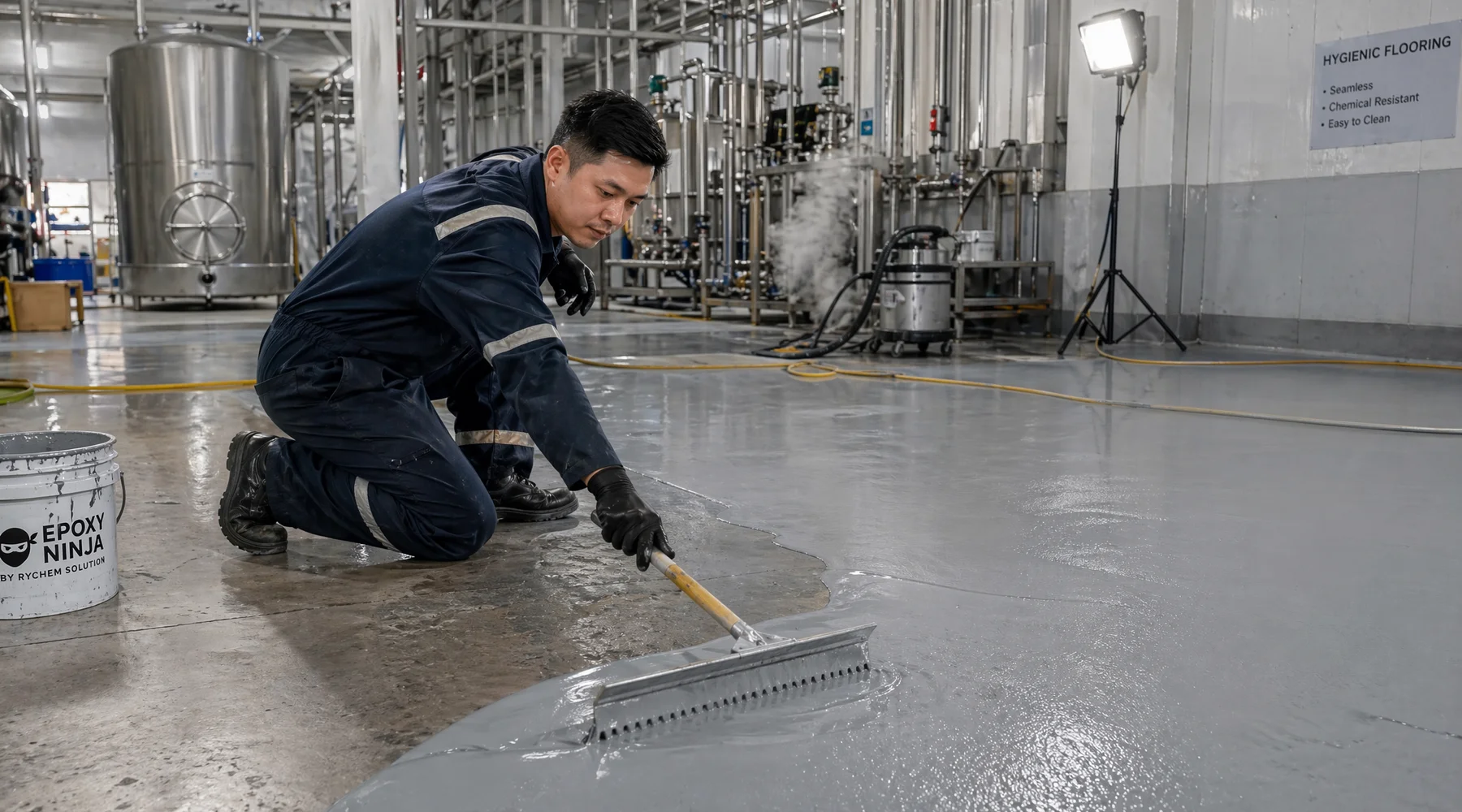
Polyurethane Flooring Built for Wet, Hot, and Chemical-Heavy Factories
Full-depth polyurethane systems engineered for wet, hot, and chemical-heavy industrial environments where epoxy fails.
Polyurethane (PU) flooring is the right chemistry when your slab faces thermal shock, steam cleaning, sub-zero transitions, or aggressive chemical washdowns. We install standard PU coatings, PU mortar, self-leveling PU, and urethane concrete (MF/HF) — matched to your facility's actual conditions, not a generic spec. Every quote starts with a Tramex moisture scan because PU's bond to concrete is only as good as the slab beneath it.
If you are struggling with cracked factory floors, Polyurethane (PU) Flooring might be the exact upgrade you need.
High humidity and daily chemical washdowns in Malaysia can destroy a standard floor in months. Finding the right industrial flooring feels like a constant battle.
We are here to share a better way to protect your workspace. This guide explains exactly how these heavy-duty systems work. You will learn the specific techniques used by top food processing plants to pass inspections.
Our team at Epoxy Ninja Johor Bahru has seen exactly what lasts and what fails.
Why factory floors need Polyurethane (PU) Flooring instead of epoxy
Standard epoxy is simply the wrong chemistry for roughly half the industrial sites in Malaysia. This rigid material bonds hard to the concrete beneath it. Our technicians find that epoxy turns extremely brittle when flexed or exposed to temperature swings.
Regular thermal cycling from heavy steam cleaning quickly causes the bond line to crack. Frequent freezer transitions create the exact same fracturing problem.
The impact of thermal shock and moisture
We know that once those fine cracks appear, moisture easily finds its way in. Hidden water drives rapid delamination until the floor completely fails. A clear look at the 2026 data shows why a flexible elastomer wins in harsh conditions.
Our comparison below highlights the critical differences between these two common chemistries:
| Feature | Standard Epoxy | Polyurethane (PU) |
|---|---|---|
| Thermal Shock Limit | Up to 65°C | -40°C to +120°C |
| Flexibility | Rigid and brittle | Flexible elastomer |
| Chemical Resistance | Fails against strong organic acids | Survives lactic acids and caustic cleaners |
The polyurethane structure moves naturally with the concrete slab underneath it. Heavy-duty urethane concrete grades tolerate extreme thermal shock without cracking.
We regularly install PU systems to protect against the specific hazards that destroy normal coatings. These common factory threats include:
- High-temperature steam cleaning: Regular washdowns over 65°C will quickly crack rigid epoxy.
- Organic food acids: Our clients in the dairy industry find that lactic acid eats through basic resins in months.
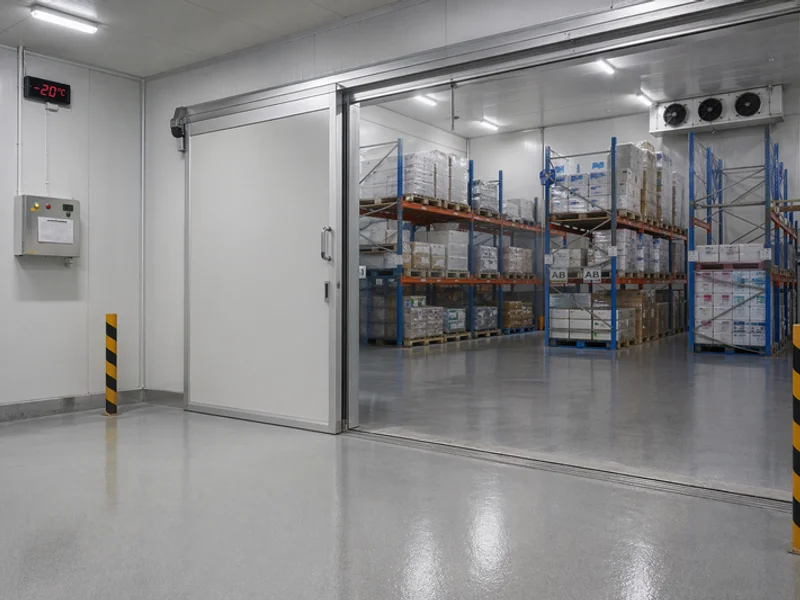
- Deep freeze transitions: Temperatures dropping to -40°C require a flexible elastomer to prevent bond failure.
- Harsh chemical sanitisers: Industrial solvents and caustic cleaners easily degrade standard floors.
We provide these flexible options as the honest answer for modern industrial facilities.
Our PU system range
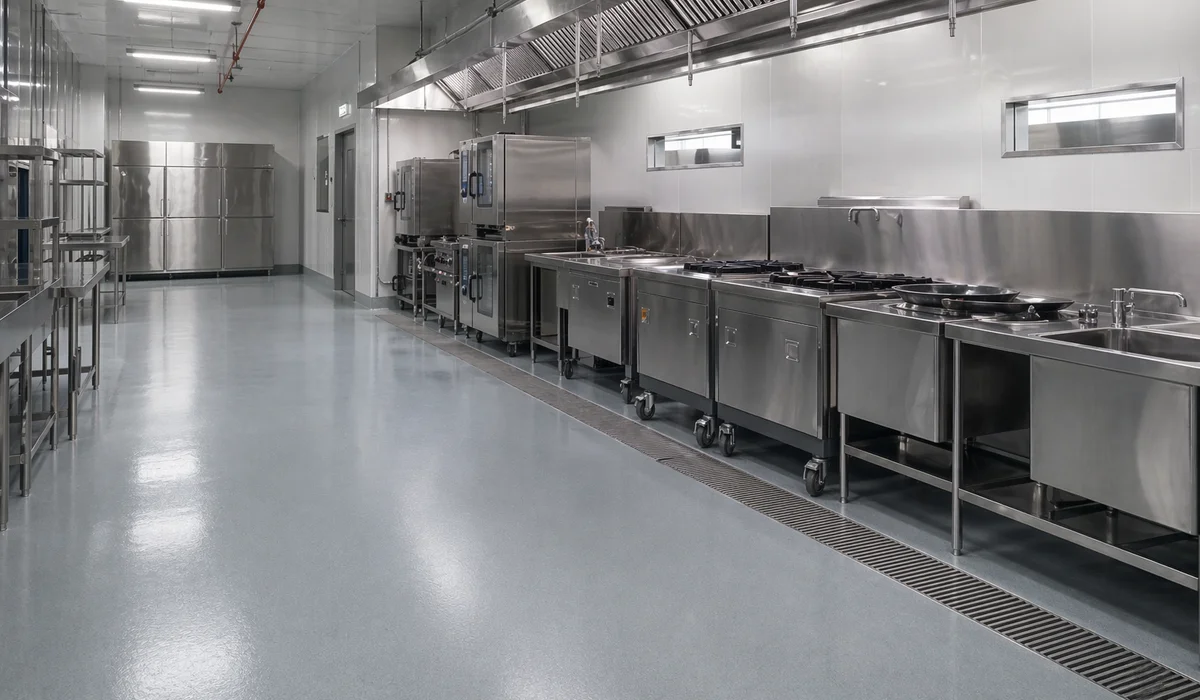
The right choice depends entirely on your specific substrate and impact load profile. Every facility faces different chemical exposure and daily traffic challenges. Our team installs five distinct PU systems created specifically for Malaysian industries.
Selecting the perfect match prevents costly repairs and unexpected downtime down the road. We evaluate your daily operations to recommend the exact thickness and chemistry needed. Here is a breakdown of the specific options available:
- Standard PU coating (1-2mm): This option works perfectly for clean rooms and light packaging halls.
- Hygienic PU (2-4mm): Our smooth, joint-free installations meet the Ministry of Health (MOH) MS 1514:2022 GMP standards.
- Self-levelling PU (3-4mm): Cold-storage facilities rely on this flat, steam-cleanable surface to maintain safety.
- PU mortar (6-9mm): Brands like Sika Ucrete handle the heavy impact and thermal cycling found in large factories.
- Urethane concrete MF/HF (6-12mm): We use these thick systems for extreme blast chillers and washdown-heavy food plants.
Food processors must meet strict government regulations to operate legally in Malaysia. An improper floor joint can harbour dangerous bacteria that leads to a failed inspection. We always curve the edges with integrated coving to eliminate those risky hiding spots.
Tramex moisture mapping: the non-negotiable
Slab moisture vapour causes more flooring failures than almost any other factor. Polyurethane actually has a lower tolerance for hidden water vapour than standard epoxy does. We start every single PU installation by mapping the entire slab for hidden moisture.
A quick visual check is simply not enough to guarantee a strong bond. Professional contractors must use specialised tools to get accurate readings below the surface. Our technicians rely on the Tramex CMEX5 digital moisture meter for this critical step.
This specific device performs a non-destructive impedance test up to 20mm deep into the concrete. It provides quantitative moisture content percentages following the strict ASTM F2659 testing standard.
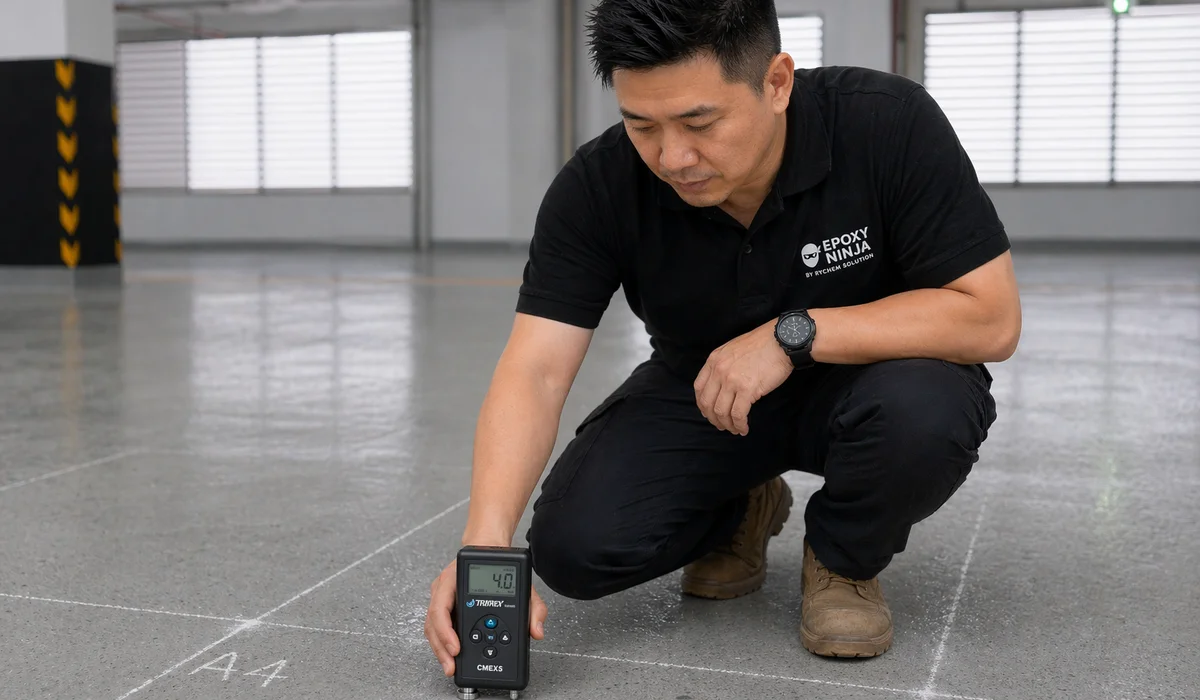
We immediately know if your floor requires an extra damp-proof membrane (DPM) intervention. High moisture vapour emission rates (MVER) mean the slab might need more time to dry. Sometimes applying a special moisture-tolerant primer is the best way to proceed.
Our testing prevents you from wasting thousands of ringgit on a doomed installation.
Contractors who skip this exact moisture mapping process are simply guessing. Guessing is exactly why your last industrial floor peeled and failed prematurely.
We refuse to gamble with your facility’s safety and operational budget.
Cost drivers, honestly
Industrial flooring prices vary widely because chemistry, thickness, and preparation time all matter. A new, clean slab costs dramatically less to prepare than a heavily damaged warehouse floor. We always provide clear, transparent pricing based on your facility’s actual conditions.
Stripping away three layers of failing, 20-year-old coating requires serious mechanical grinding. Taking the time to properly prep a bad substrate protects your long-term investment. Our quotes include a detailed breakdown of the exact materials and labour required.
Here is some rough guidance for industrial PU projects in Malaysia for 2026:
- Standard PU coating: RM 45-90/sqft for light-duty clean rooms.
- Hygienic PU with coving: Our RM 60-180/sqft installations help you meet MS 1480:2019 HACCP standards.
- PU mortar (6mm): RM 90-180/sqft covers heavy-impact food processing halls.
- Urethane concrete HF (9-12mm): RM 120-220/sqft secures extreme thermal shock areas like freezers.
We will always tell you exactly what we find during the initial site visit. You will clearly understand what the project costs and what your alternatives are. Proper planning helps avoid the massive expense of shutting down a factory for unexpected repairs.
Our goal is to install a floor that outlasts your heaviest production schedules.
Conclusion and Next Steps
Choosing the right surface protects your entire facility from dangerous bacterial growth and costly downtime. Polyurethane (PU) Flooring provides the chemical resistance and thermal flexibility that modern factories desperately need. We are ready to help you evaluate your specific slab conditions.
A professional moisture test and a site assessment will give you the exact data required to make a smart decision. Please reach out to schedule a consultation with a local specialist today.
What you're getting.
Thermal-shock resistance from -40°C to +120°C with urethane concrete grades
Steam-cleanable and chemical-resistant topcoats for washdown zones
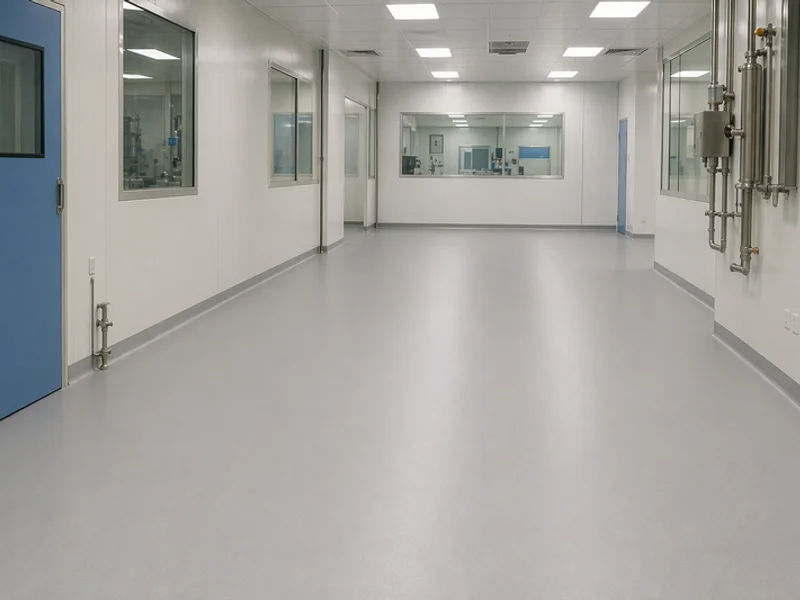
Seamless hygienic finish for F&B, pharma, and cold storage
Slip-rated aggregate options (R9 through R13)
Tramex moisture mapping before and during every install
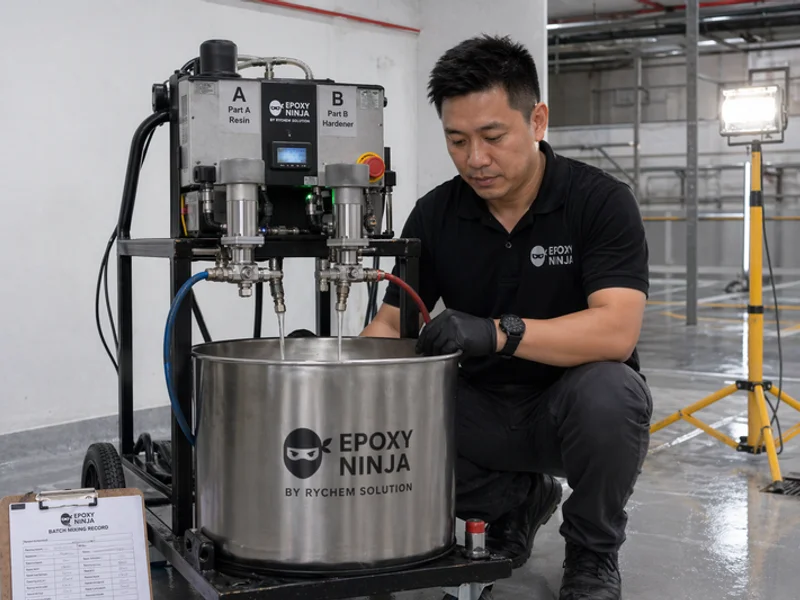
Real installs. Real factories.
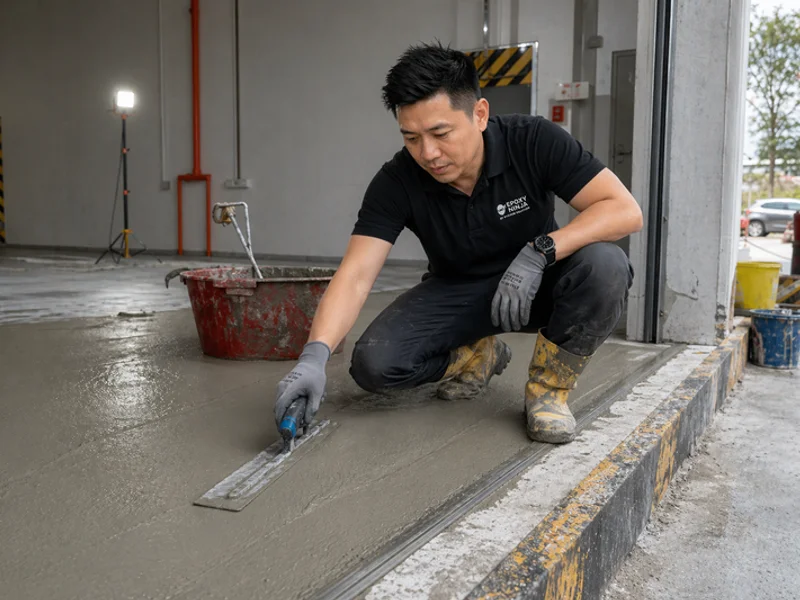
How we install it.
Tramex moisture scan
Full slab moisture mapping with CMEX5 non-destructive readings. MVER check against the PU system's bond threshold.
System selection
We match the system to your chemical and thermal profile: standard PU, PU mortar, self-leveling PU, or urethane concrete MF/HF.
Surface prep to SSPC-SP13
Diamond grinding or shot blasting to the correct surface profile. Crack routing and chase cutting as required.
Primer and buildcoat
Moisture-tolerant primer where needed. Buildcoat mixed batch-by-batch with climate monitoring on site.
Topcoat and cure verification
Anti-slip aggregate broadcast to R-rating. Topcoat applied. Cure verified before return to service.
Free site visit. Tramex scan. Written BQ. No obligation.
We walk the slab, run the moisture readings, and give you a written scope before any commitment. Same-day response across Southern Malaysia.
Deeper on the system.
Guides covering the chemistry, cost, and common questions for this system.
How Long Does Industrial Polyurethane Flooring Last?
Industrial PU flooring lifespan by system type — with abrasion ratings, what shortens life, and recoat vs replace decision points.
Read guidePolyurethane Flooring Cost Guide for Malaysia (RM per Square Foot)
Polyurethane flooring prices in Malaysia — standard PU, PU mortar, urethane concrete. RM ranges and what drives quote variance.
Read guidePU Flooring for Cold Storage and Freezer Rooms in Malaysia
PU mortar systems for freezer rooms, cold storage, and transition zones. Thermal shock, condensation, and slip resistance covered.
Read guidePU Flooring Installation Process and Timeline (What to Expect)
Day-by-day PU flooring install — prep, primer, base, broadcast, topcoat, cure. Return-to-service windows for planning shutdown.
Read guideOperators who've worked with us.
5.0★ average from 12 verified Google reviews. No cherry-picking, no edits.
"Superb service by Epoxy Ninja team. Extremely transparent with their work with consistent progress update at all times. It's also worth mentioning that their price point is extremely reasonable for industry standard with quality-finish workmanship. Thank you for the great job well done!"
"We had our flooring done by a company called Epoxy Ninja, and it was an excellent experience. The owner, Michael, who I've known for quite some time, was very attentive to our needs. They listened carefully to what we wanted and worked with great precision. Epoxy Ninja truly delivers high-quality flooring that's durable and impressive. We highly recommend them for any flooring needs!"
"Michael and his team did a great job on my epoxy flooring. They were responsible, professional, and very thorough. The final result looks amazing and high-quality. Highly recommended!"
System questions.
When should I specify PU over epoxy?
Whenever the floor sees thermal shock (hot wash plus cold storage), steam cleaning, sub-zero transitions, or aggressive chemical washdowns. Epoxy wins on dry bond strength and abrasion. PU wins on elastomer flexibility, thermal range, and chemical tolerance.
What's the lifespan of industrial PU flooring?
A correctly specified PU system installed on a prep-to-spec substrate lasts 10-15 years in typical F&B use, and up to 20+ for urethane concrete in heavy industry. Actual service life depends on washdown aggression, impact loading, and thermal cycling.
Is PU harder to install than epoxy?
It's less forgiving of moisture and climate. PU is sensitive to ambient humidity during cure, which is why we mix batch-by-batch and monitor climate on site. Done right, it's permanent. Done wrong, it blisters.
What's the indicative cost?
Standard PU coatings run around RM 45-90/sqft. Hygienic PU with coving and R-rated aggregate is RM 60-180/sqft. Urethane concrete at 6-9mm is RM 90-220/sqft. We quote exact figures after a Tramex scan and substrate walk-through.
Also worth considering.
Food-Grade / HACCP Hygienic Flooring
Seamless hygienic PU systems with integrated coving, built to pass HACCP, GMP, and ISO 22000 audits.
See specHeavy-Duty Mortar Flooring
6-12mm heavy-duty mortar systems — epoxy mortar, PU mortar, and urethane concrete — for impact-intensive loading bays, foundries, and heavy processing floors.
See specAnti-Slip Flooring (Wet Process Areas)
R9-R13 slip-rated anti-slip flooring engineered for wet processing, washdown areas, and safety-compliant outdoor ramps.
See specBook a site visit for this system. Tramex included.
Free Tramex moisture scan and a written BQ with no obligation. Same-day response across Southern Malaysia.