Diagnose, Fix, and Prevent Industrial Floor Failures with Tramex Moisture Science
Failure diagnosis and remediation for peeling, blistering, and delaminating industrial floors, powered by Tramex moisture mapping.
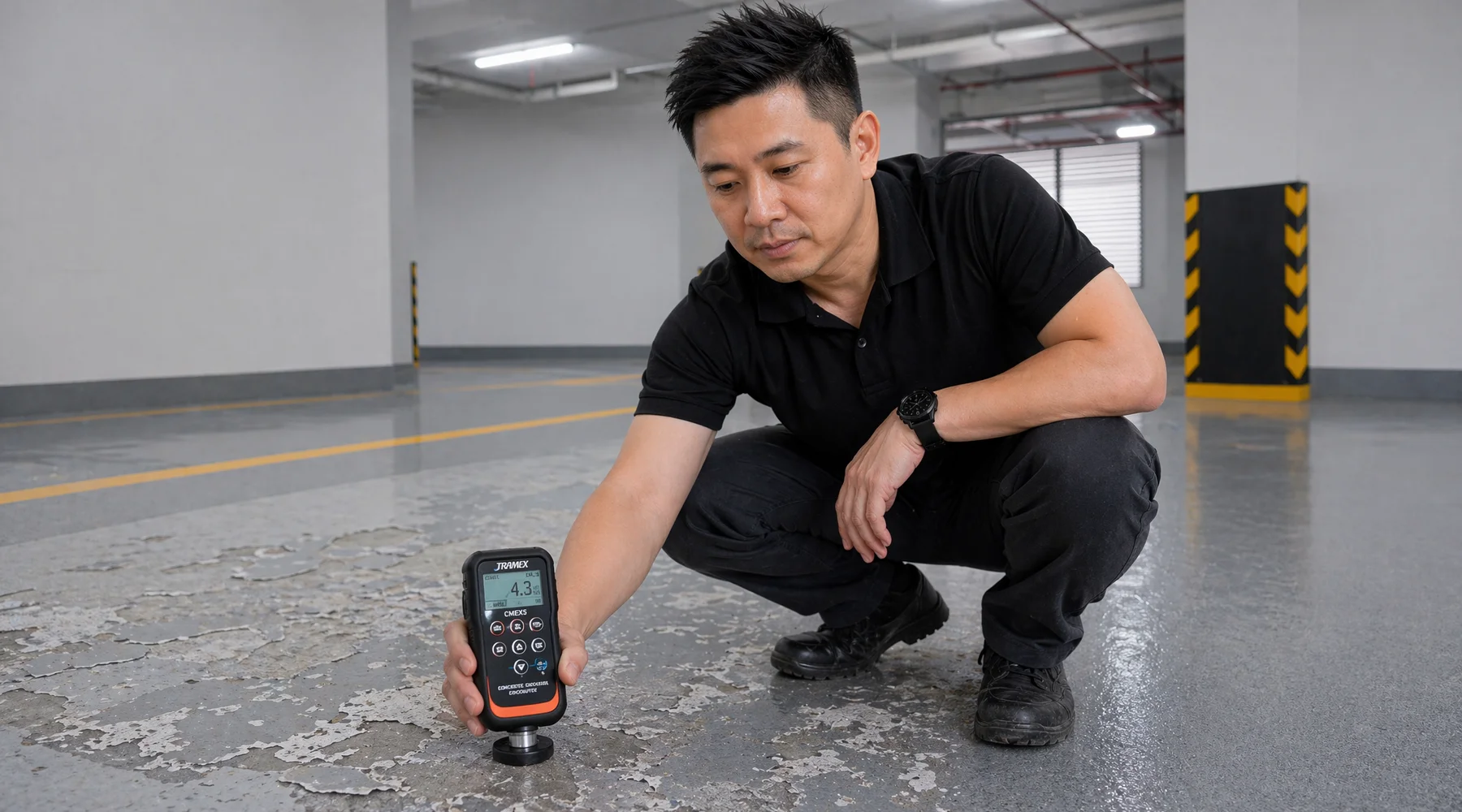
Most peeling epoxy floors didn't fail because of the topcoat — they failed because someone skipped the moisture test. We start every repair project with a full Tramex CMEX5 non-destructive moisture scan of your slab, map the failure modes, and tell you whether the right answer is spot repair, full remediation, or a chemistry change. Honest diagnosis before any resin hits the floor.
Are you tired of dealing with peeling, blistered concrete in your facility? Proper Floor Repair & Moisture Mitigation is the only way to ensure your industrial coating lasts for years.
Without it, the edges will likely start lifting just a few months after installation.
That is an incredibly frustrating situation for any facility manager.
We see this exact problem every week in local warehouses. The good news is that fixing it is straightforward once you know the root cause. This guide will show you exactly how to stop the peeling for good.
Most peeling floors fail for one reason: moisture
Our diagnostic data reveals that roughly 80% of failing epoxy floors share the same hidden culprit. The original installer skipped the moisture test before applying the resin. Professional Floor Repair & Moisture Mitigation requires accurate data before any new coating is poured.
Malaysia experiences an average relative humidity of 80% to 90% year-round. This local climate makes natural slab drying incredibly slow. High vapour pressure at the concrete bond line will eventually exceed what standard epoxy can handle.
We never recommend just painting another coat of epoxy over the mess. The coating simply delaminates again when the pressure builds up. A lasting fix requires matching the right chemistry to your actual slab moisture levels.
What our diagnostic site visit includes
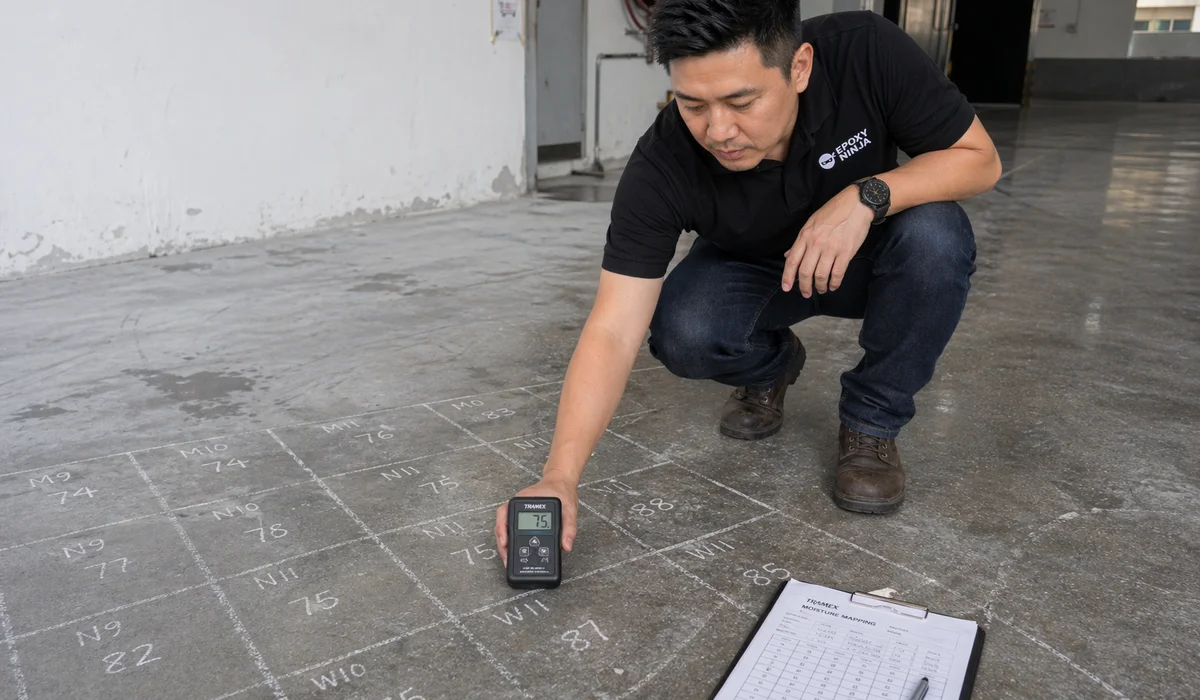
We provide a free diagnostic site visit to get you actual data instead of guesswork. A visual inspection alone cannot tell you what is happening under the surface. Knowing the exact moisture levels prevents future failures.
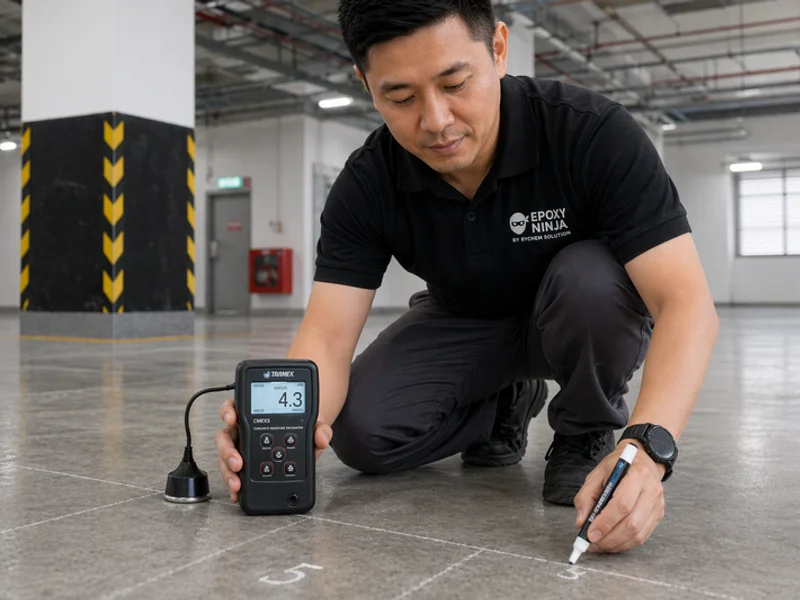
- Full Tramex CMEX5 scan: This non-destructive tool maps moisture across your entire slab up to 3/4 of an inch deep.
- Failure mode documentation: The provided report includes photographs and measurements of every delamination, blister, pinhole, and edge lift.
- ASTM F2170 RH testing: In-situ relative humidity probes verify deeper slab moisture levels. The current standard requires a 24-hour equilibration period to guarantee a highly accurate reading.
- Root cause report: This document explains what failed, why it happened, and the honest path to fix it.
Our goal is to give you the facts rather than a sales pitch. You get to keep this detailed report whether you hire us or not. Having accurate data makes your maintenance decisions much easier.
Spot repair vs full remediation: the honest decision tree
Deciding between a quick spot patch and a full floor replacement comes down to three specific factors. You need to evaluate the extent of the damage and the underlying slab conditions. The wrong choice here will cost you significant downtime later.
We always use a strict data-driven approach to make this call. Standard epoxy floors typically require a Moisture Vapour Emission Rate below 3 pounds to survive. Replacing the entire floor is necessary if your moisture levels exceed that threshold across the board.
| Decision Factor | Spot Repair | Full Remediation |
|---|---|---|
| Floor Failing % | Under 20% of total area | Over 40% of total area |
| Moisture Source | Localised to specific zones | Slab-wide moisture issues |
| Original Chemistry | Correct resin was used | Wrong system installed |
| Downtime Impact | Minimal (hours to 1 day) | High (multiple days) |
Assessing the damage percentage
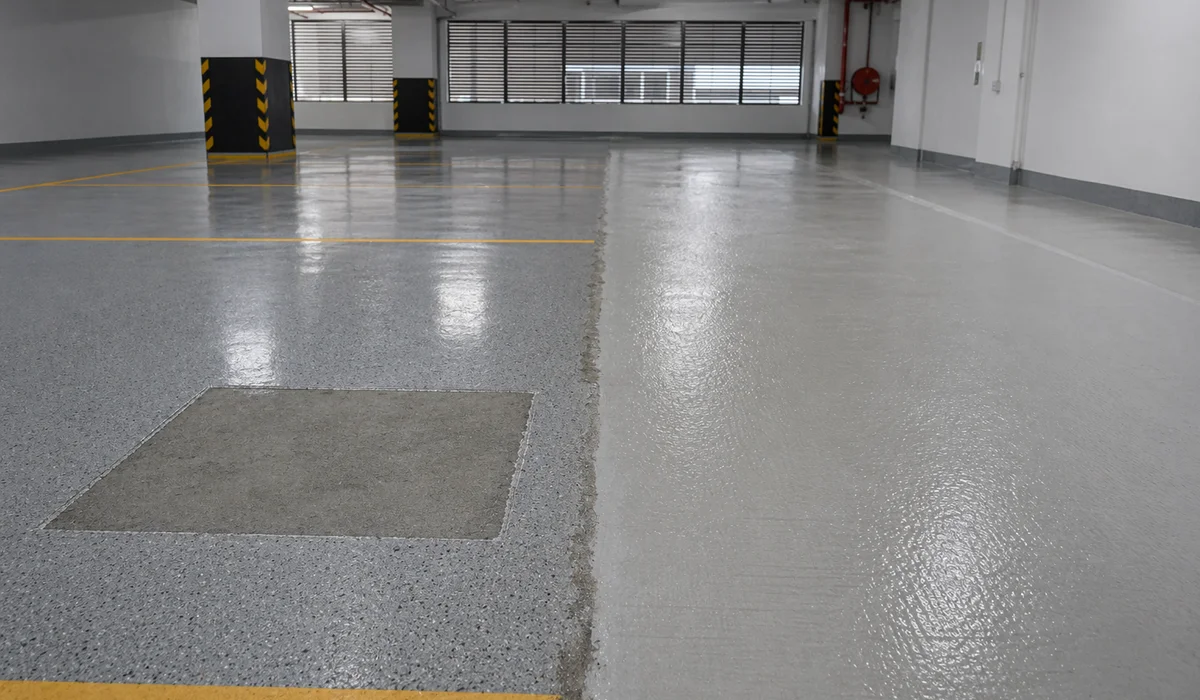
Our technicians carefully calculate the exact square footage of the failing areas. Spot repairs usually work perfectly when the damage covers less than 20% of your floor. Full remediation becomes the smarter financial choice once failures exceed the 40% mark.
Evaluating the moisture source
Identifying where the water comes from is the most critical step. We can easily treat isolated moisture issues caused by a local spill or a small leak. A slab-wide moisture problem means a spot repair will just delay the inevitable failure.
Reviewing the original specification
Sometimes the initial installer simply chose the wrong product for a wet environment. We often find standard epoxy used in commercial kitchens where a moisture-tolerant polyurethane belonged. Spot repairing a fundamental chemistry mismatch is a waste of your maintenance budget.
Cost structure
Facility managers always need to know the bottom line before approving a project. The condition of your concrete substrate and the required moisture mitigation drive most of the final price. A dry slab with clean delamination costs significantly less to fix than a wet floor covered in old coatings.
Our quotes are fully transparent and based on the exact square footage of the treatment area. You should also factor in the cost of operational downtime when making your decision. Applying a liquid moisture vapour reduction system like Sika MB or Ardex MC Rapid will add to the initial price but prevents future shutdowns.
- Spot repair (single zone): RM 35 to RM 70 per square foot of the repair area. This pricing applies when the moisture is highly localised and controllable.
- Zonal remediation (multiple areas): RM 55 to RM 100 per square foot of the treated area.
- Full removal and re-spec: RM 80 to RM 140 per square foot. This tier includes heavy mechanical prep and a complete re-installation.
Why diagnostic matters more than execution
Execution skill certainly matters when laying down industrial resins. A perfect installation of the wrong specification will still fail within months. We see this costly mistake constantly in older Skudai and Johor Bahru warehouses.
A perfect installation of the wrong specification will still fail within months. Diagnosis is where the right answer begins.
Many legacy coatings sit on slabs that never had a proper damp-proof membrane installed. A brand new epoxy coat might look fantastic for three months before it starts lifting again. Proper diagnosis ensures you apply the correct solution the first time.
We want to help you break the cycle of endless concrete issues.
Effective Floor Repair & Moisture Mitigation is the only way to protect your facility from future damage. Contact our team today to schedule your free site diagnostic scan.
What you're getting.
Tramex CMEX5 non-destructive moisture mapping of entire slab
ASTM F2170 in-situ relative humidity testing when required
Blister, delamination, edge-lift, and pinhole diagnosis and repair
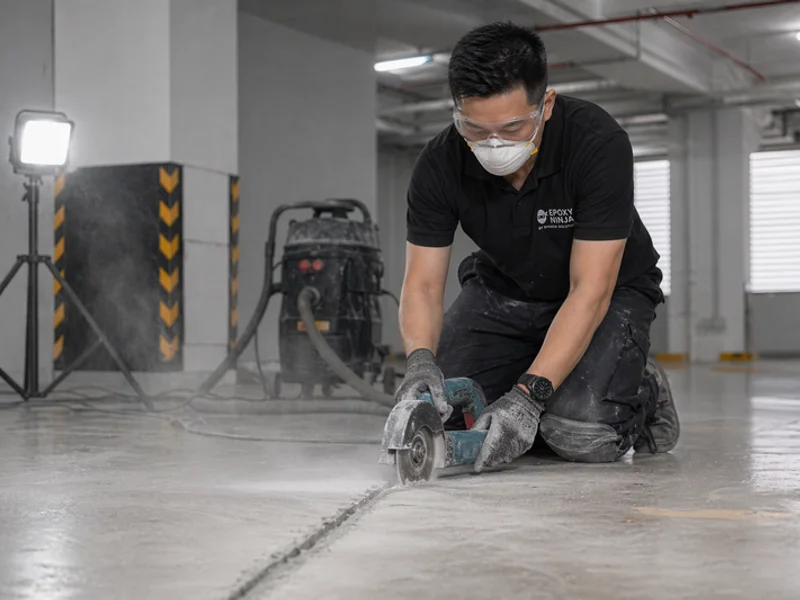
Substrate crack routing, chase-cutting, and moisture-tolerant priming
Repair vs full-replacement decision report with cost comparison
Real installs. Real factories.
How we install it.
Failure triage
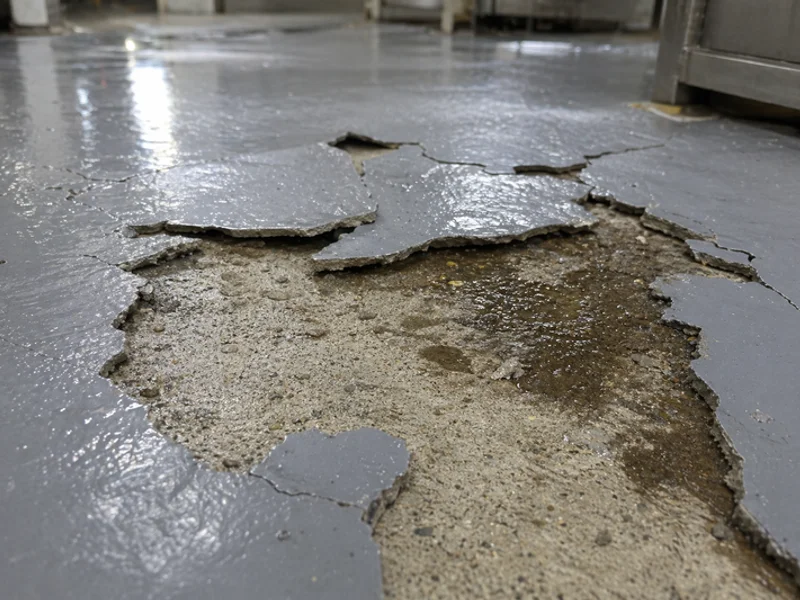
Walk the floor. Measure failure area percentage. Document blister, delamination, and edge-lift patterns.
Tramex moisture scan
Non-destructive CMEX5 moisture mapping across the whole slab. ASTM F2170 in-situ RH testing where bond-line moisture suspected.
Root cause report
Written report: what failed, why, what the honest fix is. Spot repair vs full remediation, with cost paths for each.
Substrate repair
Crack routing, chase cutting, moisture-tolerant priming, substrate patching as required.
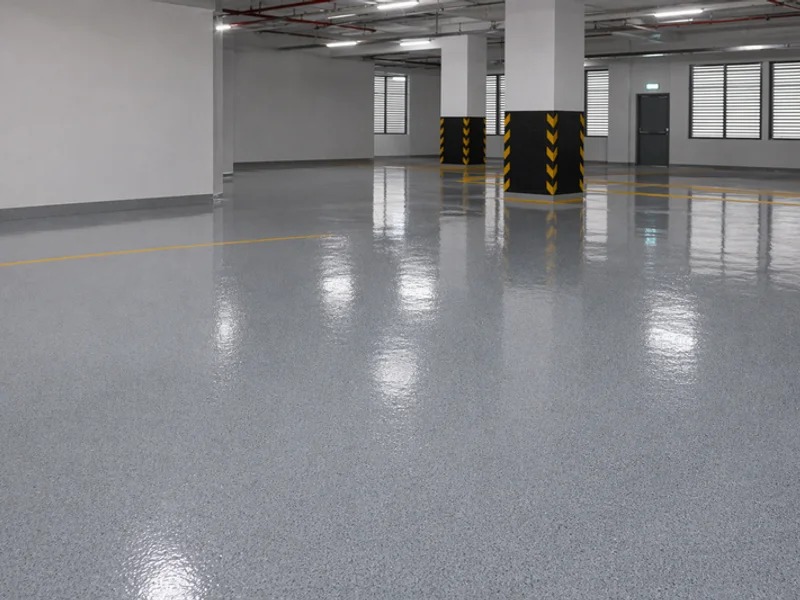
Re-coat or re-spec
Either blend-match the existing system with proper prep, or re-spec to the chemistry the conditions actually need.
Free site visit. Tramex scan. Written BQ. No obligation.
We walk the slab, run the moisture readings, and give you a written scope before any commitment. Same-day response across Southern Malaysia.
Deeper on the system.
Guides covering the chemistry, cost, and common questions for this system.
Concrete Moisture Testing Explained: MVER, RH, and Tramex Mapping
MVER, RH, calcium chloride, and Tramex mapping — what each method measures, what the thresholds mean, and why it matters.
Read guideEpoxy Floor Repair vs Full Replacement: How to Decide
When to repair, when to fully replace. Decision matrix by failure area %, substrate integrity, system age, and downtime budget.
Read guideFixing Blistering, Delamination, and Pinholes in Industrial Floors
Root causes and fixes for blisters, delamination, and pinholes. When spot repair works, when full removal is the only answer.
Read guideIndustrial Floor Repair Cost Guide for Malaysia
Spot repair and full remediation RM/sqft ranges for industrial floors in Malaysia. Diagnostic fee structure and scope variance.
Read guideOperators who've worked with us.
5.0★ average from 12 verified Google reviews. No cherry-picking, no edits.
"Superb service by Epoxy Ninja team. Extremely transparent with their work with consistent progress update at all times. It's also worth mentioning that their price point is extremely reasonable for industry standard with quality-finish workmanship. Thank you for the great job well done!"
"We had our flooring done by a company called Epoxy Ninja, and it was an excellent experience. The owner, Michael, who I've known for quite some time, was very attentive to our needs. They listened carefully to what we wanted and worked with great precision. Epoxy Ninja truly delivers high-quality flooring that's durable and impressive. We highly recommend them for any flooring needs!"
"Michael and his team did a great job on my epoxy flooring. They were responsible, professional, and very thorough. The final result looks amazing and high-quality. Highly recommended!"
System questions.
My epoxy floor peeled after 6 months. Is it the installer's fault?
Usually yes. 6-month peeling is almost always a moisture test that was skipped or a primer that didn't match the substrate conditions. A proper install survives much longer than that. We'll scan the slab, tell you what went wrong, and document it so you can take it up with the original contractor if that's a path you want to pursue.
Can you spot-repair or do I need to redo the whole floor?
Depends on the failure area, the substrate moisture, and the age of the system. If less than about 20% is failing, moisture is controllable, and the original spec was reasonable, spot repair works. If moisture is widespread or delamination exceeds 30-40%, full removal and re-spec is the honest answer. We give you both paths in the report.
What's the earliest sign my floor is going to fail?
Pinholes, dark spots, or edge-lift at control joints. Ignore those and you'll see full blistering within weeks. If you're seeing any of them, book a Tramex scan before the failure spreads — spot repair is dramatically cheaper than full replacement.
How much does industrial floor repair cost?
Spot repair on a single failure zone usually runs RM 35-70/sqft of the repair area. Full remediation with substrate work and re-coat is RM 80-140/sqft. The Tramex scan and diagnostic report are included in our quote, so you see both paths with real numbers before deciding.
Also worth considering.
Polyurethane (PU) Flooring
Full-depth polyurethane systems engineered for wet, hot, and chemical-heavy industrial environments where epoxy fails.
See specSelf-Leveling Epoxy Flooring
2-4mm seamless self-leveling epoxy for warehouses, production areas, showrooms, and workshops where flatness and gloss matter.
See specHeavy-Duty Mortar Flooring
6-12mm heavy-duty mortar systems — epoxy mortar, PU mortar, and urethane concrete — for impact-intensive loading bays, foundries, and heavy processing floors.
See specBook a site visit for this system. Tramex included.
Free Tramex moisture scan and a written BQ with no obligation. Same-day response across Southern Malaysia.