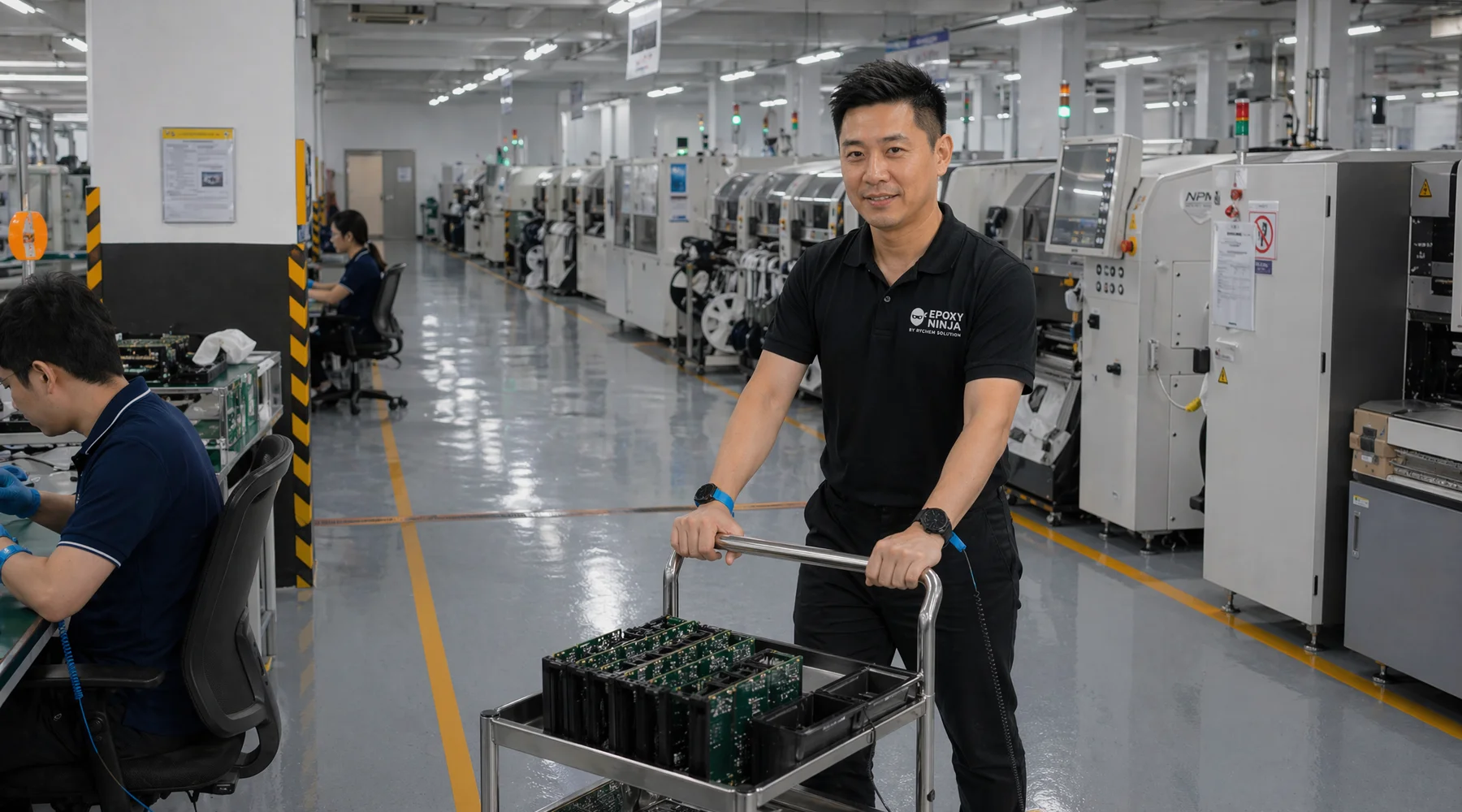
Static-Dissipative and Conductive Flooring for Electronics and Semiconductor Plants
Grounded ESD and anti-static flooring systems with specified resistance bands for electronics, EMS, and semiconductor facilities.
Electronics and semiconductor facilities need ESD-controlled floors with verifiable resistance — not paint-grade claims. We install static-dissipative and conductive epoxy systems with copper grounding mesh, specified resistance bands (10⁶ to 10⁹ Ω), and post-install resistance verification so your compliance officer signs off with confidence.
Have you ever felt the panic of an upcoming facility audit? Upgrading to proper ESD / Anti-Static Flooring is the best way to protect your sensitive equipment.
Here at Epoxy Ninja Johor Bahru, we understand how stressful it can be to worry about a single static spark shutting down your whole line.
A tiny 100-volt electrostatic event can destroy modern semiconductor chips in an instant.
ESD isn’t paint with a sticker on it
Walk any electronics manufacturing facility audit here in Malaysia, and the floor is always on the checklist. An auditor evaluates several key safety metrics.
Your facility must pass these specific checks:
- Surface resistance: Ensuring the floor falls within the safe dissipative or conductive ohms range.
- Grounding continuity: Verifying the unbroken path from the floor surface to the earth ground point.
- Verification records: Checking the documented post-installation tests from a certified installer.
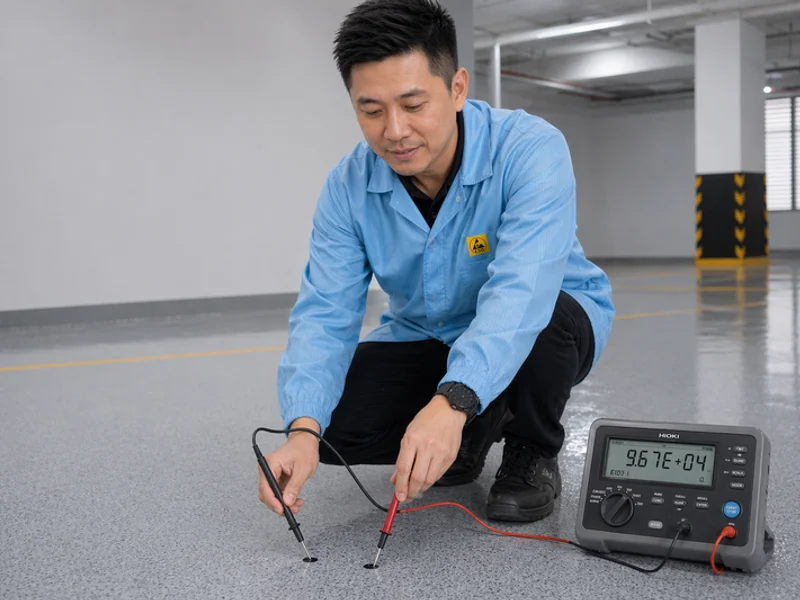
The test is not whether the floor simply looks shiny or clean. The true test is whether it measures correctly when the compliance officer shows up with a digital meter.
Standard commercial floors typically hit above 1x10¹¹ ohms, which means they completely fail the audit. We install systems engineered to hit and verify your exact spec, complete with the required grounding infrastructure.
Conductive vs dissipative: pick on the process, not the brochure
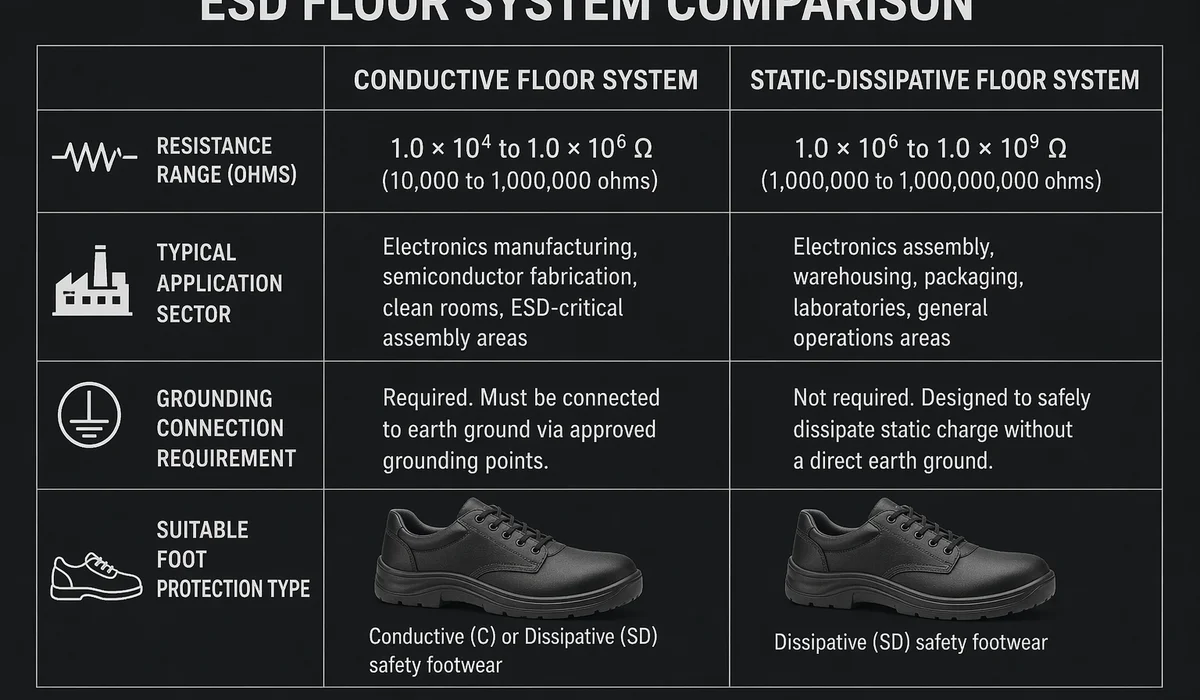
You will usually see two system families and two spec sheets when shopping for options. It is crucial to match the floor to your daily operations.
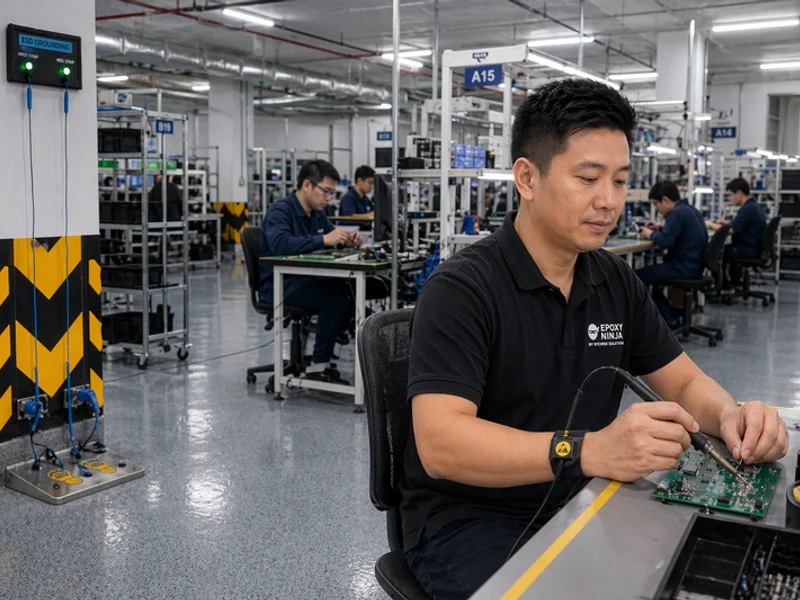
- Conductive (surface resistance < 10⁶ Ω): This provides rapid static discharge. It is the standard for semiconductor manufacturing, Surface Mount Technology (SMT) lines handling sensitive devices, and class-0 ESD-sensitive areas. Installers always pair this with a copper grounding mesh.
- Dissipative (surface resistance 10⁶-10⁹ Ω): This offers a controlled electrical discharge. It remains the preferred standard for Malaysian electronics factory assembly lines, finished electronics handling, and most test floors. This setup usually does not require a mesh if your building earth connection is adequate.
Choosing the wrong type can either drain charges too slowly or create a safety hazard by draining them too fast. We walk the process with you to help scope it perfectly. Your exact requirements will guide our team if your ESD control plan already specifies a resistance band.
Post-install verification is non-negotiable
A floor that was not verified is an ESD / Anti-Static Flooring setup on paper only. You need hard proof to show your clients and safety officers.
Our standard handover includes a comprehensive testing package.
- Point-to-point resistance measured at a grid across the floor (typically every 5m²).
- Point-to-ground resistance measured at every grounding connection using a calibrated megohmmeter.
- Compliance certificate referencing the strict IEC 61340-5-1 test method.
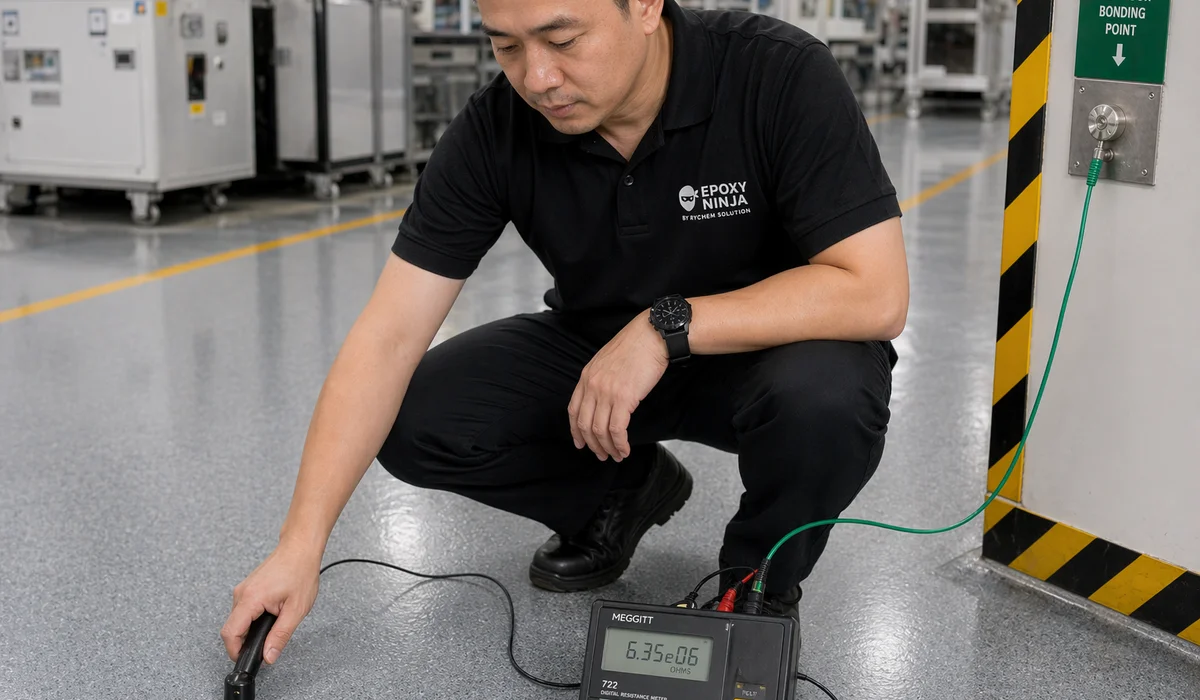
The complete report is handed over at completion. Your QA team and any external auditor get exactly what they need without a frustrating email chase. This documentation is essentially mandatory if you supply to international electronics brands.
Cost range
Budgeting for your factory upgrade requires clear numbers. Local material costs and installation complexity will affect your final price.
- Dissipative epoxy (10⁶-10⁹ Ω, no mesh): RM 55-95/sqft.
- Conductive epoxy with copper mesh: RM 80-140/sqft.
- Cleanroom-compatible conductive (ISO Class 5-8): RM 110-180/sqft.
Building earth infrastructure is the biggest wildcard. Facilities without adequate earth grounding need additional electrical work before the floor installation.
We scope this prep work separately to keep your core flooring quote accurate. High humidity in Malaysia also means your concrete slab might need specialised moisture testing before applying the primer.
Upgrading to reliable ESD / Anti-Static Flooring gives you total peace of mind during your next big audit. We are always ready to help you plan your next facility improvement. Reach out today, and let us schedule a quick site visit to check your current setup.
What you're getting.
Static-dissipative and conductive epoxy system options
Copper grounding mesh integrated into buildcoat
Specified resistance band — 10⁶ to 10⁹ Ω per IEC 61340-5-1
Point-to-point and point-to-ground post-install verification
Compatible with cleanroom ISO class requirements
Real installs. Real factories.
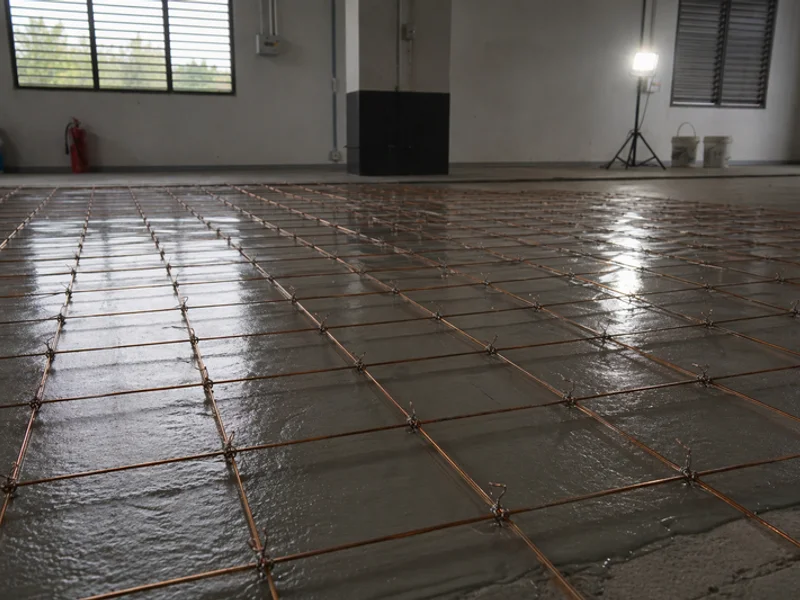

How we install it.
Resistance-spec scoping
We review your ESD specification — conductive vs static-dissipative, resistance band, grounding requirements. Spec drives the system.
Substrate prep
Diamond grinding to SSPC-SP13. Substrate continuity check. Moisture scan with Tramex.
Copper grounding mesh install
Grounding mesh laid into primer grid at specified spacing. Connected to building earth per IEC 61340-5-1.
Conductive buildcoat + topcoat
Conductive or dissipative buildcoat poured. Topcoat with specified resistance band applied.
Post-install verification
Point-to-point and point-to-ground resistance testing at grid points. Full resistance test report handed over.
Free site visit. Tramex scan. Written BQ. No obligation.
We walk the slab, run the moisture readings, and give you a written scope before any commitment. Same-day response across Southern Malaysia.
Deeper on the system.
Guides covering the chemistry, cost, and common questions for this system.
ESD Flooring for Semiconductor and Electronics Factories in Malaysia
ESD-compliant flooring for semiconductor, EMS, and SMT facilities in Senai and Iskandar Puteri. Cleanroom ISO-compatible systems.
Read guideESD Flooring Testing, Compliance Ratings, and Handover Verification
Point-to-point, point-to-ground resistance testing, humidity dependence, periodic re-testing. What to expect at ESD floor handover.
Read guideWhat Is ESD Flooring and When Do You Need It?
ESD flooring explained — static-dissipative vs conductive, resistance bands, grounding, and which industries actually need it.
Read guideOperators who've worked with us.
5.0★ average from 12 verified Google reviews. No cherry-picking, no edits.
"Superb service by Epoxy Ninja team. Extremely transparent with their work with consistent progress update at all times. It's also worth mentioning that their price point is extremely reasonable for industry standard with quality-finish workmanship. Thank you for the great job well done!"
"We had our flooring done by a company called Epoxy Ninja, and it was an excellent experience. The owner, Michael, who I've known for quite some time, was very attentive to our needs. They listened carefully to what we wanted and worked with great precision. Epoxy Ninja truly delivers high-quality flooring that's durable and impressive. We highly recommend them for any flooring needs!"
"Michael and his team did a great job on my epoxy flooring. They were responsible, professional, and very thorough. The final result looks amazing and high-quality. Highly recommended!"
System questions.
What's the difference between conductive and dissipative flooring?
Conductive floors have surface resistance under 10⁶ Ω — they discharge static rapidly and are standard in semiconductor manufacturing. Dissipative floors sit at 10⁶-10⁹ Ω — they discharge safely but more slowly, and are the typical spec for EMS and electronics assembly. Your ESD control plan defines which you need.
Do you test resistance after install?
Yes. We perform point-to-point (surface-to-surface) and point-to-ground (surface-to-building-earth) resistance tests at a grid across the floor. The test report is part of the handover, and it's the document your internal QA or external auditor will want to see.
Is the grounding mesh required?
For conductive systems in semiconductor or heavy-ESD zones, yes — the mesh provides the low-resistance path to earth. For many dissipative systems in lighter applications, the resin itself is sufficient and mesh is optional. We spec based on your resistance target and the existing building earth infrastructure.
Can ESD floors also be cleanroom-rated?
Yes. We install ESD systems that meet cleanroom ISO Class 5-8 particulate requirements. Seamless installation, low-outgassing resins, and compatible surface finishes are standard. For Class 3-4 requirements, we scope with the cleanroom consultant directly.
Also worth considering.
Self-Leveling Epoxy Flooring
2-4mm seamless self-leveling epoxy for warehouses, production areas, showrooms, and workshops where flatness and gloss matter.
See specFood-Grade / HACCP Hygienic Flooring
Seamless hygienic PU systems with integrated coving, built to pass HACCP, GMP, and ISO 22000 audits.
See specPolyurethane (PU) Flooring
Full-depth polyurethane systems engineered for wet, hot, and chemical-heavy industrial environments where epoxy fails.
See specBook a site visit for this system. Tramex included.
Free Tramex moisture scan and a written BQ with no obligation. Same-day response across Southern Malaysia.