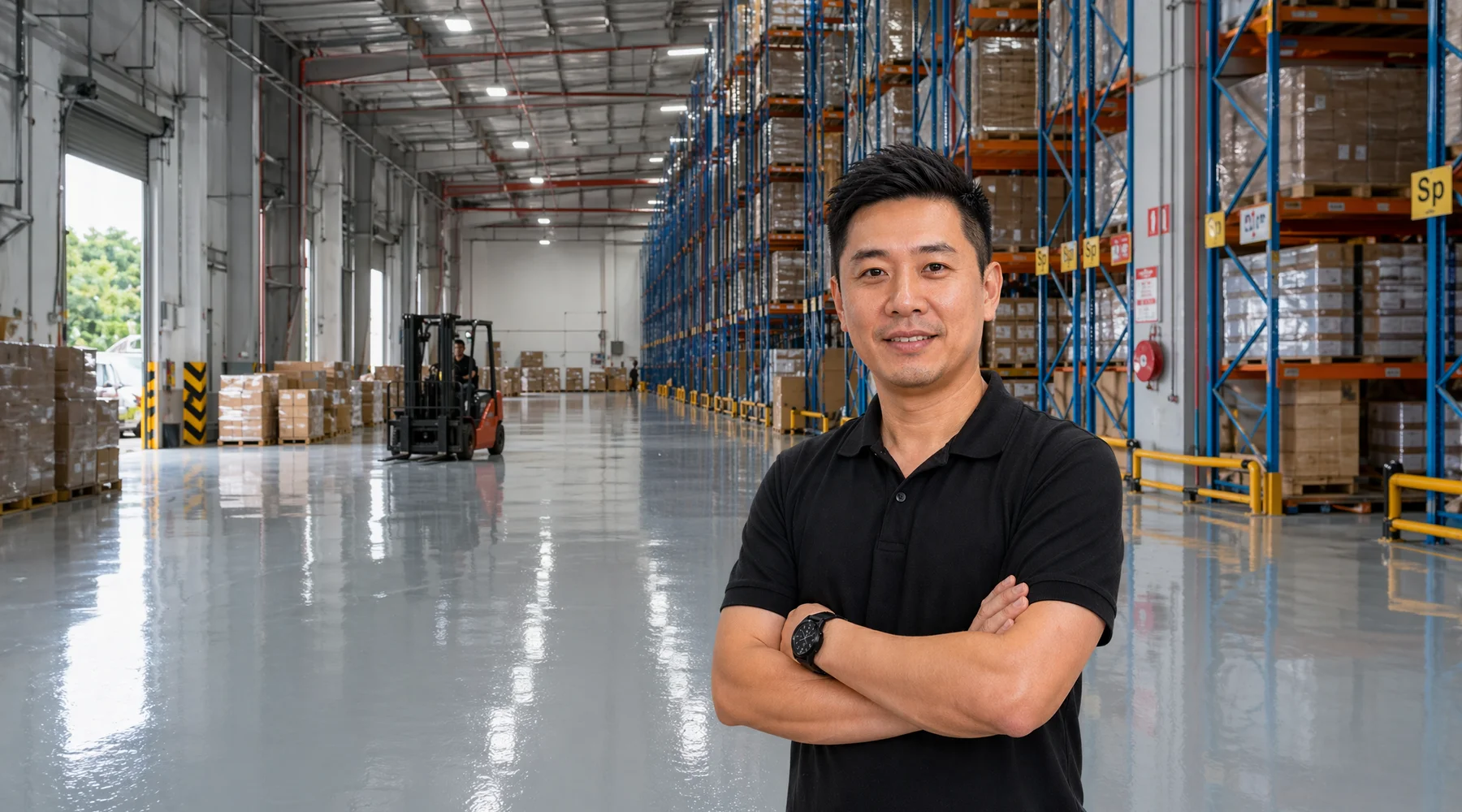
Glass-Smooth Self-Leveling Epoxy for Warehouses, Showrooms, and Production Floors
2-4mm seamless self-leveling epoxy for warehouses, production areas, showrooms, and workshops where flatness and gloss matter.
Self-leveling epoxy delivers the flat, seamless, glass-smooth industrial finish that warehouses, 3PL operators, electronics assembly floors, and showrooms expect. We install at 2-4mm typical thickness, assess substrate flatness tolerances first, and handle substrate correction (grinding, patching, or screeding) as a separate pre-install phase — no shortcuts on the prep.
Have you ever noticed how a cracked, uneven warehouse floor slows down your entire operation? We see many facility managers struggle to maintain safe working zones. Daily forklift traffic takes a massive toll on standard concrete surfaces.
Our team at Epoxy Ninja Johor Bahru knows exactly what it takes to build a reliable industrial surface.
Choosing the right coating system prevents costly disruptions later.
We are going to walk you through exactly when self-leveling epoxy flooring makes sense for your space. You will discover the true costs and the specific preparations required to get a perfect finish.
When self-leveling is the right call
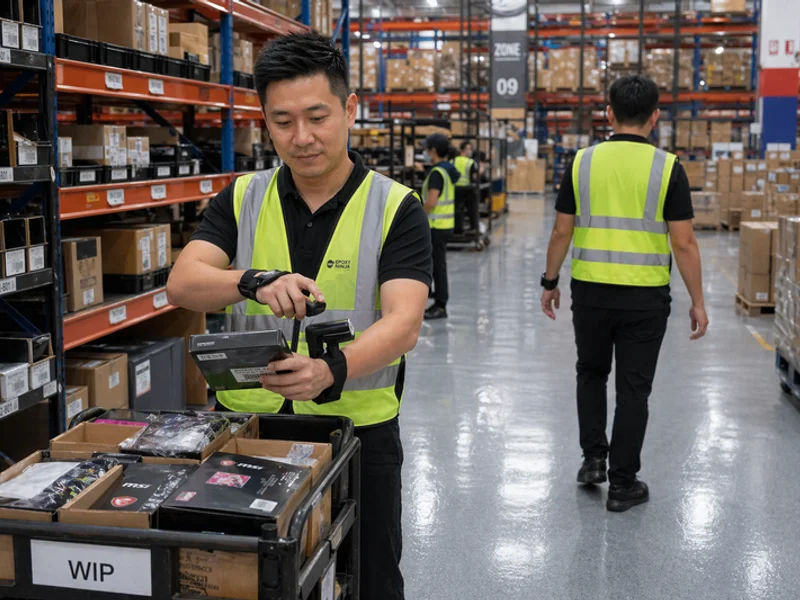
We always recommend this material for dry industrial environments like 3PL picking zones, electronics assembly, and general production areas. The product flows naturally to create a perfectly flat, joint-free finish.
Our standard application sits at a thickness of 2 to 4 millimeters. That specific depth provides enough volume to hide minor concrete imperfections while keeping your budget sensible.
We find this thickness to be the perfect spot for maximizing forklift efficiency. Flat floors prevent tire burn marks and reduce wear on expensive machinery.
Our team installs these durable systems across a variety of commercial spaces. The most common facilities benefiting from this technology include:
- Logistics and 3PL Warehouses: Smooth surfaces speed up pallet jack movement.
- Electronics Assembly Plants: Flat floors support precise manufacturing equipment.
- Automotive Showrooms: High-gloss finishes reflect light beautifully.
We will quickly tell you when standard epoxy is the wrong choice. Wet processing plants, heavy impact loading zones, and areas facing frequent chemical washdowns require different chemistry.
Our specialists often see standard epoxy fail in food processing facilities that use hot steam for cleaning. Those demanding environments need heavy-duty polyurethane (PU) mortar chemistry.
We help food and beverage clients operating under Malaysia’s Food Hygiene Regulations (2009) install HACCP-certified PU systems to prevent bacterial growth. Polyurethane handles extreme temperature shifts without cracking.
Substrate flatness: the thing nobody talks about upfront
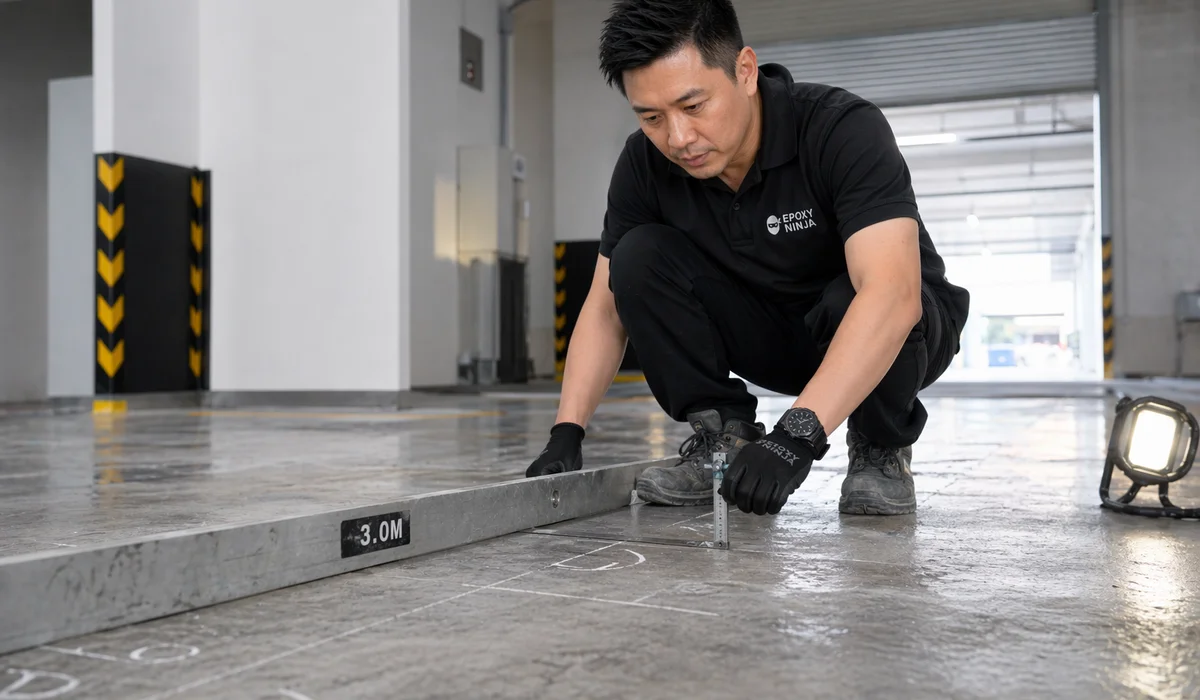
Our crew needs to discuss the reality of how these coatings actually work. The product flows to a gravity level within its specific thickness tolerance.
We cannot use it to magically fix a concrete slab that is 12 millimeters out of alignment across a 3-meter span. Pouring expensive resin over a terrible slab just gives you a glossy, wavy floor.
A beautiful topcoat cannot hide structural flaws.
Our technicians measure your substrate flatness using the standard F-number system on a grid before ever sending a quote. Precise F-number testing reveals exactly how much preparation your specific floor requires.
We keep our pricing transparent if the slab meets the required specifications. A slab that falls out of spec requires a dedicated substrate correction phase.
Our installers typically employ three main methods to correct an uneven base: Proper execution of these steps guarantees a flawless final layer.
- Diamond Grinding: Smoothing out high spots and removing old, failing sealers.
- Epoxy Patching: Filling deep cracks, joints, and localized low spots.
- Cementitious Screeds: Pouring a completely new levelling layer for severely damaged floors.
We list this preparation phase separately so you see the real cost drivers upfront. Proper preparation prevents the topcoat from peeling after just a few months.
Finish options
Our company offers several distinct finishes to match your daily operational needs. Choosing the correct texture impacts both aesthetics and long-term maintenance.
We help you weigh the pros and cons of each topcoat style. Here is a quick breakdown of the most popular industrial choices.
| Finish Type | Best Application | Key Features |
|---|---|---|
| High-Gloss | Showrooms, retail spaces | Maximum light reflectivity, brightens spaces, shows scratches faster. |
| Satin / Semi-Gloss | Warehouses, logistics hubs | Hides wear from forklifts, cuts LED glare, very easy to clean. |
| Anti-Slip | Commercial kitchens, wet zones | Uses R10-R11 quartz aggregate broadcast, highly durable, slight gloss reduction. |
Our applicators can modify your final layer with specialized aggregates to solve specific problems. Safety remains the highest priority in fast-paced production lines.
We incorporate graded silica sand into our anti-slip systems to meet strict occupational safety standards. A slightly rougher texture significantly reduces workplace accidents in areas prone to oil or water spills.
Our team also installs anti-static coatings for sensitive electronics manufacturing zones. Grounding the floor safely dissipates harmful electrical charges before they damage delicate components.
Cost guide
We want to give you a clear, honest look at current pricing for the Malaysian market in 2026. The final figure always depends on your specific operational requirements and the condition of your existing concrete.
Our estimates below assume your substrate is in reasonable condition and needs a standard 2 to 4-millimeter application. These baseline figures help you plan your facility upgrades accurately.
| Specification Level | Thickness & Finish | Estimated Cost |
|---|---|---|
| Standard Warehouse | 2-3mm, Satin | RM 25-45/sqft |
| Showroom Grade | 3-4mm, Gloss | RM 40-65/sqft |
| Anti-Static / Heavy Forklift | 3-5mm, Specialized | RM 50-85/sqft |
We always quote substrate correction as a completely separate line item. Fixing a poorly poured slab typically adds RM 8 to RM 25 per square foot.
Our transparent pricing model ensures you know exactly where your facility budget goes. Investing in the right floor upfront provides a solid 10 to 20 years of reliable service.
We hope this guide helps you make a confident decision about self-leveling epoxy flooring for your facility. A properly installed surface keeps your workers safe and your warehouse running efficiently.
Our team is ready to evaluate your facility and recommend the exact system you need. Reach out today to schedule a comprehensive substrate inspection and get a customized quote.
What you're getting.
2-4mm seamless self-leveling thickness range
Gloss, semi-gloss, or satin topcoat finishes
Forklift-rated load capacity with appropriate primer + buildcoat
Line-marking and 5S color-coding compatibility
Substrate flatness assessment and correction included in scope
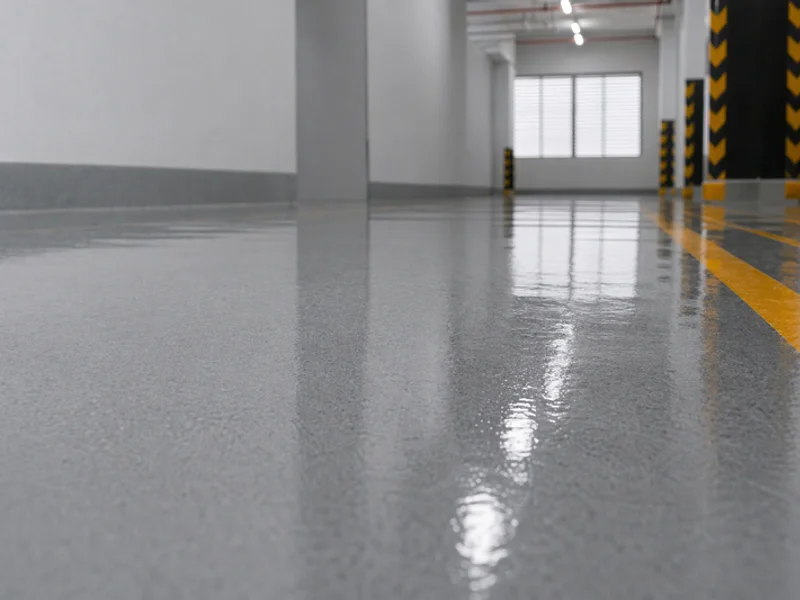
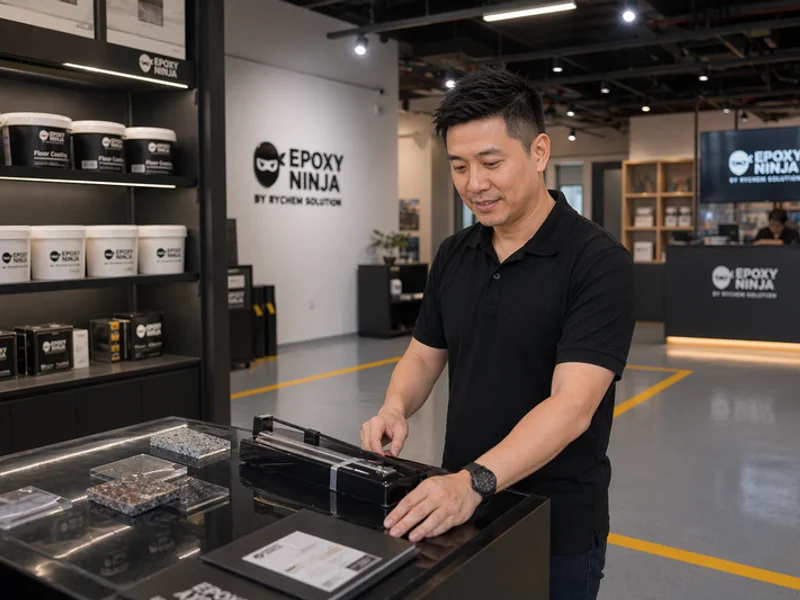
Real installs. Real factories.
How we install it.
Substrate flatness assessment
We measure slab flatness (F-number) and document low spots, high spots, and variance. Flat-pour performance depends on starting flat.
Tramex moisture scan
Full slab moisture mapping. Self-leveling systems are less forgiving than thin-film on moisture — we quote realistic prep accordingly.
Substrate correction
Diamond grinding or shot blasting. Crack repair. Cementitious levelling screed if flatness is out of spec.
Primer + buildcoat
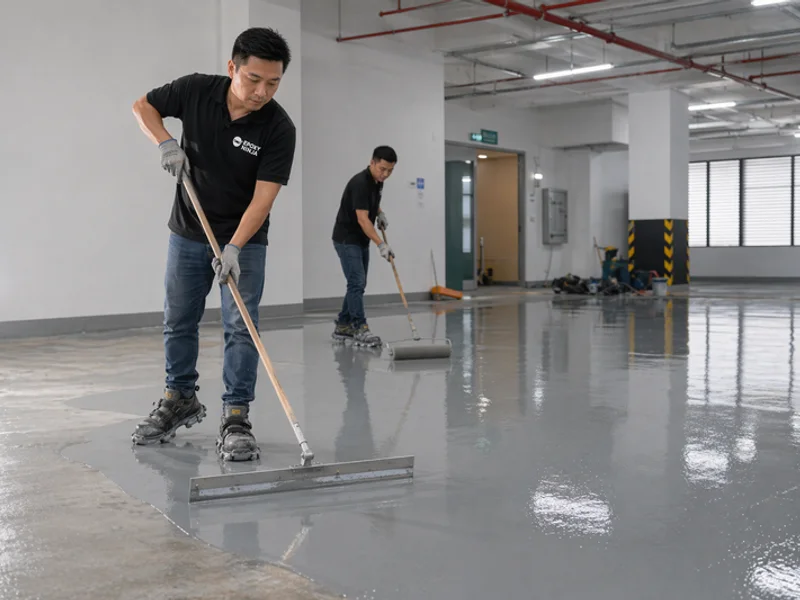
Moisture-tolerant primer. Self-leveling buildcoat poured at the specified thickness, spike-rolled for deaeration.
Topcoat + handover
Gloss, satin, or anti-slip topcoat per spec. Line marking applied as separate phase. Full cure verification before return to service.
Free site visit. Tramex scan. Written BQ. No obligation.
We walk the slab, run the moisture readings, and give you a written scope before any commitment. Same-day response across Southern Malaysia.
Deeper on the system.
Guides covering the chemistry, cost, and common questions for this system.
Fixing Uneven Concrete Before Self-Leveling Epoxy
Grinding, patching, screeding — how uneven concrete is corrected before self-leveling. When SL alone won't fix slope.
Read guideSelf-Leveling Epoxy for Warehouses and Production Floors
Forklift-rated self-leveling epoxy for warehouses, 3PL operations, and production floors. Thickness, dust control, line marking.
Read guideSelf-Leveling Epoxy vs Standard Epoxy Coatings: Thickness, Cost, Durability
Thin-film epoxy vs self-leveling — thickness, substrate tolerance, durability, appearance, cost. Which is right for your floor?
Read guideOperators who've worked with us.
5.0★ average from 12 verified Google reviews. No cherry-picking, no edits.
"Superb service by Epoxy Ninja team. Extremely transparent with their work with consistent progress update at all times. It's also worth mentioning that their price point is extremely reasonable for industry standard with quality-finish workmanship. Thank you for the great job well done!"
"We had our flooring done by a company called Epoxy Ninja, and it was an excellent experience. The owner, Michael, who I've known for quite some time, was very attentive to our needs. They listened carefully to what we wanted and worked with great precision. Epoxy Ninja truly delivers high-quality flooring that's durable and impressive. We highly recommend them for any flooring needs!"
"Michael and his team did a great job on my epoxy flooring. They were responsible, professional, and very thorough. The final result looks amazing and high-quality. Highly recommended!"
System questions.
Can self-leveling epoxy handle forklift traffic?
Yes, with the correct primer and buildcoat. We spec point-load ratings based on your heaviest loaded forklift (typically 2-5 ton operating weight). Wheel type matters too — polyurethane wheels are gentle, steel wheels require a tougher buildcoat or a heavy-duty mortar upgrade.
Do I need to replace my warped slab before you install?
Usually not. Most flatness issues we see are correctable with a cementitious levelling screed at 3-15mm, or by feathering with diamond grinding. Full slab replacement is rare — we'd only recommend it for fundamentally cracked or moisture-compromised slabs. We give you the assessment honestly, with cost for each path.
What's the finish like?
Glass-smooth, seamless, and reflective depending on topcoat choice. High-gloss is the standard showroom finish. Satin is common for warehouses (less glare under LED lighting). Anti-slip aggregate broadcast gives an R10-R11 rating for mixed wet zones if needed.
How long until we can move equipment in?
Light foot traffic: 24-36 hours after topcoat. Forklift and heavy equipment: 5-7 days for full cure and point-load tolerance. We commit to a written return-to-service schedule before work starts so you can plan.
Also worth considering.
Polyurethane (PU) Flooring
Full-depth polyurethane systems engineered for wet, hot, and chemical-heavy industrial environments where epoxy fails.
See specFloor Repair & Moisture Mitigation
Failure diagnosis and remediation for peeling, blistering, and delaminating industrial floors, powered by Tramex moisture mapping.
See specBook a site visit for this system. Tramex included.
Free Tramex moisture scan and a written BQ with no obligation. Same-day response across Southern Malaysia.