
Self-Leveling Epoxy for Warehouses & Production Floors
Forklift-rated self-leveling epoxy for warehouses, 3PL operations, and production floors. Thickness, dust control, line marking.
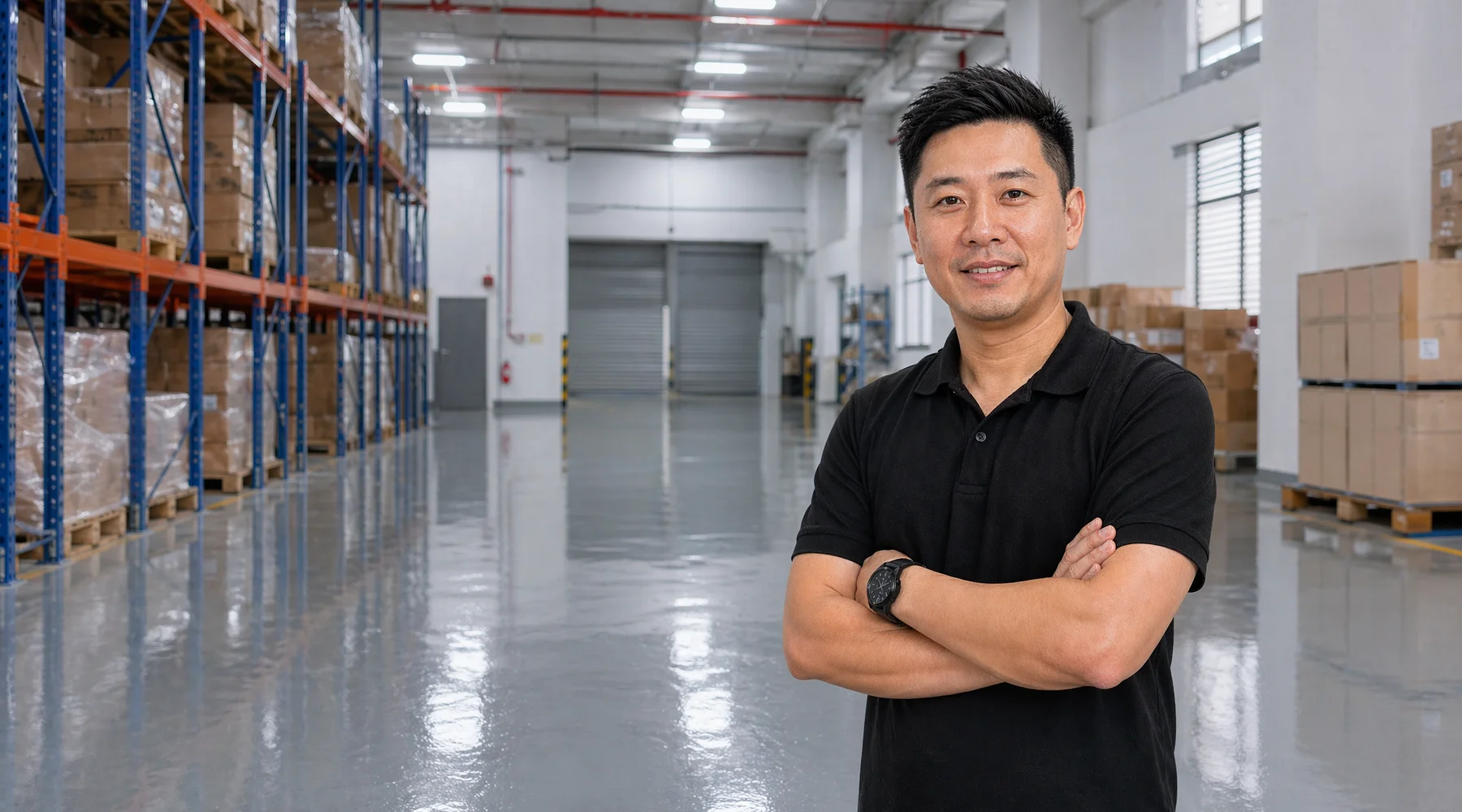
The short answer: Self leveling epoxy warehouse malaysia
We regularly see facility managers face premature floor failure when searching for a self leveling epoxy warehouse malaysia solution, simply because a generic coating was applied to heavy-duty zones. A standard 1mm application cannot survive constant forklift traffic in a busy logistics centre.
Our team matches the exact thickness and chemistry of your flooring system to your specific operational demands. This targeted approach prevents costly shutdowns and constant repairs.
For details on our installation process, see our self-leveling service.
What this guide covers
Evaluating your substrate and traffic load is the critical first step before applying any warehouse flooring. We will cover how thickness affects point-load capacity, line-marking integration, abrasion resistance, and dust control.
These four elements determine whether your floor lasts two years or ten.
Forklift point-load ratings by thickness
Thickness directly dictates how much weight your floor can handle before cracking. We classify anything under 2mm as a simple floor covering, which is inadequate for heavy machinery. Constant forklift traffic requires a true self-leveling system applied between 4.5mm and 6.0mm.
A 3-tonne forklift with hard plastic wheels exerts massive point-load pressure when turning. Our heavy-duty installations absorb this impact by distributing the weight across a thicker, high-compressive-strength resin matrix. Systems like Nippon Paint FloorShield provide the necessary 85 N/mm² compressive strength for these environments.
If you operate hard plastic-wheeled trolleys alongside heavy forklifts, the substrate needs maximum protection. We always assess the specific wheel types and load weights during our initial site walk.
| Traffic Type | Recommended Thickness | Typical Use Case |
|---|---|---|
| Light Duty | 1.0mm - 2.0mm | Foot traffic, pallet jacks |
| Medium Duty | 2.0mm - 4.0mm | Rubber-tyred forklifts |
| Heavy Duty | 4.5mm - 6.0mm | Hard plastic wheels, heavy point loads |
Line-marking compatibility and durability
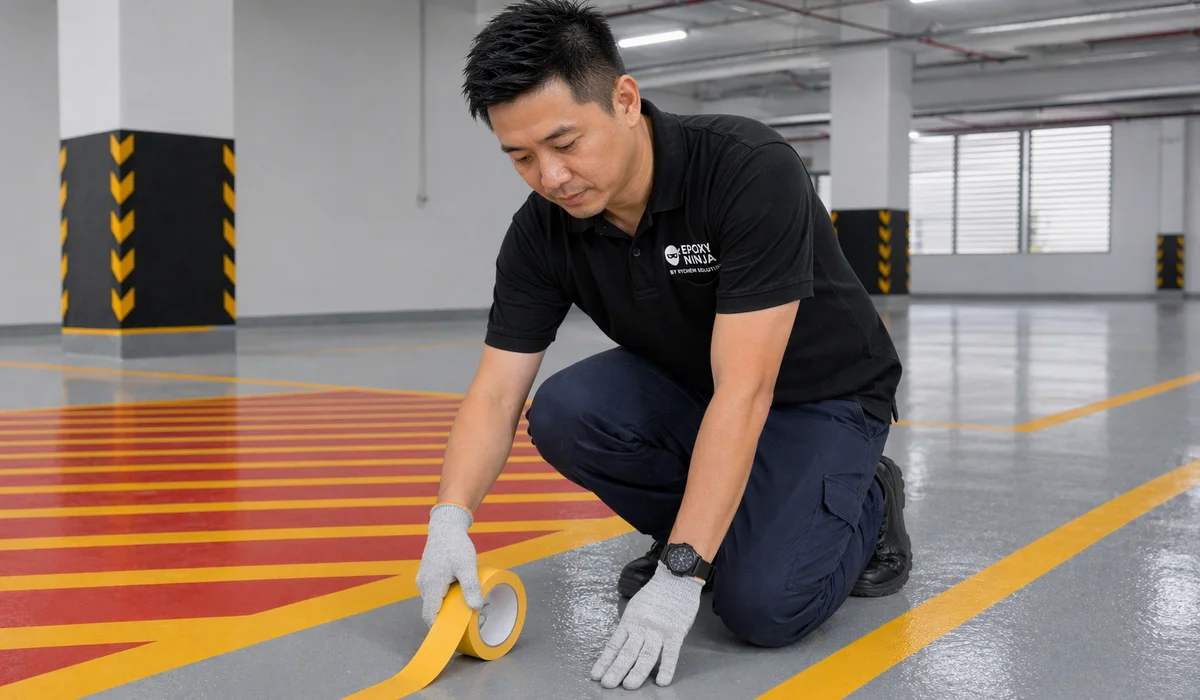
Applying standard paint over an industrial floor is a common mistake that leads to rapidly fading safety lines across your warehouse flooring. We specify two-component epoxy or polyurethane for all warehouse floor markings to ensure they bond permanently with the base.
This chemical bond prevents the lines from peeling when tyres spin or drag across them. The 5S methodology relies heavily on clear, colour-coded organization to keep production running safely.
Our application process integrates these specific colour standards directly into the topcoat.
Standard 5S Colour Designations
- Yellow: Pedestrian walkways and safe traffic lanes.
- Red: Defect storage, scrap areas, and fire equipment.
- Orange: Machinery boundaries and energized equipment zones.
- White: Production equipment outlines and general storage.
Yellow typically designates pedestrian walkways, while bright red indicates scrap areas or fire equipment zones. Using a glossy clear coat over the lines adds an extra layer of protection against daily scrubbing and chemical spills.
We highly recommend this extra step for high-traffic aisles.
Abrasion performance in high-traffic aisles
High-traffic aisles act like sandpaper on your floor as forklifts drag grit and wooden pallets across the surface. We measure a floor’s ability to withstand this wear using Taber Abrasion test standards.
A premium production floor epoxy will typically lose less than 80 milligrams of material per 1,000 cycles under a 1kg load. This technical metric translates directly to years of service life in your facility.
Our clients often find that cheaper coatings wear through to the bare concrete within 12 months in busy 3pl floor coating applications. Upgrading to a properly specified self-leveling system prevents this rapid deterioration.
Factors Accelerating Floor Wear
- Silica Dust: Acts as an abrasive compound under forklift tyres.
- Dragged Pallets: Broken wooden skids gouge the topcoat.
- Chemical Spills: Weakens the resin matrix if left uncleaned.
- Hard Cornering: Twisting heavy tyres degrades specific choke points.
To maintain that abrasion resistance, regular sweeping is mandatory to remove sharp silica dust. We advise facility managers to implement daily mechanical scrubbing protocols.
Dust control benefit over bare concrete
Bare concrete naturally sheds fine silica dust as it ages and degrades under traffic. We install self-leveling epoxy to seal the substrate completely, eliminating this persistent dusting problem.
This unbroken, non-porous barrier is an absolute requirement for food and beverage processing facilities operating in Malaysia today. Meeting Hazard Analysis Critical Control Point (HACCP) and Good Manufacturing Practice (GMP) standards demands a floor that will not harbor bacteria.
Our epoxy flooring solutions create a smooth surface that resists moisture penetration and microbial growth. Food-safe epoxy formulations also withstand the harsh cleaning chemicals used during daily washdowns.
“Achieving HACCP certification in 2026 requires strict environmental controls. A gap-free, non-porous floor is the foundational step in preventing cross-contamination from substrate dusting.”
A dust-free environment drastically reduces maintenance costs for sensitive manufacturing equipment. We regularly see fewer machinery breakdowns and filter replacements after upgrading an untreated concrete slab.
For a closer look at related considerations, read our Self-Leveling vs Standard Epoxy Coatings guide.
What to do next
If you are weighing this decision for your facility, finding the right self leveling epoxy warehouse malaysia contractor is your fastest next step. We provide a comprehensive site evaluation to accurately measure your floor’s current condition.
This process includes bringing a Tramex CMEX5 moisture meter to walk the substrate and document your exact chemical and thermal exposure.
Site Visit Deliverables
- Moisture Testing: Deep substrate analysis using the Tramex CMEX5.
- Exposure Audit: Documentation of chemical and thermal zones.
- Cost Breakdown: A written BQ with transparent pricing paths.
We then hand you a written BQ with the honest cost paths, carrying no obligation for your team. Same-day responses are available across JB, Pasir Gudang, Skudai, Senai, and Iskandar Puteri.
We ensure that you have the precise data needed to make an informed decision for your production floor. Reviewing the technical details is an excellent way to prepare for our visit.
Our Self-Leveling Epoxy Flooring service page covers the system spec in detail.
Fast answers.
Can forklifts damage self-leveling epoxy?
Properly primed 3-4mm SL easily handles typical 3-ton forklift traffic. Damage usually comes from untreated joints or point-load edges.
How often do warehouse SL floors need recoating?
Every 5-8 years in heavy-traffic aisles for a fresh topcoat. The buildcoat typically lasts 10-15 years if the substrate stayed dry.
Is SL epoxy good for dust control?
Yes — seamless finish eliminates the concrete dusting that plagues bare-slab warehouses. Big benefit for picking and clean-product operations.
More in this cluster.
Fixing Uneven Concrete Before Self-Leveling Epoxy
Grinding, patching, screeding — how uneven concrete is corrected before self-leveling. When SL alone won't fix slope.
Self-Leveling Epoxy vs Standard Epoxy Coatings: Thickness, Cost, Durability
Thin-film epoxy vs self-leveling — thickness, substrate tolerance, durability, appearance, cost. Which is right for your floor?
Ready for a real assessment? Free Tramex scan.
Guides are the general case. A site visit gives you the specific answer for your slab, your chemicals, and your operational conditions.