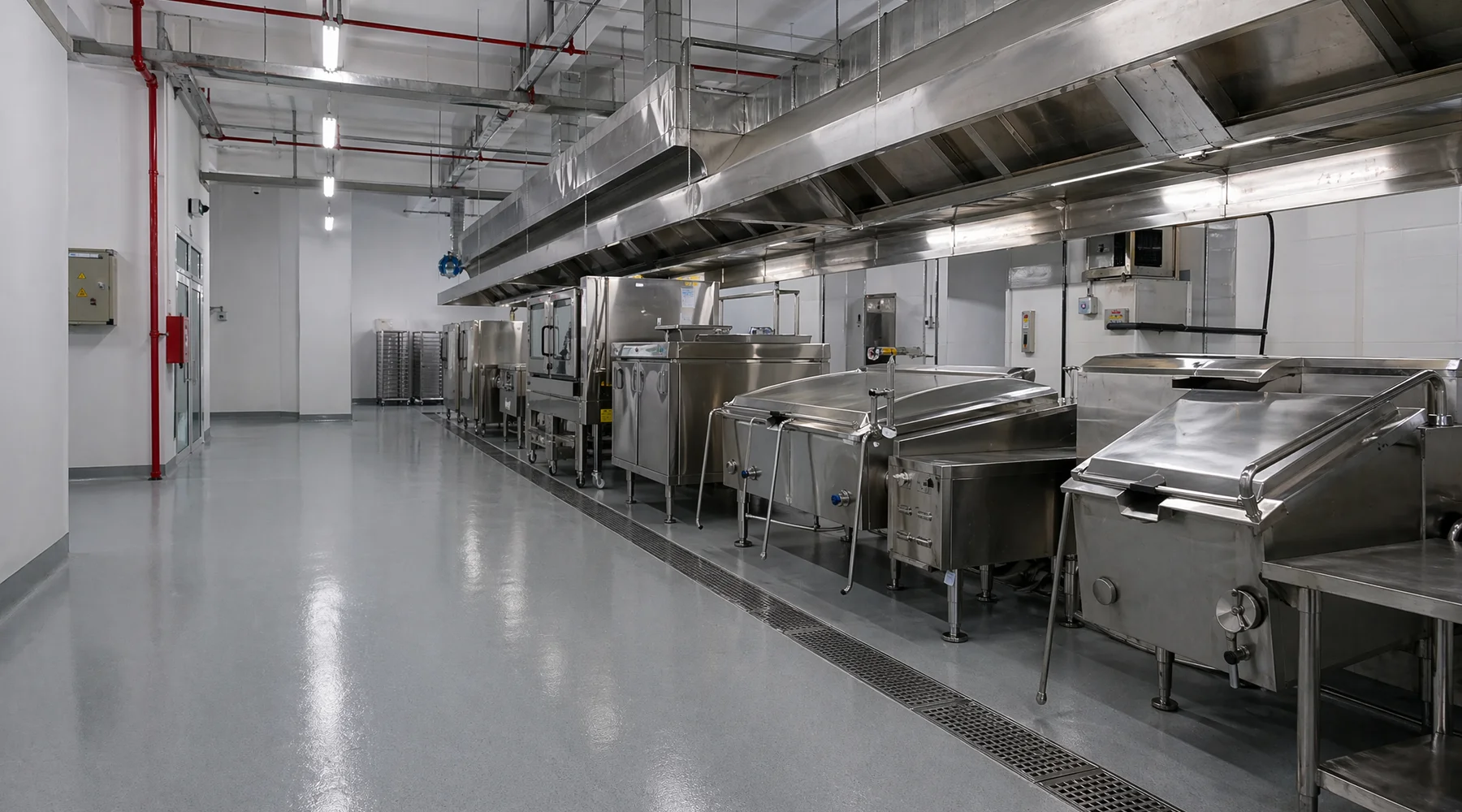
Audit-Ready HACCP & Food-Grade Flooring for F&B and Pharma Facilities
Seamless hygienic PU systems with integrated coving, built to pass HACCP, GMP, and ISO 22000 audits.
HACCP-compliant flooring isn't a single product — it's a specification your system, coving, slip rating, and cleanability must all meet together. We install hygienic polyurethane systems with integrated floor-to-wall coving, antimicrobial options, R12-R13 slip ratings, and steam-cleanable topcoats designed for wet processing zones, central kitchens, bakeries, cold storage, and pharma clean areas.
HACCP flooring is a system spec, not a product
Have you ever felt a knot in your stomach when an auditor walks into your facility? We know that feeling well.
Inspectors from the Ministry of Health (MOH) are never just looking at a product label on a bucket of paint. They focus on the entire system to ensure full compliance with the Food Act 1983.
Our team has seen too many Malaysian businesses fail their MeSTI or JAKIM Halal audits over a basic, cracking floor. A simple coat of paint will not cut it for proper Food-Grade / HACCP Hygienic Flooring.
The auditor is looking for very specific details during their walk-through:
- Is the surface completely continuous to prevent bacterial growth?
- Does the coving run smoothly up the wall without sharp corners?
- Are the wet zones equipped with an adequate slip rating?
- Can the material survive high-temperature steam cleaning?
We install complete, audit-ready polyurethane systems that answer “yes” to all those questions. This means you get a tough buildcoat, integrated coving, and antimicrobial additives for your high-risk zones.
Our handover process gives you all the exact documentation needed for your official HACCP file. You can finally breathe easy when the inspector arrives.
What hygienic PU actually is
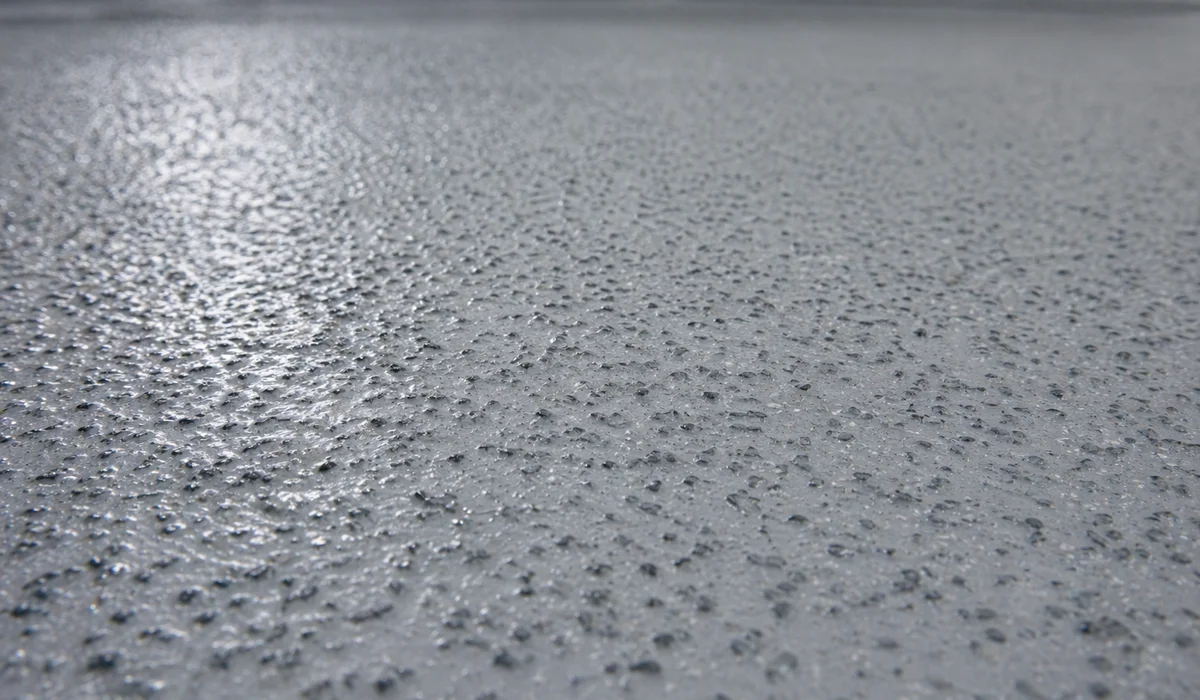
Hygienic polyurethane is a heavy-duty, elastomeric resin system applied smoothly across your entire production area. We apply this material continuously from the floor up the wall at a coved radius to seal every single transition. The completely non-porous surface leaves absolutely no room for bacteria to hide.
This flexibility is crucial for surviving extreme thermal shocks in a tropical climate like Malaysia. Our installations handle the intense temperature swings from a hot steam cleaning right into a freezing cold storage room. The material also easily tolerates exposure to harsh food acids and aggressive commercial chemicals.
These daily cleaning agents often include heavy-duty peracetic acid and active chlorine-based sanitising foams. We make sure your floor withstands these chemicals while remaining fully compliant with JAKIM halal standards. Choosing the correct thickness depends entirely on your specific daily operations.
Standard system thicknesses:
- Hygienic PU coating (1 to 2mm): Perfect for light wet zones and dry packaging halls.
- Hygienic PU screed (2 to 4mm): Designed for mainstream food and beverage processing or central kitchens.
- Hygienic urethane concrete (6 to 9mm): Built for heavy-duty processing with frequent forklift traffic, severe thermal shock, and constant chemical washdowns.
Slip rating is a specification, not a suggestion
Safety on the factory floor directly impacts your bottom line and your employees’ well-being. We take slip resistance seriously because the Department of Occupational Safety and Health (DOSH) Malaysia reported over 4,400 workplace accidents just between January and May of 2024. The manufacturing sector accounted for the highest number of those incidents.
A significant portion of those injuries happen due to simple slips and falls on wet floors. Our team relies on the DIN 51130 R-rating system because it is the global gold standard for industrial slip resistance. For local food processing facilities, the typical specifications look like this:
- R9 to R10: Ideal for dry packaging halls and areas right next to administrative offices.
- R11: Suited for mixed environments with both wet and dry production lines.
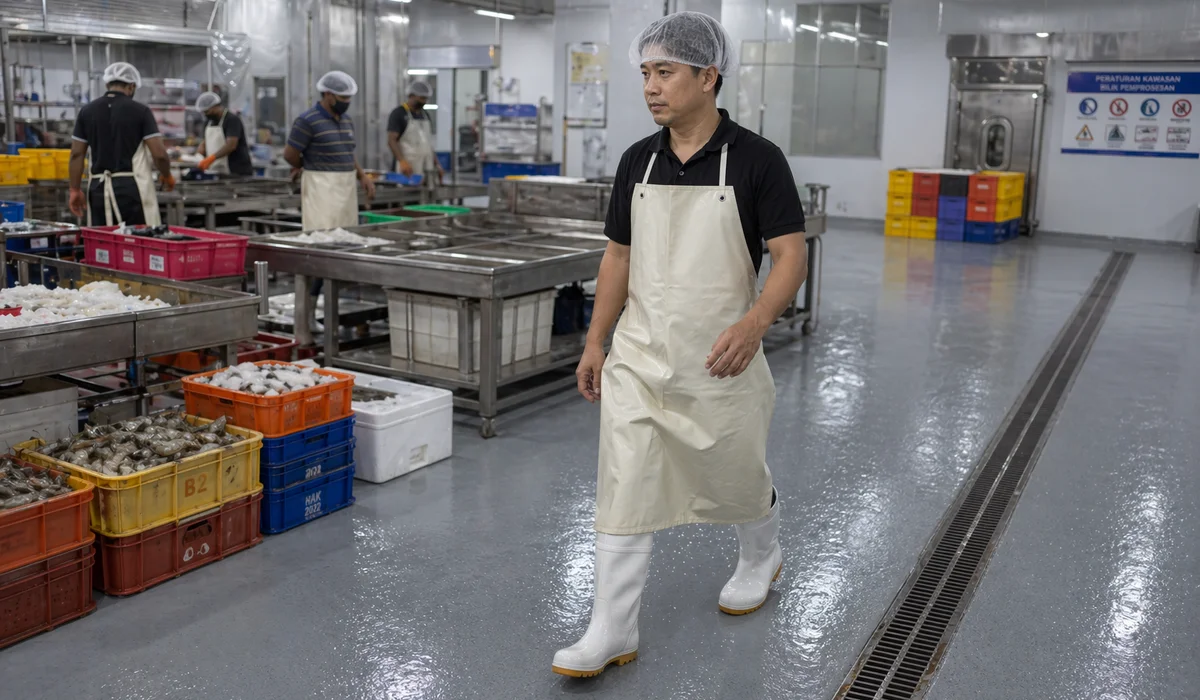
- R12: Required for main processing zones featuring constant washdowns and wet floors.
- R13: Necessary for heavy-oil or heavy-grease processing areas like poultry, seafood, and rendering plants.
Getting the R-rating right requires a very careful balance. We know that a floor that is too grippy makes cleaning difficult because grime gets trapped in the rough aggregate. A surface that is too smooth immediately increases the risk of a dangerous slip.
Our experts personally walk through every zone of your facility with you. This careful method ensures we specify the exact aggregate grade needed for each specific area. Applying a blanket setting across the whole site is a common mistake we help you avoid.
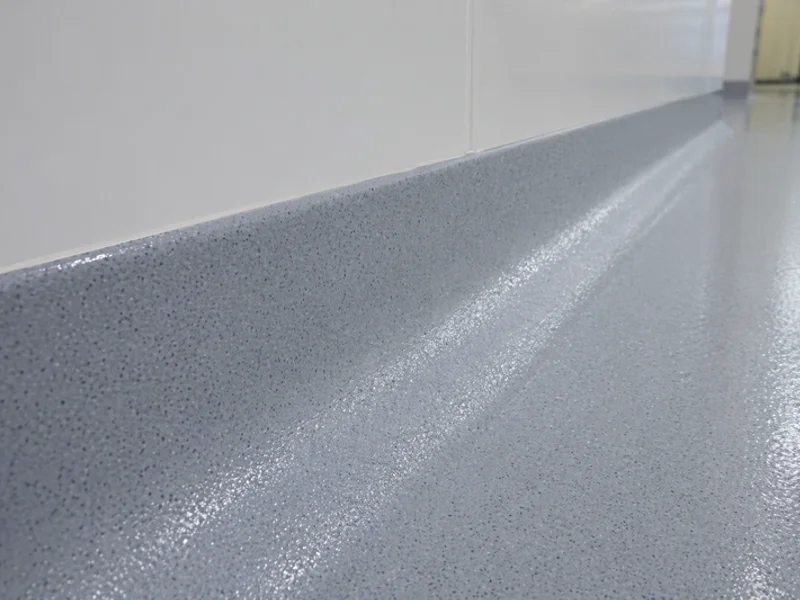
Integrated coving: the detail that passes audits
Loose floor-to-wall joints are exactly where auditors will flag a massive hygiene risk. We constantly see facilities fail inspections because grease, dirty water, and organic matter collect in sharp 90-degree corners. This buildup happens even if you follow a strict daily cleaning schedule.
Integrated coving creates a smooth radius curve that sweeps directly from the floor up onto the wall. Our installation method completely eliminates the corner, turning the floor and wall into one continuous surface. The standard coving radius for the food and beverage industry sits between 40mm and 50mm.
Pharmaceutical clean rooms often require a larger curve of 75mm to 100mm. We see many contractors make the critical mistake of using a cheap silicone retrofit for this joint. Silicone quickly peels and degrades in Malaysia’s high humidity and intense heat.
To prevent early failure, we follow a strict installation process for every wall joint:
- First, we cut a proper chamfer directly into the wall structure.
- Next, we shape the epoxy resin into a solid, curved profile.
- Finally, we seal the coving continuously so it becomes one piece with the floor.
This permanent construction guarantees bacteria has absolutely nowhere to hide.
Documentation you get at handover
A high-quality floor is useless during an inspection if you cannot prove its specifications on paper. Our team knows that Ministry of Health (MOH) and JAKIM auditors demand clear, verifiable proof of your facility’s safety standards. Scrambling to find technical documents is the last thing you want to do during a surprise inspection.
We ensure you are fully prepared from day one. The comprehensive handover pack we provide gives you physical copies of every crucial certificate and testing record.
- Full product data sheets (PDS) for every single resin system used in your floor.
- Official slip rating test certificates verifying DIN 51130 compliance.
- A customised chemical resistance matrix covering the actual heavy-duty cleaning chemicals you use.
- Detailed coving drawings and dimensional notes for structural verification.
- A signed cure verification record to prove the floor is food-safe.
- A clear, plain-language system warranty explaining exactly what is covered and what is excluded.
This is the exact paperwork your auditor wants to see. We provide all of this organised documentation the moment the job is finished.
You will never have to chase us with emails six months later just to get your warranty.
Investing in proper Food-Grade / HACCP Hygienic Flooring protects your business, your products, and your staff. Reach out to Epoxy Ninja Johor Bahru today, and let us help you build a facility that passes every audit with flying colours.
What you're getting.
Seamless, non-porous hygienic PU finish
Integrated coving (floor-to-wall radius) for auditor-friendly corners
Antimicrobial additive options for high-risk processing
R12-R13 slip ratings for wet and greasy processing floors
Compatible with JAKIM halal-compliant and ISO 22000 documentation
Real installs. Real factories.
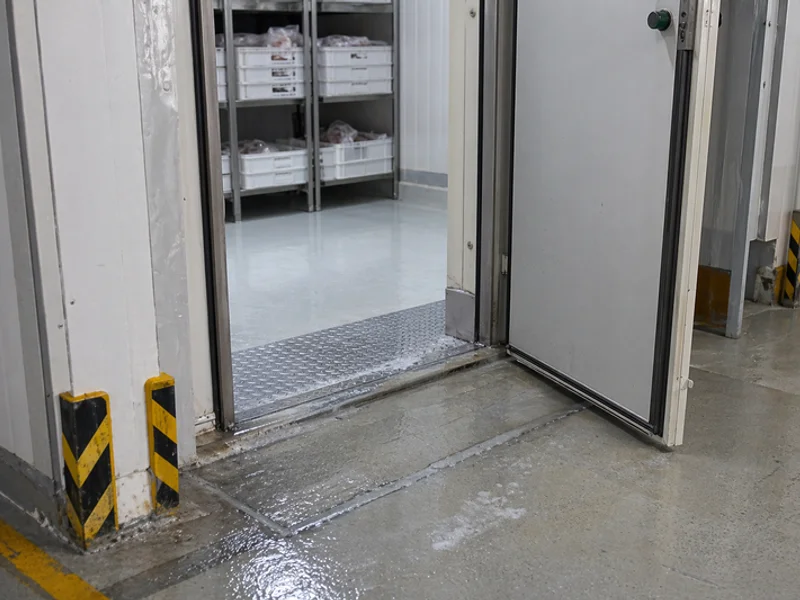
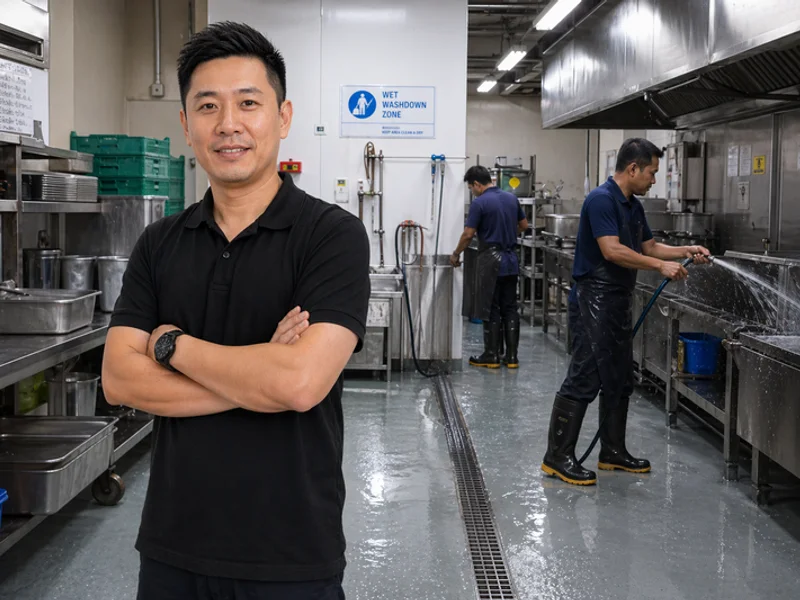
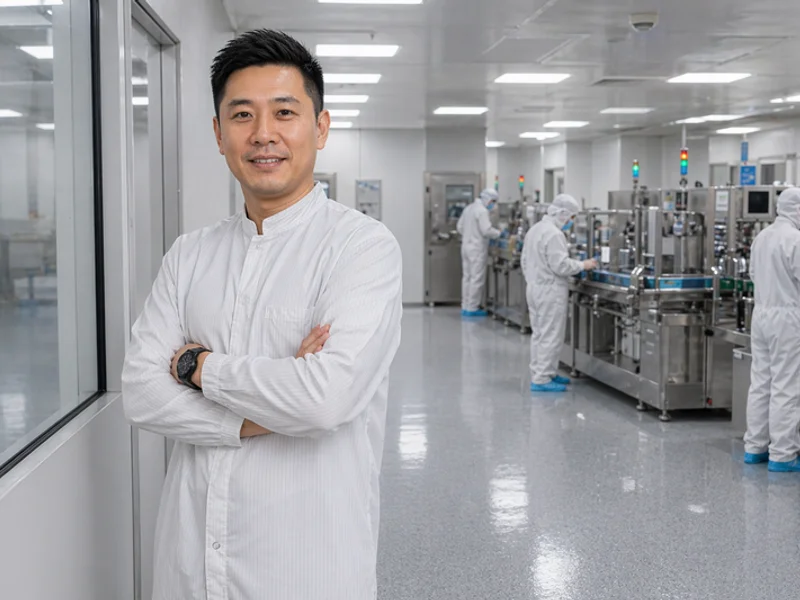
How we install it.
Audit-readiness walk-through
We walk every process zone: wet washdown, packaging, cold storage, coving detailing. Understand slip, drainage, and certification requirements first.
Tramex moisture scan
Full slab moisture mapping. Hygienic PU is unforgiving of slab vapor, so we map the whole area before quoting.
Substrate prep + crack repair
Diamond grinding to SSPC-SP13 profile. Crack routing and joint detailing. Cove-base chamfer cutting where coving radius requires it.
Primer + buildcoat + coving
Moisture-tolerant primer, buildcoat, integrated coving installed as a seamless system. No gaps, no hidden corners.
Topcoat + slip-rating aggregate
R-rated aggregate broadcast. Steam-cleanable topcoat applied. Cure verified. Handover includes PDS and spec sheets for auditors.
Free site visit. Tramex scan. Written BQ. No obligation.
We walk the slab, run the moisture readings, and give you a written scope before any commitment. Same-day response across Southern Malaysia.
Deeper on the system.
Guides covering the chemistry, cost, and common questions for this system.
Commercial Kitchen vs Cold Storage Flooring: Different Needs, Different Systems
Kitchen floors face grease and heat; cold storage faces thermal shock and condensation. Different systems for different conditions.
Read guideFood-Grade Flooring Requirements for F&B Facilities in Malaysia
What F&B facility floors actually need — wet/dry zoning, thermal shock, chemical, slip rating. Self-qualify your system spec.
Read guideHACCP-Compliant Flooring Cost Guide for Malaysia
HACCP-compliant hygienic PU flooring prices in Malaysia — base system, coving, slip aggregate, documentation. Realistic RM/sqft.
Read guideHygienic Coving: Floor-to-Wall Transitions for F&B and Pharma
Hygienic coving done right — radius, integral vs applied, wall-seal detail. The corner auditors always flag.
Read guideOperators who've worked with us.
5.0★ average from 12 verified Google reviews. No cherry-picking, no edits.
"Superb service by Epoxy Ninja team. Extremely transparent with their work with consistent progress update at all times. It's also worth mentioning that their price point is extremely reasonable for industry standard with quality-finish workmanship. Thank you for the great job well done!"
"We had our flooring done by a company called Epoxy Ninja, and it was an excellent experience. The owner, Michael, who I've known for quite some time, was very attentive to our needs. They listened carefully to what we wanted and worked with great precision. Epoxy Ninja truly delivers high-quality flooring that's durable and impressive. We highly recommend them for any flooring needs!"
"Michael and his team did a great job on my epoxy flooring. They were responsible, professional, and very thorough. The final result looks amazing and high-quality. Highly recommended!"
System questions.
Will your floor pass my HACCP audit?
HACCP is a facility-wide framework — it covers process flows, staff hygiene, records, and more beyond just flooring. What we guarantee is that the floor meets the technical requirements auditors look for: seamless non-porous finish, integrated coving radius, R12-R13 slip rating where required, steam-cleanable topcoat, and full documentation. You still need the rest of your HACCP plan in order, but flooring won't be the reason you fail.
What radius do you install for floor-to-wall coving?
Standard radius is 40-50mm for most F&B processing. Pharmaceutical clean areas sometimes specify 75-100mm. We confirm the radius spec with your QA or auditor before scoping, then chamfer-cut and cove the transition as one integrated system with the floor — not a separate retrofit.
Can hygienic PU handle daily steam cleaning?
Yes. Our hygienic PU systems are steam-cleanable up to about 80°C on standard systems, higher for urethane concrete grades. Chemical tolerance covers common food-industry cleaners (caustic sanitizers, peroxide-based disinfectants). We specify the topcoat based on your actual chemical regime.
What's the difference between hygienic PU and standard epoxy for food facilities?
Hygienic PU is elastomeric — it flexes with thermal cycling, survives washdown, and resists food acids. Standard epoxy is rigid — it cracks under thermal shock from steam cleaning or cold storage transitions. Food facilities that put standard epoxy in washdown zones are usually back in 18-24 months re-doing the floor.
Also worth considering.
Polyurethane (PU) Flooring
Full-depth polyurethane systems engineered for wet, hot, and chemical-heavy industrial environments where epoxy fails.
See specAnti-Slip Flooring (Wet Process Areas)
R9-R13 slip-rated anti-slip flooring engineered for wet processing, washdown areas, and safety-compliant outdoor ramps.
See specFloor Repair & Moisture Mitigation
Failure diagnosis and remediation for peeling, blistering, and delaminating industrial floors, powered by Tramex moisture mapping.
See specBook a site visit for this system. Tramex included.
Free Tramex moisture scan and a written BQ with no obligation. Same-day response across Southern Malaysia.