
HACCP-Compliant Flooring Cost in Malaysia
HACCP-compliant hygienic PU flooring prices in Malaysia — base system, coving, slip aggregate, documentation. Realistic RM/sqft.
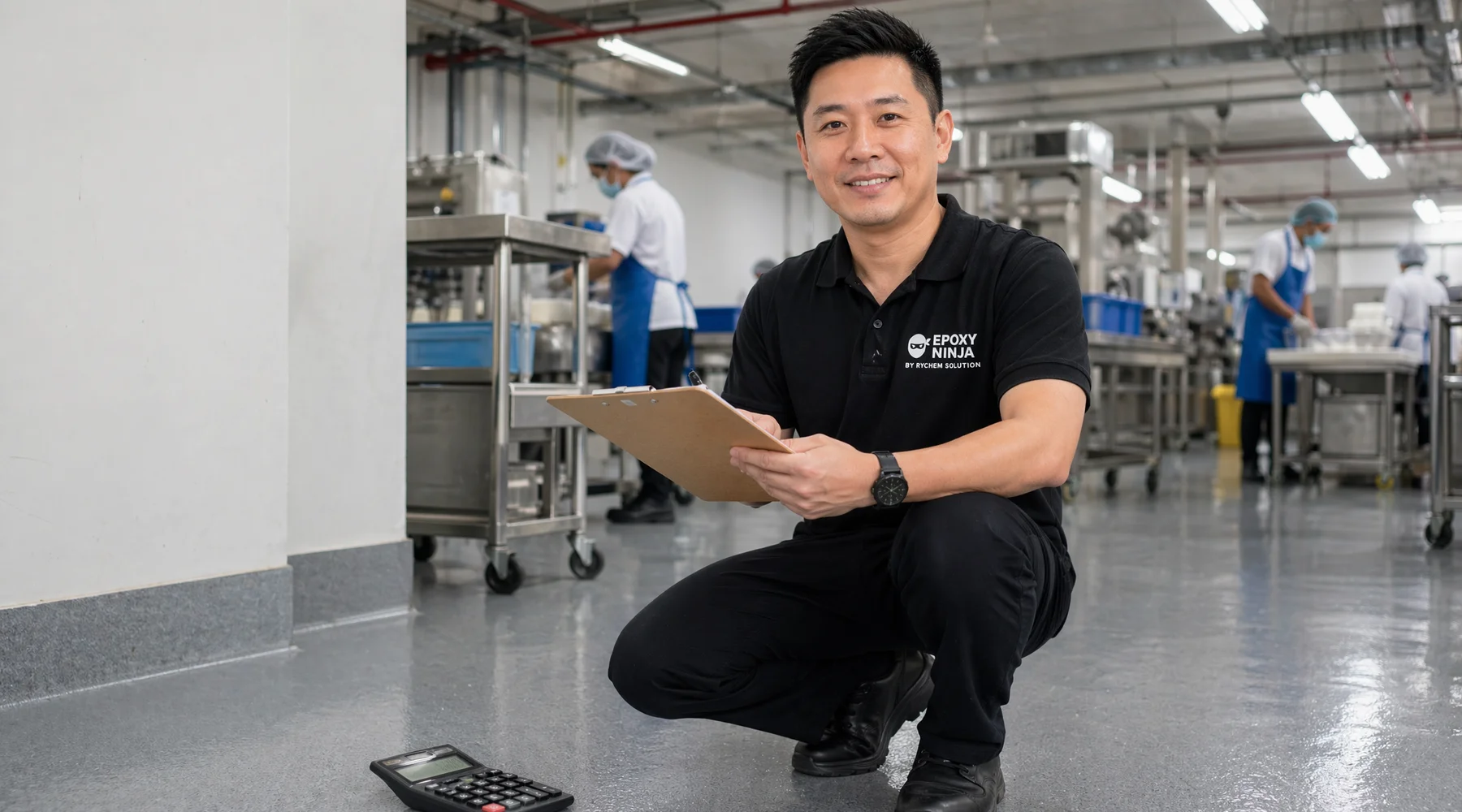
The short answer
Food facility managers across Malaysia face increasingly strict audits under the new MS 1480:2025 guidelines.
Researching the true haccp flooring cost malaysia is the first step to protecting your facility. The line between a pass and a costly operational shutdown often comes down to your surface specifications. We publish honest RM/sqft for HACCP-grade work and itemize the premium over standard epoxy.
For our HACCP flooring service, the exact financial numbers dictate your long-term success. The base polyurethane concrete systems usually cost between RM60 and RM220 per square foot. Let’s look at the data, see what it actually means for your budget, and explore practical ways to respond.
What this guide covers about HACCP flooring cost Malaysia
The main thing to understand first is the financial breakdown for a fully compliant setup.
We will review the RM/sqft range for hygienic PU, which typically sits between RM60 and RM220 depending on thickness. Other factors include the mandatory coving extras, slip-resistant aggregate upgrades, and how specific thickness requirements shift the total price.
RM/sqft range for hygienic PU (typical RM60-220 depending on thickness)
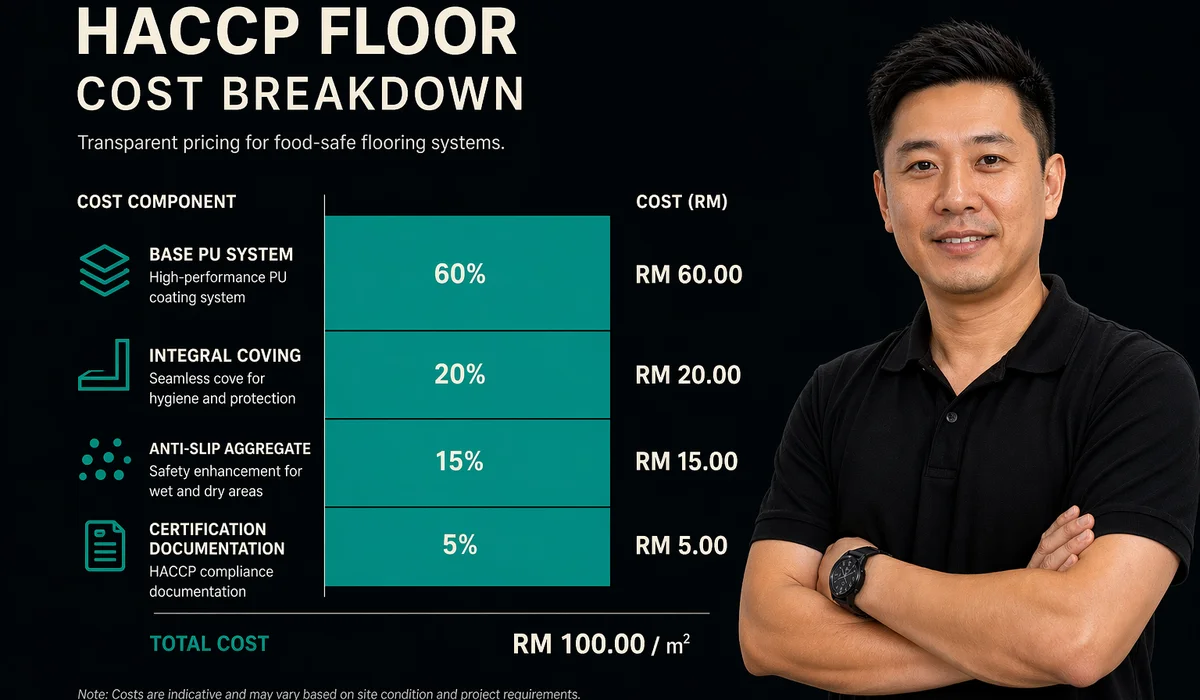
The hygienic pu cost per sqft sits between RM60 and RM220, heavily dictated by your chosen millimetre depth. In practice for Malaysian industrial sites, this range shows up as real numbers and real trade-offs. The decision threshold here depends on the slab condition, the chemical exposure, and the installer’s discipline.
We walk through these exact variables on every site visit across Johor. What you decide here drives 60 to 80 percent of your floor’s actual service life. Getting the call right the first time prevents expensive production halts later.
To put things in perspective, the food grade flooring price malaysia generally increases when top-tier polyurethane concrete products like Ucrete or Duracrete HD are required.
The Role of GMP Standards
The recent Malaysian Standard MS 1514 updates require food zones to have highly resistant surfaces. Basic epoxy degrades quickly when exposed to organic acids from poultry, dairy, or palm oil processing.
Heavy-duty PU concrete provides a continuous, joint-free barrier that resists these exact corrosive by-products.
| Flooring Type | Typical Application | Estimated Cost (RM/sqft) |
|---|---|---|
| Standard Epoxy (2mm) | Dry storage, walkways | RM15 - RM35 |
| Light-Duty PU (3mm) | Packaging zones, mild chemicals | RM60 - RM90 |
| Heavy-Duty PU (6mm - 9mm) | Meat processing, hot oil zones | RM100 - RM220 |
Coving add-on cost per linear metre
A flat floor is useless if the corners harbour bacteria. When factoring in your hygienic budget, you must calculate the extra linear metre rate for coving. Coving transforms that hard 90-degree angle into a curved transition.
Regulatory Coving Requirements
Malaysian food safety guidelines mandate a minimum 50mm radius for all coving in wet processing zones. This curve prevents food waste and dirty water from pooling in tight crevices during washdowns.
Our teams typically charge between RM40 and RM80 per linear metre for hand-trowelled PU coving. This price fluctuates based on the height of the cove base and the condition of the existing wall.
Here are the primary factors that influence your final coving bill:
- Wall material (brick, insulated panel, or concrete)
- Required coving height (standard is 100mm)
- Radius specifications (50mm minimum for MS 1480 compliance)
- Presence of existing damaged concrete
Slip aggregate broadcast premium
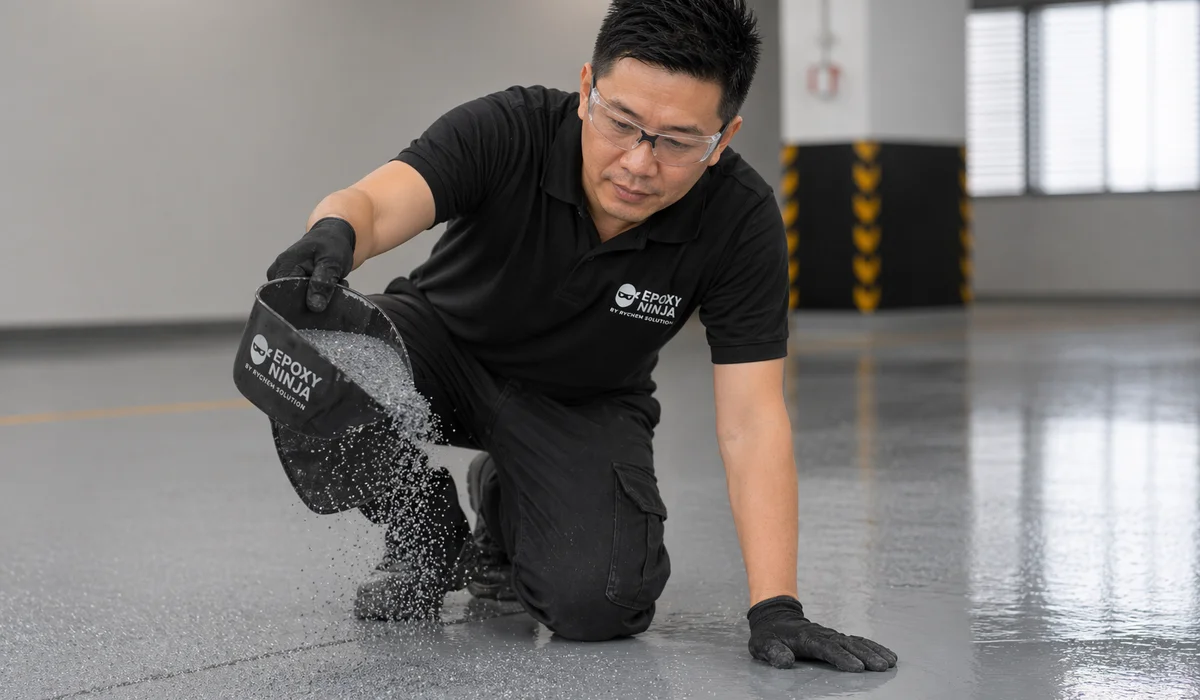
Wet processing floors present a major safety hazard for factory workers. Upgrading your floor with a slip-resistant texture costs an additional RM5 to RM15 per square foot. Adding a slip-resistant texture requires broadcasting silica sand or coloured quartz directly into the wet PU base coat.
Calculating the Texture Upgrade
We frequently see facilities fail safety inspections because their hygienic floors are too slick when coated in oil or animal fats. The premium covers both the raw material cost and the extra labour required to distribute the sand evenly.
Installers must sweep off the excess sand the next day and apply a final seal coat to lock the texture in place. A heavier broadcast uses up to 1 kilogram of quartz per square metre, which increases the material expenses.
Thickness impact on price
Specifying the correct millimetre depth is the most critical financial decision for your project. Moving from a 3mm to a 9mm thickness can triple your material costs but ensures thermal shock resistance. A cheaper 3mm layer will crack and delaminate within months under severe heat if specified incorrectly.
Matching Thickness to Temperature
Polyurethane concrete behaves differently at different depths. The physical thickness dictates how much heat the coating can absorb before it detaches from the concrete slab below.
| Thickness | Max Temperature Limit | Best Used For |
|---|---|---|
| 3mm | Ambient temperatures | Dry packing, foot traffic |
| 6mm | Up to 70°C | Hot water washdowns |
| 9mm | Up to 120°C | High-pressure steam cleaning |
A 9mm system requires three times the raw resin and aggregate compared to a light-duty 3mm floor. The sheer volume of material is why a heavy-duty f&b flooring price pushes toward the RM150 to RM220 ceiling.
Investing in the 9mm depth guarantees the floor will survive daily steam sterilisation without failing. We often guide clients away from cheaper 3mm systems for heavy-duty production rooms.
For a closer look at related considerations, read our Passing HACCP and GMP Floor Inspections in Malaysia guide.
What to do next
If you are weighing this decision for your facility, the fastest next step is a free site visit. We bring a Tramex CMEX5 moisture meter, walk the substrate, document the chemical and thermal exposure, and hand you a written BQ with the honest cost paths.
There is no obligation, and you receive a same-day response across JB, Pasir Gudang, Skudai, Senai, and Iskandar Puteri.
Our Food-Grade / HACCP Hygienic Flooring service page covers the system specifications in complete detail. Contact the Epoxy Ninja Johor Bahru team today to secure your exact haccp flooring cost malaysia.
Fast answers.
How much more does hygienic PU cost vs standard PU?
Typically 20-40% premium — driven by thicker buildcoat, coving, slip aggregate, and higher-grade topcoat.
Is the coving quoted separately from the floor?
Usually yes — coving is priced per linear metre because facility size doesn't linearly predict wall-perimeter length.
Does smaller facility = higher per-sqft cost?
Yes — setup, mobilization, and prep costs are largely fixed. Very small jobs carry a per-sqft premium.
More in this cluster.
Commercial Kitchen vs Cold Storage Flooring: Different Needs, Different Systems
Kitchen floors face grease and heat; cold storage faces thermal shock and condensation. Different systems for different conditions.
Food-Grade Flooring Requirements for F&B Facilities in Malaysia
What F&B facility floors actually need — wet/dry zoning, thermal shock, chemical, slip rating. Self-qualify your system spec.
Hygienic Coving: Floor-to-Wall Transitions for F&B and Pharma
Hygienic coving done right — radius, integral vs applied, wall-seal detail. The corner auditors always flag.
Passing HACCP and GMP Floor Inspections in Malaysia
What auditors check on your factory floor — non-conformances, documentation, pre-audit self-check. Get ready before the walk-through.
Ready for a real assessment? Free Tramex scan.
Guides are the general case. A site visit gives you the specific answer for your slab, your chemicals, and your operational conditions.