
Hygienic Coving: Floor-to-Wall Transitions Explained
Hygienic coving done right — radius, integral vs applied, wall-seal detail. The corner auditors always flag.
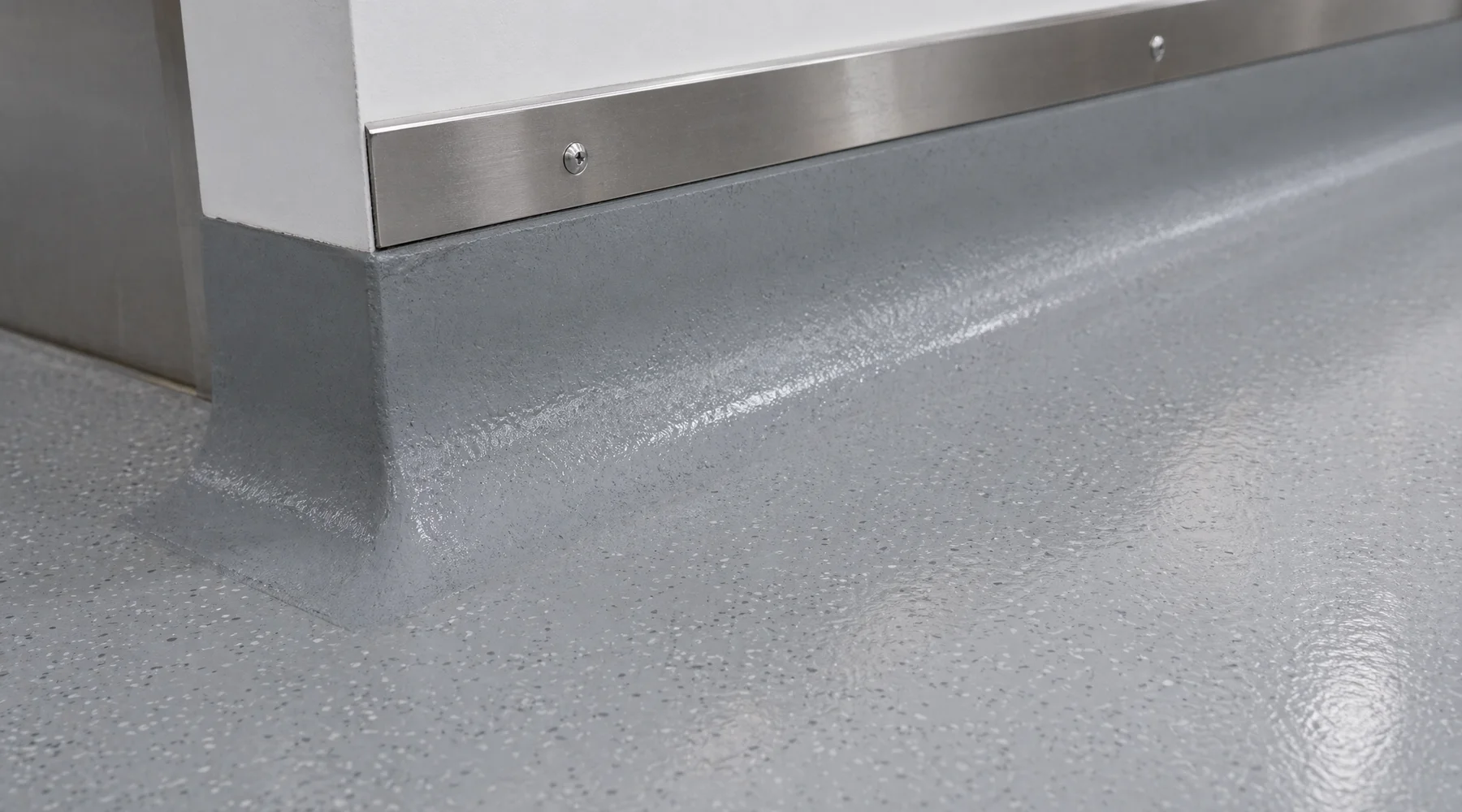
The short answer
Our team created this resource to clarify transition details so you can specify and inspect your hygienic coving food factory installations correctly.
This foundational element is exactly what separates a failing facility inspection from a successful one. You need a continuous curve that eliminates hard corners where washdown water pools and bacteria multiply.
For immediate technical specifications on installation, see our HACCP flooring service.
What this guide covers
This guide explains the exact haccp coving spec required to pass Malaysian food safety audits.
We see the costly mistakes facility managers make every single day at Epoxy Ninja Johor Bahru. An improper corner installation will guarantee failed swab tests and frustrating auditor non-conformities under local guidelines.
The following sections break down the specific components you must get right.
- Proper Radius Sizing: Specific measurements required for MS 1514 Good Manufacturing Practice (GMP) compliance.
- Material Selection: The structural differences between integral polyurethane and applied fillers.
- Cladding Integration: Proven methods for sealing the transition against wall panels.
- Audit Protection: Direct solutions for the most common structural failures flagged during inspections.
Minimum radius requirements (typical 40mm-75mm depending on jurisdiction)
Malaysian food safety standards generally dictate a floor to wall radius between 40mm and 75mm depending on the exact processing activity.
We always advise clients that a 50mm (roughly two-inch) curve is the absolute sweet spot. This specific measurement consistently satisfies both Ministry of Health (MOH) and SIRIM auditors during strict certification checks. A tight 90-degree corner creates an immediate red flag because it traps standing water and organic matter.
Our installation crews start every project with a moisture scan and a walk through the process zones. The actual thermal and chemical conditions must dictate the system you choose. This specific design choice drives up to 80% of your floor’s actual service life.
| Coving Radius Size | Best Facility Application | Audit Compliance Level |
|---|---|---|
| 40mm | Packaging zones and light foot traffic areas | Meets basic hygiene requirements |
| 50mm | Standard food processing and washdown zones | Optimal for MS 1514 and MS 1480 |
| 75mm | Heavy dairy, meat processing, and high-pressure wash areas | Exceeds all standard local guidelines |
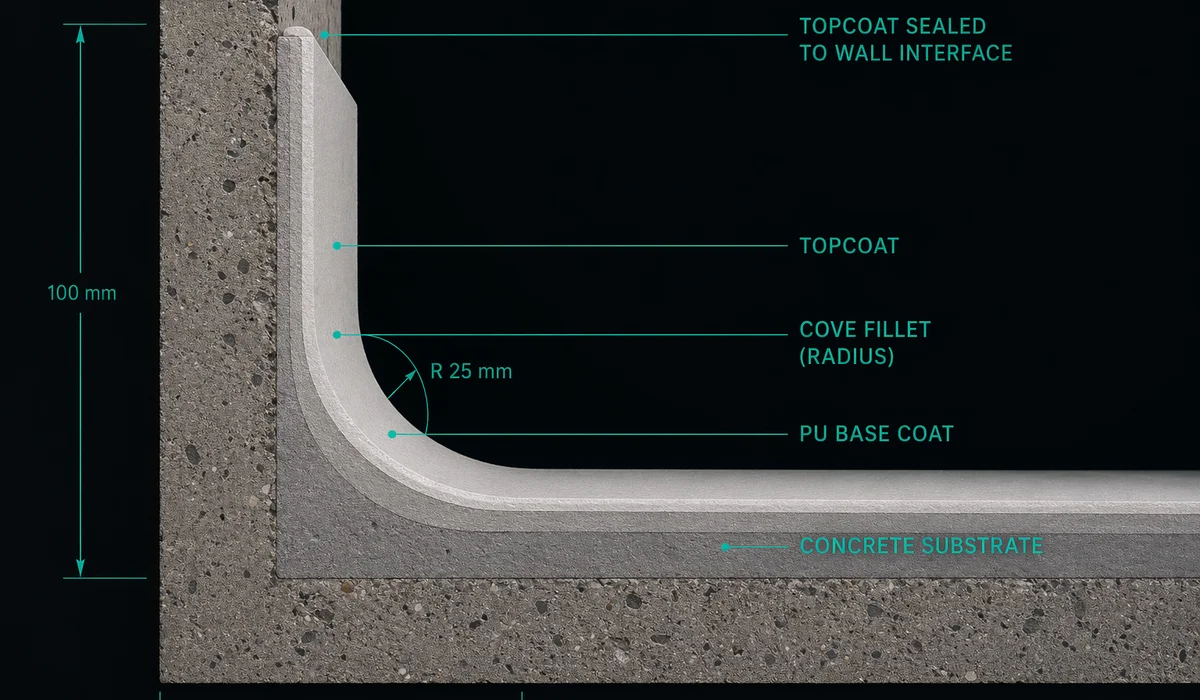
Integral (built up from floor material) vs applied (separate cove filler)
Integral coving is constructed continuously from the exact same heavy-duty resin as the floor, while applied coving relies on separate PVC strips glued into the corner.
Our engineers strongly recommend an integral coving pu system for any wet processing environment. Applied skirting creates a weak adhesive joint that will eventually peel away from the wall. A continuous polyurethane mortar transition offers vastly superior protection against moisture intrusion.
The chemical resistance differences are stark when you compare materials. Epoxy systems often corrode or turn yellow when exposed to the lactic acids common in dairy production. Heavy-duty PU mortar withstands extreme thermal shocks ranging from -40°C in freezing zones up to 120°C during aggressive steam cleaning cycles.
| Feature Comparison | Integral PU Mortar Coving | Applied PVC/Rubber Skirting |
|---|---|---|
| Thermal Resistance | Exceptional (Handles 120°C steam) | Poor (Adhesive melts under heat) |
| Chemical Resistance | High (Repels lactic and organic acids) | Low (Materials degrade quickly) |
| Bacterial Harborage Risk | Zero (Continuous unbroken surface) | High (Gaps form as adhesive fails) |
| Expected Lifespan | 10 to 15 years | 2 to 5 years |
Sealing detail to wall cladding or kerbing
The top edge of your hygienic coving must terminate perfectly flush against the wall panel or be sealed with an antimicrobial mastic.
We utilize a specialized technique called a termination chase to ensure a permanent mechanical lock. This involves cutting a physical groove directly into the concrete block or kerbing to anchor the top layer of the resin. An exposed upper edge will eventually catch washdown water, forcing moisture behind the coving and destroying the substrate.
Different wall materials require specific termination methods to guarantee long-term performance.
- Insulated Metal Panels (IMP): These flex during temperature changes and require a stainless steel termination bar for stability.
- Concrete Kerbing: Best suited for a deep, angled termination chase cut directly into the masonry.
- Food-Grade Wall Tiles: Demands a specialized flexible sealant to accommodate different expansion and contraction rates between the floor and the wall.
Common auditor findings (cracks, gaps, porosity)
Auditors consistently flag cracks, physical gaps, and porous surfaces at the floor-to-wall junction as major non-conformities.
Our team frequently repairs facilities that failed their assessments due to degrading corner materials. Under specific inspection frameworks like the BRCGS Food Safety standard, Clause 4.11.1 specifically targets equipment and facilities that are not maintained in a clean condition. Porous epoxy and separated PVC skirting act as perfect breeding grounds for dangerous pathogens like Listeria.
You must eliminate these specific failure points before your next site assessment.
- Adhesive Failure: High-pressure washdown water easily penetrates behind applied skirting strips, which rots the backing and drywall.
- Thermal Shock Cracking: Standard epoxy fractures violently when operators spray it with 90°C water during sanitation shifts.
- Chemical Pitting: Harsh alkaline cleaners and organic acids eat away at low-grade resin mixtures, creating microscopic holes that harbour bacteria.
For a closer look at related considerations, read our Food-Grade Flooring Requirements for F and B Facilities guide.
What to do next
If you are weighing this structural decision for your facility, the fastest next step is a free site assessment. A professional evaluation completely removes the guesswork from your compliance upgrades.
We bring a Tramex CMEX5 moisture meter to accurately walk the substrate and document your exact chemical and thermal exposures. This data allows us to hand you a written BQ with honest, transparent cost paths. There is absolutely no obligation, and we provide same-day responses across JB, Pasir Gudang, Skudai, Senai, and Iskandar Puteri.
Our Food-Grade / HACCP Hygienic Flooring service page covers the complete system specification in detail.
Fast answers.
What's the minimum cove radius for HACCP compliance?
Typical Malaysian practice: 40mm-50mm minimum radius. Some pharma and export-oriented auditors push for 75mm. Confirm with your audit scheme.
Can I install cove separately from the floor?
Applied coves exist but integral coves are the gold standard — no joint means no cracking, no harbourage, nothing for auditors to flag.
Why does cove keep cracking at the vertical edge?
Usually substrate movement or substrate moisture pushing the cove off the wall. Fix the substrate; re-form the cove.
More in this cluster.
Commercial Kitchen vs Cold Storage Flooring: Different Needs, Different Systems
Kitchen floors face grease and heat; cold storage faces thermal shock and condensation. Different systems for different conditions.
Food-Grade Flooring Requirements for F&B Facilities in Malaysia
What F&B facility floors actually need — wet/dry zoning, thermal shock, chemical, slip rating. Self-qualify your system spec.
HACCP-Compliant Flooring Cost Guide for Malaysia
HACCP-compliant hygienic PU flooring prices in Malaysia — base system, coving, slip aggregate, documentation. Realistic RM/sqft.
Passing HACCP and GMP Floor Inspections in Malaysia
What auditors check on your factory floor — non-conformances, documentation, pre-audit self-check. Get ready before the walk-through.
Ready for a real assessment? Free Tramex scan.
Guides are the general case. A site visit gives you the specific answer for your slab, your chemicals, and your operational conditions.