
Commercial Kitchen vs Cold Storage Flooring
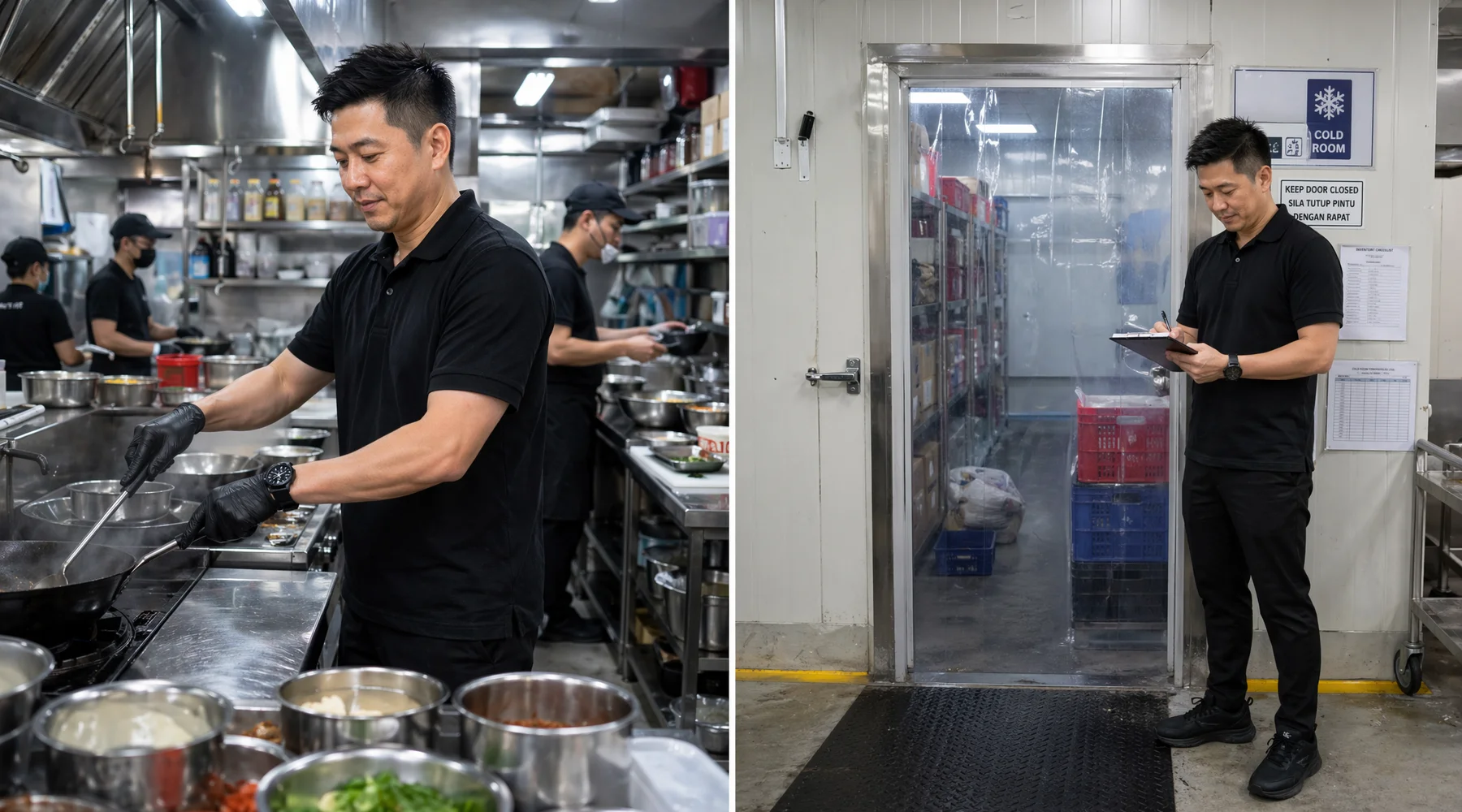
Kitchen floors face grease and heat; cold storage faces thermal shock and condensation. Different systems for different conditions.
The short answer
You know how quickly a mismatched floor can shut down a food facility. Commercial kitchens require extreme heat resistance, while cold storage demands protection against sub-zero thermal shock.
We see flooring failures constantly when these basic rules are ignored.
A 9mm thick polyurethane concrete floor handles steam cleaning up to 120°C, and you can explore how we apply this in our HACCP flooring service. Let’s review the data behind these temperature extremes and look at the practical ways to specify the correct chemistry.
| Feature | Commercial Kitchen | Cold Storage |
|---|---|---|
| Primary Threat | Hot oil spills & steam cleaning | Sub-zero blasts & ice build-up |
| Temperature Range | Up to 120°C | Down to -25°C |
| Required Chemistry | Heavy-duty Polyurethane (PU) | Flexible Polyurethane (PU) |
What this guide covers
This guide breaks down the exact specifications needed to pass Malaysian food safety standards. You will learn the specific chemistry required to handle severe temperature swings and heavy traffic.
Our goal is to help you match your floor to your exact operating conditions. The data shows that 80% of major injuries in food manufacturing happen due to slips and falls. Proper flooring design prevents these accidents and ensures compliance with MS 1514:2009 Good Manufacturing Practice (GMP).
Here is exactly what we will examine as we compare commercial kitchen flooring vs cold storage flooring:
- Kitchen hazards: Handling hot cooking oil and heavy impact.
- Cold room risks: Managing condensation and extreme freezing.
- Shared standards: Meeting strict HACCP hygiene requirements.
Commercial kitchen demands
Kitchen environments expose floors to severe punishment through boiling liquids, heavy carts, and constant cleaning. The honest rule of thumb: match the chemistry to the conditions, not the other way round.
We always warn facility managers that specifications ignoring real operating conditions fail first. A standard epoxy coating will easily blister and peel when exposed to 120°C steam cleaning. Polyurethane concrete, installed at a thickness of 6mm to 9mm, provides a thermal coefficient of expansion similar to the concrete substrate below.
This matching expansion rate prevents cracks when hot oil spills occur.
Key Kitchen Hazards
Kitchen floors must defend against four primary threats to maintain a safe working environment.
- Grease: Cooking oils and animal fats aggressively degrade basic floor paints.
- Heat: Daily steam washing creates rapid thermal expansion.
- Slip: Wet zones require a textured, anti-slip surface profile.
- Impact: Dropped heavy pots and dragged equipment cause severe gouging.
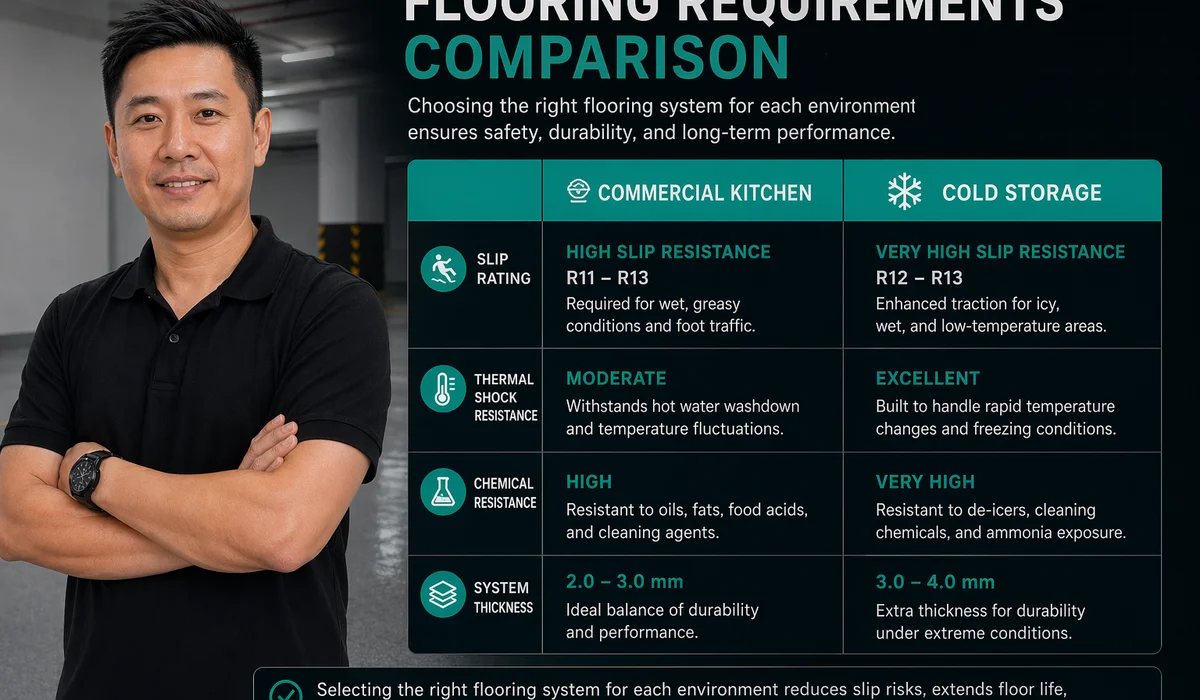
Cold storage demands
Freezers and chiller rooms present a completely different set of structural challenges. The honest rule of thumb: match the chemistry to the conditions, not the other way round.
Our site inspections often reveal shattered floors caused by extreme thermal contraction. Specifications that ignore real operating conditions fail first. When a cold store operates at -25°C, the flooring material pulls tight and shrinks.
A rigid epoxy will snap under this tension, leading to severe debonding and hygiene risks.
Sub-Zero Challenges
Heavy-duty polyurethane systems remain slightly flexible even at extreme low temperatures. You must account for these three specific cold room challenges during the design phase to protect your investment.
- Thermal shock: Rapid temperature drops from open freezer doors.
- Condensation: Moisture build-up requires proper falls to stainless steel drainage.
- Slip at sub-zero transitions: Frost and ice create severe slip hazards at doorways.
Recommended systems for each
Polyurethane (PU) concrete mortar is the undisputed champion for both high heat and sub-zero food processing environments. The honest rule of thumb: match the chemistry to the conditions, not the other way round.
We recommend specific systems based on the operating temperatures of your facility. Specifications that ignore real operating conditions fail first. A 9mm application of premium polyurethane concrete, such as NovaCrete PU MF or Flowfresh HF, offers the necessary durability.
This is one of the areas we walk through on every site visit. What you decide here drives 60% to 80% of your floor’s actual service life, making it worth getting the call right the first time.
Thickness Dictates Performance
You cannot cut corners on material thickness if you want the floor to survive thermal shock. It is the defining factor in determining pu for kitchen vs freezer applications.
| Area | Recommended System | Required Thickness |
|---|---|---|
| Heavy Cooking Zones | Heavy Duty PU Concrete | 9mm to 12mm |
| Walk-in Freezers | Heavy Duty PU Concrete | 6mm to 9mm |
| Dry Storage | Medium Duty PU | 4mm to 6mm |
Shared requirements
Both hot and cold processing zones must meet strict Malaysian food safety regulations. The honest rule of thumb: match the chemistry to the conditions, not the other way round.
Our team ensures every installation complies fully with local health standards. Specifications that ignore real operating conditions fail first. Pathogens like Salmonella and E. coli can quickly multiply in cracked grout lines or porous concrete.
HACCP International guidelines mandate surfaces that prevent any bacterial infiltration.
Mandatory Hygiene Features
Modern polyurethane systems incorporate silver-ion antimicrobial agents to actively inhibit bacterial growth. You must ensure your specified flooring includes these four critical elements.
- Seamless: A continuous surface with no joints for dirt to hide.
- Hygienic: Non-porous materials that block liquid absorption.
- Coved: Curved skirting that eliminates sharp 90-degree floor-to-wall corners.
- Cleanable: Appropriate falls laid toward stainless steel drainage channels.
For a closer look at related considerations, read our Food-Grade Flooring Requirements for F and B Facilities guide.
What to do next
If you are weighing this decision for your facility, the fastest next step is a free site assessment. A proper evaluation requires specialized tools, so we bring a Tramex CMEX5 moisture meter to accurately read your concrete substrate.
Our inspection process documents the exact chemical and thermal exposure your floor will face. After walking the site, we will hand you a written BQ outlining the honest cost paths. There is zero obligation, and you get a same-day response across JB, Pasir Gudang, Skudai, Senai, and Iskandar Puteri.
You can review our Food-Grade / HACCP Hygienic Flooring service page for a detailed breakdown of the system specifications. Reach out today to schedule your consultation and secure your facility.
Fast answers.
Can one floor system serve both a kitchen and adjacent cold room?
Rarely — the thermal and chemical profiles differ. Zoning the floor with appropriate transitions is standard practice.
What's the biggest mistake in commercial kitchen flooring?
Specifying epoxy. Standard epoxy softens around 60°C; kitchens hit that regularly at the wash-down cycle. PU is the reliable choice.
How do transitions between kitchen and freezer get handled?
Coved threshold with matched slip rating, drainage slope if wet, and a hard stop between the two floor systems at the threshold line.
More in this cluster.
Food-Grade Flooring Requirements for F&B Facilities in Malaysia
What F&B facility floors actually need — wet/dry zoning, thermal shock, chemical, slip rating. Self-qualify your system spec.
HACCP-Compliant Flooring Cost Guide for Malaysia
HACCP-compliant hygienic PU flooring prices in Malaysia — base system, coving, slip aggregate, documentation. Realistic RM/sqft.
Hygienic Coving: Floor-to-Wall Transitions for F&B and Pharma
Hygienic coving done right — radius, integral vs applied, wall-seal detail. The corner auditors always flag.
Passing HACCP and GMP Floor Inspections in Malaysia
What auditors check on your factory floor — non-conformances, documentation, pre-audit self-check. Get ready before the walk-through.
Ready for a real assessment? Free Tramex scan.
Guides are the general case. A site visit gives you the specific answer for your slab, your chemicals, and your operational conditions.