
Food-Grade Flooring Requirements for F&B Facilities
What F&B facility floors actually need — wet/dry zoning, thermal shock, chemical, slip rating. Self-qualify your system spec.
The short answer
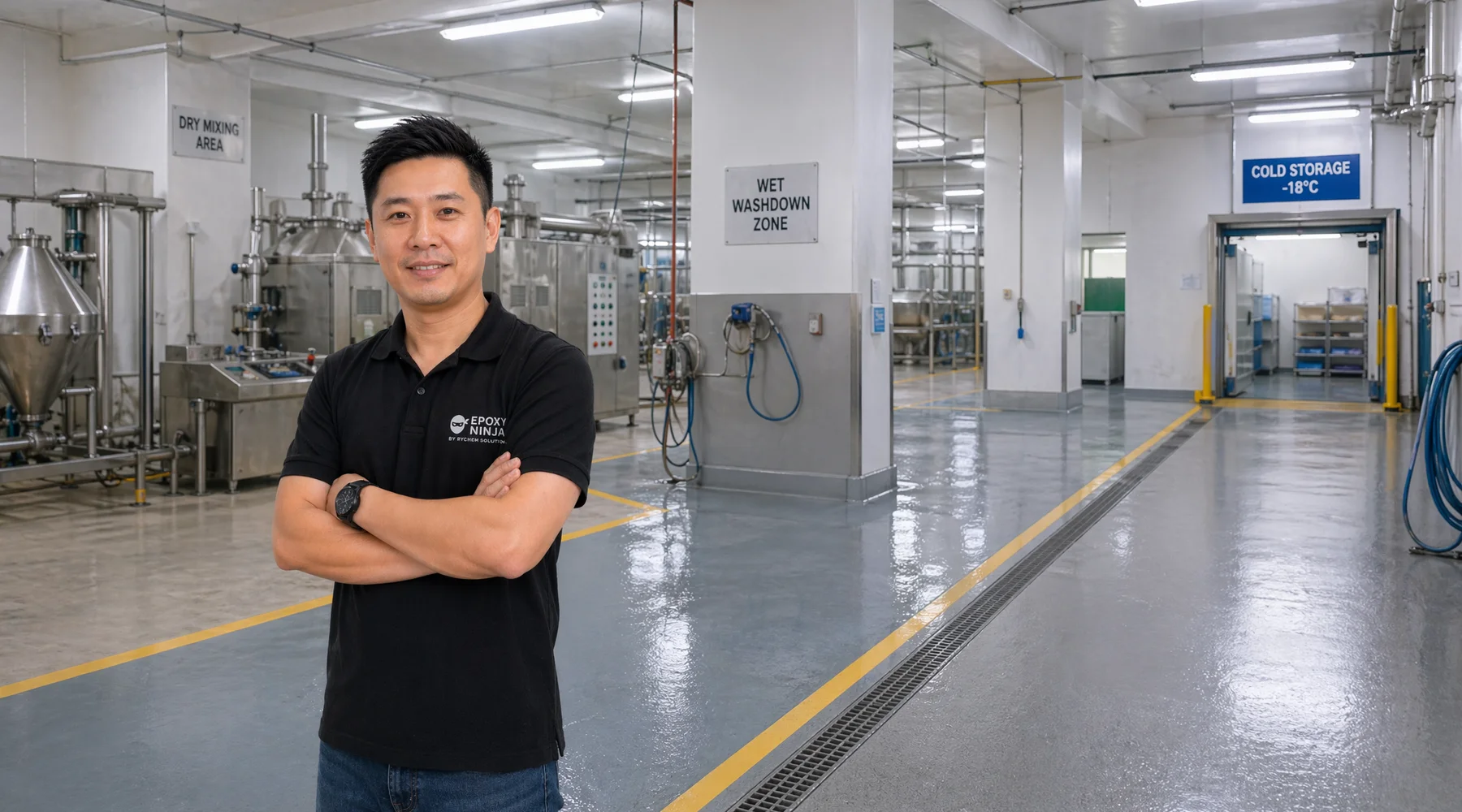
We set the standard for quality in the industrial flooring sector by always advising clients to work backwards from their daily operations to determine the exact food grade flooring requirements malaysia mandates for their facility.
The core answer involves matching specific process zones to the right material chemistry and slip rating to pass MS 1514 GMP and MeSTI audits. A clear mapping strategy prevents costly tear-outs and production downtime later.
Our team provides detailed specifications and installations, which you can review at our HACCP flooring service.
Starting with the wet versus dry process classification eliminates most guesswork immediately. Regulatory compliance becomes much more manageable using this approach.
What this guide covers
This guide breaks down the exact f&b flooring specification criteria required for different manufacturing environments across the country. You will learn how to choose the correct system based on thermal shock exposure, chemical spills, and the DIN 51130 slip resistance standards.
We built this resource to help facility managers avoid the common mistake of applying standard commercial epoxy in heavy washdown zones. Understanding the wet versus dry process zone matrix is the most critical first step.
A simple miscalculation here often leads to early floor failure.
Our site assessments always begin with this fundamental distinction.
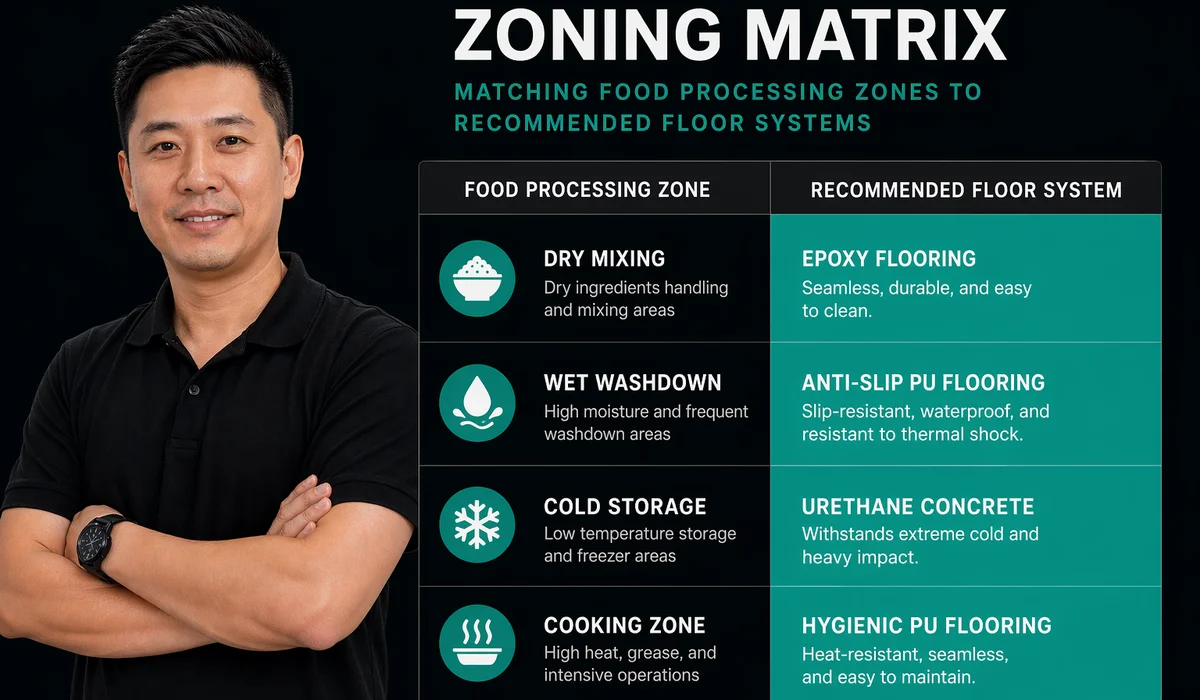
Wet vs dry process zone matrix
For industrial facilities across Malaysia, the practical guidance is to start with a moisture scan and let the specific process conditions dictate the system. Dry zones, like packaging lines or ingredient storage, can often safely use a standard 2mm to 3mm self-levelling epoxy.
We walk through these distinct areas on every site visit to ensure accurate classification. Wet processing zones require a completely different approach due to continuous water exposure and organic buildup.
A 6mm to 9mm polyurethane cement system is mandatory for these harsh environments to prevent water ingress and bacterial growth.
Our experience shows that matching the chemistry to the zone drives up to 80% of the floor’s actual service life.
Key Differences Between Zones
Getting this initial assessment right saves immense frustration down the road. A single floor failure can halt production for an entire week.
Our team uses a simple baseline to separate these areas.
- Dry Zones: Packing areas and dry storage usually handle ambient temperatures well.
- Wet Zones: Cooking, washing, and draining areas face constant moisture and temperature fluctuations.
- Material Choice: Epoxy works for dry spaces, while wet areas demand heavy-duty polyurethane cement.
- Cost Implication: Using the right material in each zone optimises your budget without sacrificing safety.
Thermal-shock zones (steam, hot fill, cold storage)
Areas facing extreme temperature changes require a thick polyurethane cement system rather than standard epoxy. When a commercial kitchen floor spec involves boiling water spills or high-pressure steam cleaning, standard coatings will expand, contract, and inevitably crack.
We see this exact failure pattern frequently in local dairies and breweries. A standard epoxy resin typically reaches its glass transition phase and begins failing around 60°C.
A 9mm thick polyurethane cement floor can withstand continuous exposure up to 120°C.
Temperature Resistance Comparison
Our team references these baseline limits when designing a specification.
| System Type | Thickness | Max Temperature Limit | Common Application |
|---|---|---|---|
| Standard Epoxy | 2mm - 3mm | Up to 60°C | Dry packing, ambient storage |
| Polyurethane Cement | 4mm - 6mm | Up to 90°C | Hot washdowns, light cooking |
| Heavy-Duty PU Cement | 9mm | Up to 120°C | Steam cleaning, blast freezers (-40°C) |
Cold storage rooms also benefit from this material flexibility. Rapid temperature drops from ambient to -40°C in blast freezers cause rigid floors to delaminate from the concrete substrate.
We highly recommend matching the floor thickness directly to the maximum temperature exposure of your cleaning protocols.
Chemical exposure by process (oils, acids, cleaning agents)
Protecting your concrete slab requires identifying the exact food factory floor requirements for chemical resistance in your specific processing lines. Organic acids and harsh alkaline cleaning agents will rapidly eat through inadequate floor coatings, leaving the porous concrete exposed to dangerous bacteria.
We carefully evaluate the safety data sheets of your daily sanitisation chemicals before proposing a solution. Lactic acid from milk and cheese processing is notoriously destructive to standard epoxy floors.
Citric acids found in juice processing or phosphoric acids used in Clean-In-Place systems cause similar deterioration.
Common Chemical Hazards in Food Production
Our preferred approach utilises heavy-duty polyurethane mortar because it naturally resists these harsh organic compounds. A properly cured polyurethane surface acts as an impenetrable barrier against fats, oils, and hot grease.
Blood and protein-based contaminants simply wash away without penetrating the surface profile.
We always remind clients that a chemical attack often starts subtly as a slight discolouration before escalating into full delamination.
- Dairy Byproducts: Lactic acids aggressively degrade unprotected concrete and basic coatings.
- Beverage Production: Sugars, citric acids, and yeast create a highly corrosive acidic environment.
- Meat Processing: Blood and animal fats demand a non-porous, easily sanitised surface.
- Sanitisation Procedures: Hot caustic sodas and phosphoric CIP chemicals require extreme chemical tolerance.
Taking the time to match the floor chemistry to your process chemistry is a non-negotiable step for long-term durability. The right specification protects your facility against costly, unexpected health inspector violations.
Slip resistance by process (R9 dry, R11 moderate wet, R12-R13 washdown)
Selecting the correct slip resistance rating based on the DIN 51130 standard ensures your staff can work safely without the floor becoming impossible to clean. The balance between traction and hygiene is critical, as overly textured floors trap dirt and bacteria.
We use a specific grading scale to broadcast aggregates into the wet resin during installation to achieve the exact profile required. An R9 rating provides minimal traction and is only appropriate for completely dry areas like packaging or administrative zones.
Commercial kitchens and moderate wet areas typically require an R11 rating to prevent slips from occasional oil and water spills.
Matching the R-Rating to the Hazard
Our crews often install R12 rated profiles in dairy plants and general food production halls that face constant moisture. The R13 category delivers the highest level of slip resistance available under this standard.
Abattoirs, heavy meat processing plants, and areas with deep grease buildup absolutely require an R13 surface.
We ensure the final topcoat encapsulates these anti-slip aggregates properly so the floor remains compliant with Halal and MeSTI cleaning protocols. Here is a simple breakdown of how the DIN 51130 ratings apply to food manufacturing.
The right profile keeps workers safe while allowing cleaning crews to efficiently sanitise the area at the end of a shift.
We always demonstrate physical sample boards so your team can feel the exact texture before making a final decision.
- R9 (Low Risk): Dry storage, corridors, and packaging areas.
- R11 (Moderate Risk): Commercial kitchens, light washdown zones, and areas with occasional spills.
- R12 (High Risk): Dairy processing, wet food production, and frequent hot water cleaning areas.
- R13 (Extreme Risk): Slaughterhouses, deep fryer zones, and heavy fat processing lines.
Finding the optimal texture is a conversation that must involve your production managers and cleaning staff. A floor that is too rough will tear up mops and increase your daily cleaning labour costs.
For a closer look at related considerations, read our Hygienic Coving: Floor-to-Wall Transitions guide.
What to do next
If you are evaluating flooring options for your facility, the fastest and most accurate next step is a comprehensive site assessment. A visual inspection alone cannot reveal underlying moisture issues within the concrete slab.
We bring a specialized Tramex CMEX5 moisture meter to accurately read the substrate conditions before making any recommendations. Documenting the specific chemical and thermal exposure of your process zones allows for an accurate bill of quantities.
Clear, honest pricing paths eliminate surprises during the installation phase.
What to Expect During a Site Visit
Our team provides same-day responses for facility visits across JB, Pasir Gudang, Skudai, Senai, and Iskandar Puteri.
- Moisture Testing: Identifying hidden slab moisture using advanced Tramex equipment.
- Zone Mapping: Charting your wet, dry, and thermal shock areas.
- Chemical Review: Matching your cleaning agents to the correct resin chemistry.
- Transparent Pricing: Delivering a written BQ with honest cost paths.
Every detailed proposal includes specific guidance on meeting local health inspector guidelines. Upgrading your facility to meet modern compliance standards is a critical investment in your operational future.
We encourage you to review the technical details on our Food-Grade / HACCP Hygienic Flooring service page to see exactly how these systems perform.
Fast answers.
Do I need the same floor system across the whole plant?
Usually no — wet zones need PU/HACCP spec, dry zones can use epoxy. Zoning saves cost without compromising compliance.
What slip rating does a commercial kitchen need?
Typically R11-R12 behind cooking lines, R10 in prep areas, R9 in dining-service passage. Auditors sometimes spec higher per local practice.
Does halal zoning require separate floors?
Not separate floor systems, but cleanable transitions and no cross-contamination pathways between halal and non-halal zones — a coving detail question.
More in this cluster.
Commercial Kitchen vs Cold Storage Flooring: Different Needs, Different Systems
Kitchen floors face grease and heat; cold storage faces thermal shock and condensation. Different systems for different conditions.
HACCP-Compliant Flooring Cost Guide for Malaysia
HACCP-compliant hygienic PU flooring prices in Malaysia — base system, coving, slip aggregate, documentation. Realistic RM/sqft.
Hygienic Coving: Floor-to-Wall Transitions for F&B and Pharma
Hygienic coving done right — radius, integral vs applied, wall-seal detail. The corner auditors always flag.
Passing HACCP and GMP Floor Inspections in Malaysia
What auditors check on your factory floor — non-conformances, documentation, pre-audit self-check. Get ready before the walk-through.
Ready for a real assessment? Free Tramex scan.
Guides are the general case. A site visit gives you the specific answer for your slab, your chemicals, and your operational conditions.