
Industrial PU Flooring Lifespan — What to Expect
Industrial PU flooring lifespan by system type — with abrasion ratings, what shortens life, and recoat vs replace decision points.
The short answer
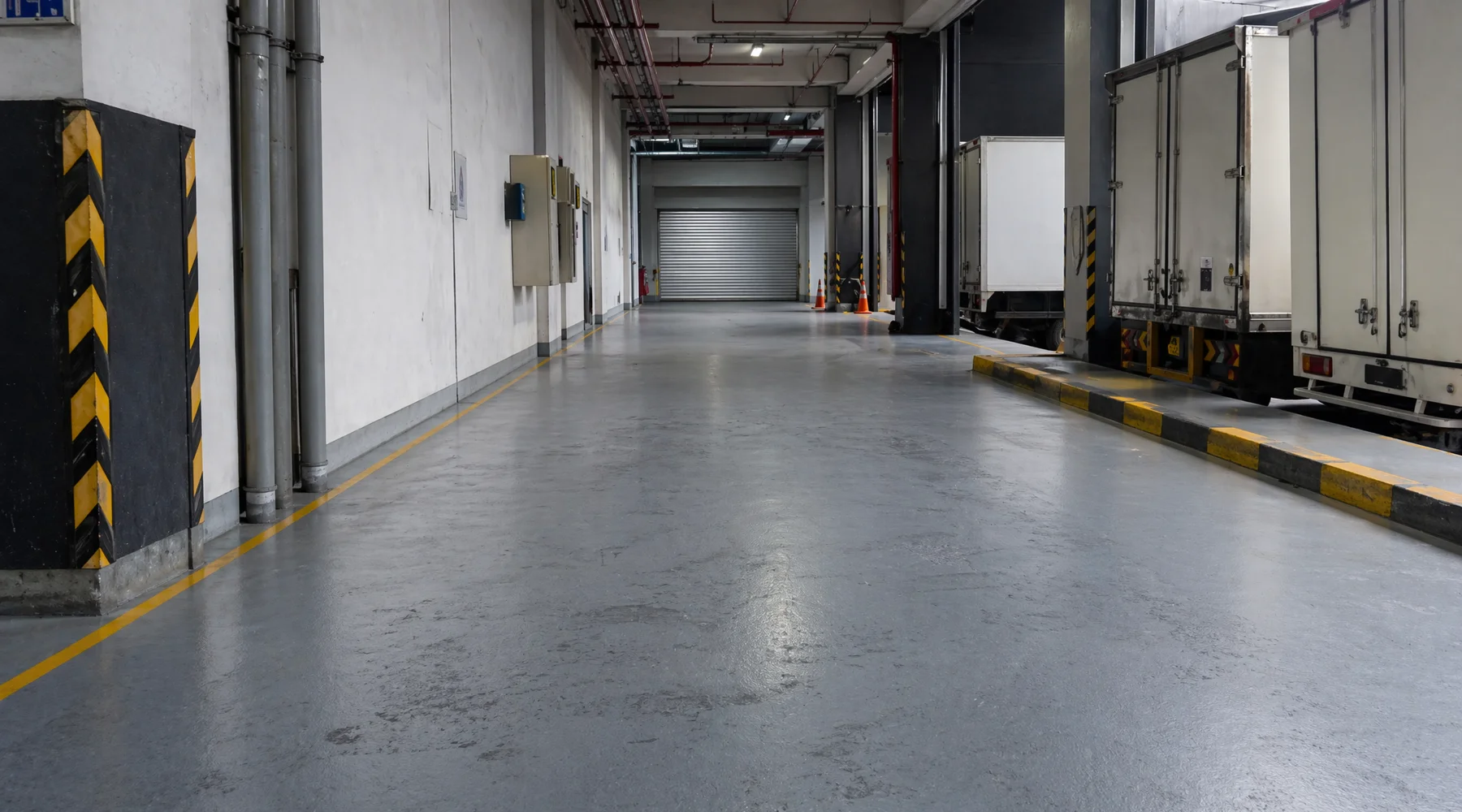
How long does industrial PU flooring last? Standard polyurethane floors provide a solid 7 to 10 years of reliable service.
We find that upgrading to a heavy-duty PU mortar pushes that lifespan to between 12 and 20 years. Urethane concrete systems can easily exceed two decades even in harsh manufacturing environments.
Our team observes these exact lifespans across facilities in Johor Bahru. Proper maintenance directly impacts how well the surface holds up over time. We evaluate expected service life by system type and carefully list the factors that extend or shorten it.
You can explore these specific options on our PU flooring service page.
What this guide covers
The main thing to understand first is that material thickness and chemical formulation dictate your floor’s endurance. Expected service life breaks down into three distinct categories based on these specifications. Standard PU gives you 7 to 10 years, PU mortar lasts 12 to 20 years, and urethane concrete provides 20 or more years of wear.
We will detail the exact abrasion ratings and mechanical stressors that affect these timelines. You will learn how forklift traffic and chemical spills specifically degrade different coatings over time.
Expert Insight: Identifying your primary wear factor before selecting a product is the single most important step in extending your floor’s lifespan.
Our goal is to give facility managers in Malaysia the exact data needed to make an informed upgrade.
Expected service life
Polyurethane flooring lifespan ranges from 7 years for basic coatings to over 20 years for premium urethane concrete. The exact duration depends entirely on the specific system you install and the daily abuse it takes. We determine the actual wear rate by inspecting the current concrete condition and operations.
The problem is usually diagnosable from a proper Tramex scan and a substrate walk-through. Once the cause is clear, the remediation path becomes obvious, whether that means spot repair, zonal remediation, or full replacement.
Our technicians frequently install heavy-duty systems like GrecoFloor PU-HD for food processing plants in Pasir Gudang. This specific urethane concrete handles extreme thermal shocks from daily steam cleaning. We see standard thin-film coatings fail within five years under those exact same conditions.
Here is a breakdown of typical service life by system type:
- Standard PU (7-10 yr): Best for light manufacturing and pedestrian zones.
- PU mortar (12-20 yr): Ideal for medium-duty facilities using products like Textraco BC-Crete MF.
- Urethane concrete (20+ yr): Required for high-impact zones and heavy chemical exposure.
Abrasion ratings (ASTM D4060) by system
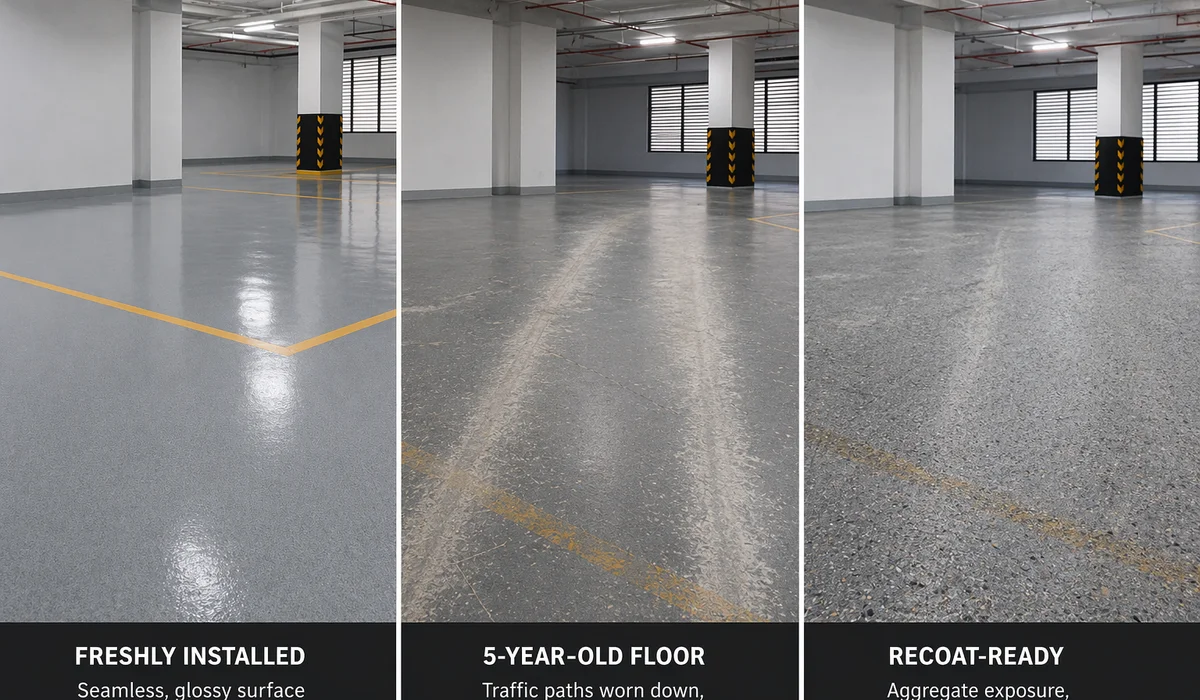
Abrasion resistance dictates how much material grinds away under heavy traffic, measured via the ASTM D4060 standard. A lower milligram (mg) loss number directly translates to a longer pu floor wear life. We look closely at these ratings when specifying a finish for high-traffic logistics centers.
The problem is usually diagnosable from a proper Tramex scan and a substrate walk-through. Once the cause is clear, the remediation path becomes obvious, whether that means spot repair, zonal remediation, or full replacement.
We use the ASTM D4060 Taber Abraser test to compare durability objectively. This standardized test rotates an abrasive wheel over the cured resin to simulate years of rolling loads.
| Flooring System Type | Example Product | ASTM D4060 Abrasion Loss | Best Application |
|---|---|---|---|
| Standard PU | Sikafloor-324 | ~65 mg loss | Light assembly lines |
| PU Mortar | Weberfloor PUR HD | ~83 mg loss | Wet processing areas |
| Urethane Concrete | Hybri-Gard PQ | ~55 mg loss | Heavy manufacturing |
For example, Sikafloor-324 standard polyurethane shows roughly 65 mg of loss after 1,000 cycles. Industrial-grade PU mortars like Weberfloor PUR HD record about 83 mg loss but offer significantly higher compressive strength. Our team relies on these precise figures to prevent premature surface failure.
This specific abrasion data is something we walk through on every single site visit. What you decide here drives 60 to 80 percent of your floor’s actual service life, so it is worth getting the call right the first time.
Mechanical wear factors
Heavy equipment movement and sharp impacts act as the primary mechanical wear factors that destroy industrial flooring. Constant forklift turning and dragged pallets will quickly grind down a standard coating if the surface lacks sufficient compressive strength. We install specialized PU modified cementitious systems like NovaCrete PU MF specifically to combat this physical abuse.
The problem is usually diagnosable from a proper Tramex scan and a substrate walk-through. Once the cause is clear, the remediation path becomes obvious, whether that means spot repair, zonal remediation, or full replacement.
Pro Tip: Facility managers often overlook the damage caused by uneven concrete substrates beneath the coating. Uneven surfaces force forklifts to bounce, which magnifies the impact force and chips the polyurethane.
Our technicians see rapid floor degradation near loading docks and tight warehouse aisles across Malaysia. When a three-ton forklift pivots sharply, the wheels apply massive lateral forces that tear at the topcoat. We always recommend proper mechanical grinding and leveling before applying any new resin.
Here are the most common mechanical stressors:
- Forklift traffic: Sharp turns in narrow aisles apply extreme lateral friction to the coating.
- Impact: Dropped tools or heavy metal components easily crack rigid epoxy, whereas flexible PU absorbs the shock.
- Pallet drag: Pushing wooden pallets with exposed nails across the floor leaves deep gouges that compromise the waterproof seal.
Chemical wear factors outside the spec’d matrix
Harsh industrial chemicals and organic acids will eat through incompatible flooring materials in a matter of months. Exposing a floor to solvents or cleaning agents outside its engineered chemical resistance matrix drastically reduces its lifespan. We frequently assess chemical damage in Malaysian food and beverage plants caused by unapproved cleaning protocols.
The problem is usually diagnosable from a proper Tramex scan and a substrate walk-through. Once the cause is clear, the remediation path becomes obvious, whether that means spot repair, zonal remediation, or full replacement.
Our team often encounters failing floors in palm oil processing facilities and commercial kitchens due to oleic and lactic acid exposure. Standard epoxy blistering under hot cooking oil is a common sight in Johor-based factories.
Here are the chemicals that cause the most severe degradation:
- Organic food acids: Lactic acid from dairy or oleic acid from palm oil degrades standard resins.
- Hot CIP chemicals: Strong caustic sodas used in brewery cleaning lines require heavy-duty urethane concrete.
- Industrial solvents: Petrochemical spills dissolve the chemical bonds in basic polyurethane topcoats.
We highly recommend specifying products like Sikafloor-29 PurCem LP for environments dealing with aggressive organic acids. This vertical-grade polyurethane mortar resists high concentrations of alkalis and solvents that destroy cheaper alternatives.
We walk through these exact chemical specifications on every single site visit. What you decide here drives 60 to 80 percent of your floor’s actual service life, so it is worth getting the call right the first time.
For a closer look at related considerations, read our Polyurethane Flooring Cost Guide for Malaysia guide.
What to do next
If you need to replace a failing surface, scheduling a professional substrate evaluation is the most critical next step. An accurate moisture and structural assessment ensures your new polyurethane floor durability matches your operational needs. We provide these detailed inspections directly to industrial clients throughout the region.
If you are weighing this decision for your facility, the fastest next step is a free site visit. We bring a Tramex CMEX5 moisture meter, walk the substrate, document the chemical and thermal exposure, and hand you a written BQ with the honest cost paths. There is no obligation, and you get a same-day response across JB, Pasir Gudang, Skudai, Senai, and Iskandar Puteri.
Our Polyurethane (PU) Flooring service page covers the system spec in detail. Reviewing those specifications will help you understand exactly how long does pu flooring last in your specific manufacturing environment.
Fast answers.
Can I extend PU lifespan with a recoat?
Yes — most PU systems can be recoated every 5-8 years if the buildcoat is intact and substrate is dry. This extends total life by ~40-60%.
What shortens PU life most quickly?
Chemical exposure beyond the system's rated matrix, untreated moisture under the slab, and repeated pallet-drop impact at the same zone.
Does UV affect PU flooring?
For interior floors, rarely. Aromatic PU systems yellow under direct UV — aliphatic PU is used for UV-exposed decks or carparks.
More in this cluster.
Polyurethane Flooring Cost Guide for Malaysia (RM per Square Foot)
Polyurethane flooring prices in Malaysia — standard PU, PU mortar, urethane concrete. RM ranges and what drives quote variance.
PU Flooring for Cold Storage and Freezer Rooms in Malaysia
PU mortar systems for freezer rooms, cold storage, and transition zones. Thermal shock, condensation, and slip resistance covered.
PU Flooring Installation Process and Timeline (What to Expect)
Day-by-day PU flooring install — prep, primer, base, broadcast, topcoat, cure. Return-to-service windows for planning shutdown.
When to Choose PU Over Epoxy in Wet and Thermal-Shock Environments
When wet washdowns, steam cleaning, or thermal cycling force PU over epoxy — real decision rules with examples.
Ready for a real assessment? Free Tramex scan.
Guides are the general case. A site visit gives you the specific answer for your slab, your chemicals, and your operational conditions.