
PU Flooring Installation Process & Timeline
Day-by-day PU flooring install — prep, primer, base, broadcast, topcoat, cure. Return-to-service windows for planning shutdown.
The short answer
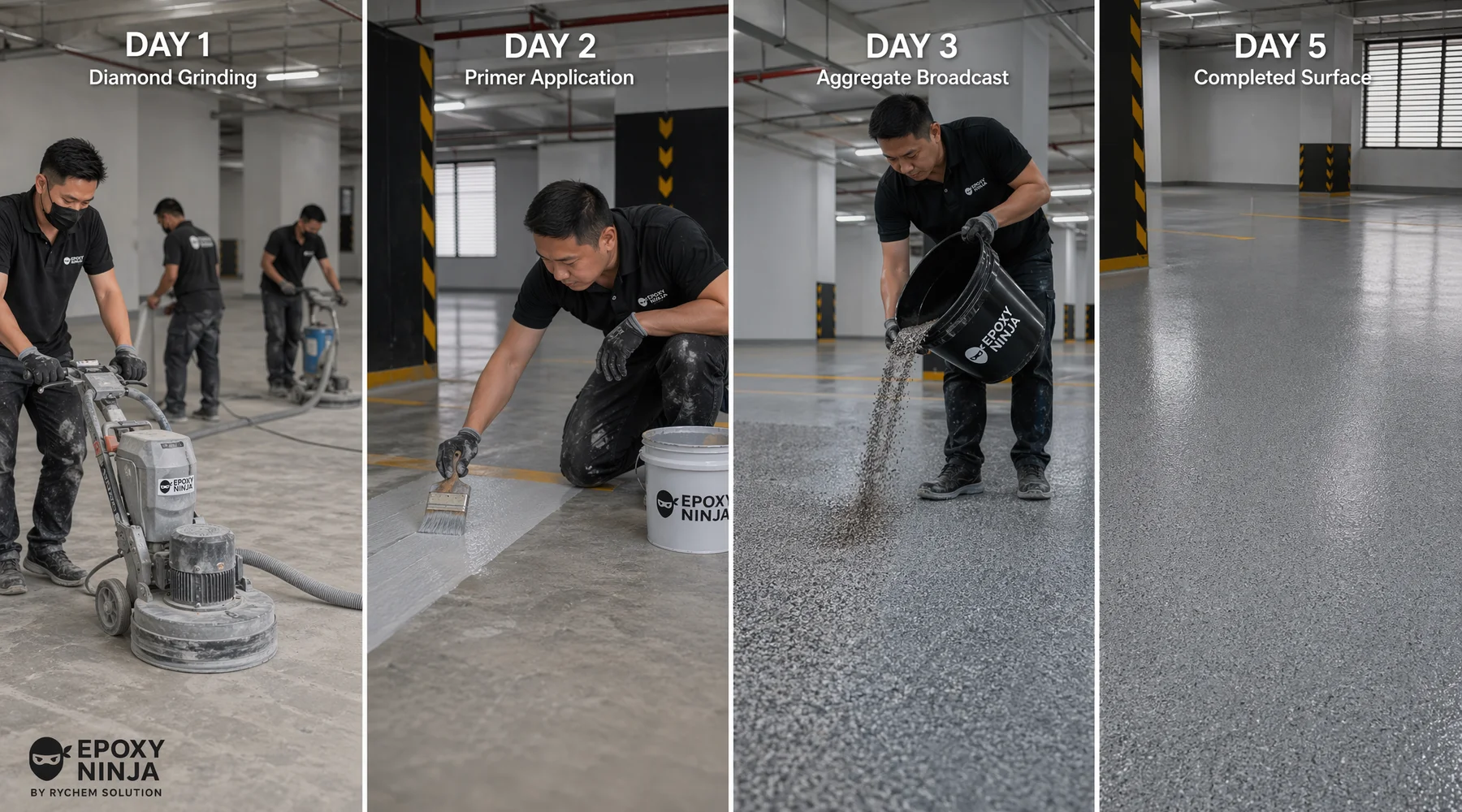
We publish a realistic, day-by-day install schedule so your factory flooring shutdown planning is based on real cure windows rather than optimistic marketing claims. A standard pu flooring installation process malaysia typically requires three to five days from initial grinding to final curing.
For a full breakdown of the materials used in this process, see our PU flooring service.
We establish these clear timelines as the experts at Epoxy Ninja Johor Bahru to help you manage a smooth facility upgrade. A predictable workflow prevents unexpected delays in your production schedule. Specific environmental factors will dictate the exact speed of the chemical reactions.
What this guide covers regarding the pu flooring installation process malaysia
Our project managers will walk you through the day-by-day schedule covering surface preparation, primer, base application, broadcast, and topcoat. The main thing to understand first is how each sequential step relies entirely on the success of the previous one. Temperature dependencies significantly impact the polyurethane cure time across different working zones.
We outline the exact return-to-service windows so you can coordinate staffing and heavy machinery deliveries accurately. Critical quality assurance checkpoints serve as mandatory milestones during the project. A deep understanding of these metrics allows facility managers to spot errors before the resin hardens.
Day-by-day schedule
We find that the pu floor install timeline directly dictates the duration of your operational downtime. In practice for Malaysian industrial sites, the timeline translates into real production numbers and calculated trade-offs. The cost delta or decision threshold here depends on the existing slab condition, chemical exposure levels, and the installer’s discipline.
Our teams modify the baseline schedule when dealing with severe concrete damage or high moisture readings. Proper planning requires breaking the project down into distinct daily phases. A standard 500-square-metre food and beverage processing zone generally requires four full days of work.
| Phase | Typical Timeline | Key Action |
|---|---|---|
| Prep | Day 1 | Shotblasting the concrete to CSP 4 or 5 and cutting anchor trenches. |
| Primer | Day 2 | Applying a specialised resin to seal the slab and prevent outgassing. |
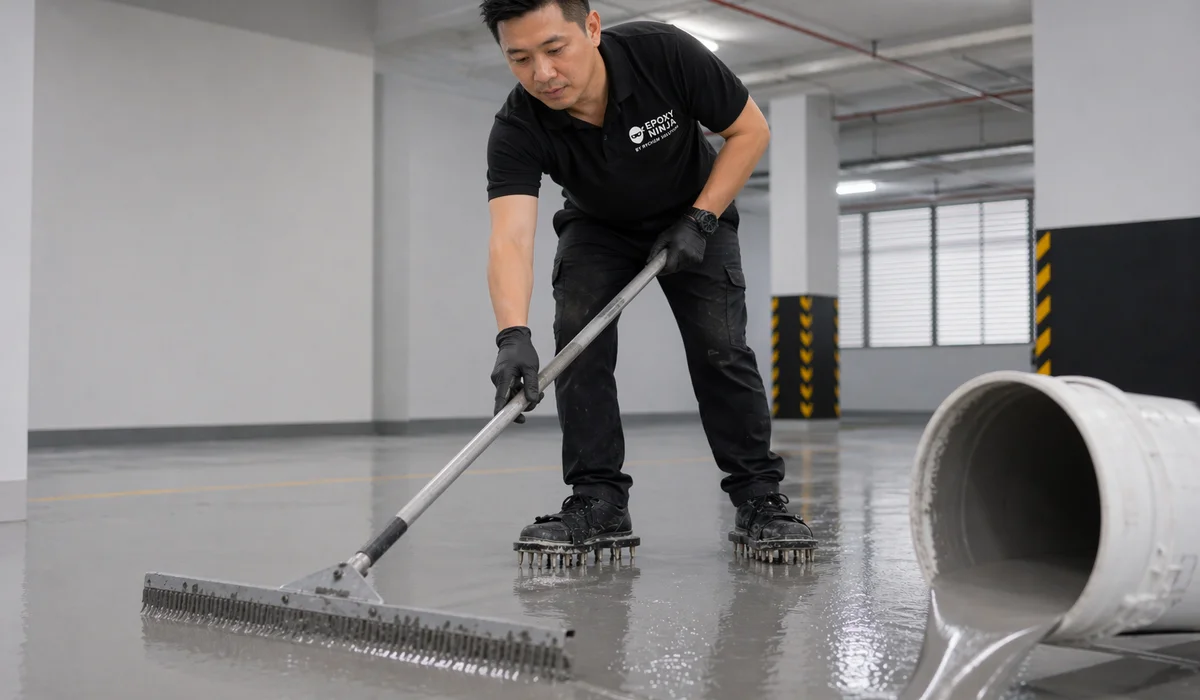
| Base | Day 3 | Troweling the 4mm to 6mm heavy-duty slurry across the floor. |
| Broadcast | Day 3 | Adding silica quartz sand into the wet resin for slip resistance. |
| Topcoat | Day 4 | Sweeping excess sand and applying the final chemical-resistant seal. |
We enforce strict drying periods between each of these phases to guarantee maximum adhesion. Skipping a curing window usually results in catastrophic delamination under forklift traffic. A disciplined approach to this schedule ensures a durable finish that easily withstands harsh washdowns.
Return-to-service windows
We emphasise that fast turnaround times remain the biggest advantage of choosing this advanced chemical system. In practice for active Malaysian industrial sites, these precise waiting periods introduce real numbers and necessary trade-offs. The cost delta or decision threshold here depends on operational urgency and the severity of the expected chemical exposure.
Our technicians strictly enforce these traffic guidelines to prevent permanent indentations in the curing resin. Specific milestones dictate exactly when different types of activity can resume. The following windows provide a safe baseline for a floor curing at standard ambient temperatures.
- Foot traffic: We clear the floor for light foot traffic after just 8 to 12 hours of curing. A standard operator can safely walk the surface to conduct basic visual inspections at this point.
- Light wheel: Light wheel activity is officially permitted at the 24-hour mark. Our safety protocols allow manual pallet jacks carrying up to 500kg to move across the area after this first day.
- Forklift: Full forklift traffic requires a solid 48 hours of uninterrupted curing time. Heavy motorised equipment with hard rubber tyres demands a structurally sound mechanical bond.
- Full chemical: We instruct clients to wait three to five days before exposing the new floor to full chemical washdowns. The polymer matrix must fully cross-link before resisting concentrated acids or hot cooking oils. Rushing this final phase compromises the protective barrier and shortens the surface lifespan.
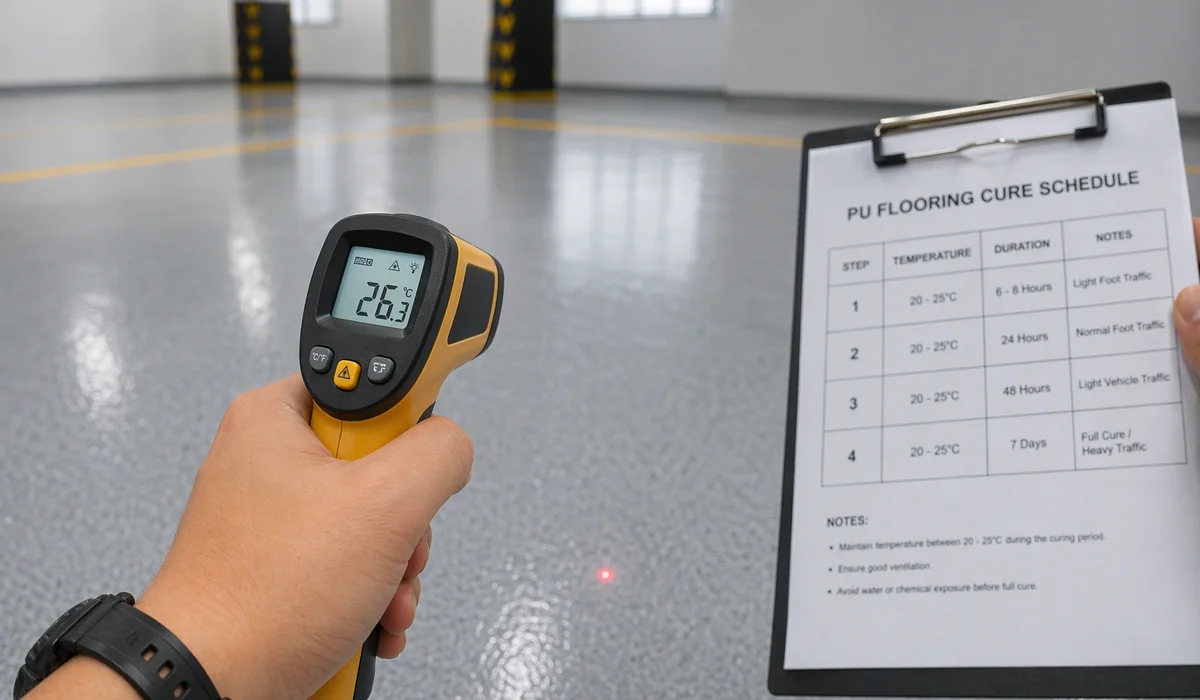
Temperature dependencies on cure (PU cures faster above 25°C)
We continuously monitor ambient conditions because the local tropical climate drastically alters how these chemical systems behave. These thermal variables present real numbers and trade-offs for installation teams. High heat significantly shortens the working pot life of the mixed resin.
Our applicators must work rapidly at typical Malaysian warehouse temperatures of 28°C to 32°C. A standard polyurethane batch behaves very differently across varying facility zones. The specific environmental conditions dictate the immediate action required on site.
- Ambient warehouses (28°C+): We evaluate these hot zones carefully because the resin might only remain workable for 10 to 15 minutes.
- Air-conditioned processing (20°C): The chemical reaction stabilises here to offer a comfortable 25-minute pouring window.
- Cold storage rooms (10°C): Chilled environments drastically slow down the curing process and require specialised winter-grade formulas.
Critical QA checkpoints the client should witness
We firmly encourage facility owners to be actively present during major quality assurance testing phases. You should verify the quality of the preparation work before any resin touches the concrete. The cost delta or decision threshold for repairing a failed floor later is simply too high to ignore these steps.
Our supervisors will pause the installation to demonstrate that the substrate preparation meets strict international standards. Catching a critical error early drives 60 to 80 percent of your floor’s actual service life. Getting the call right the first time prevents massive operational disruptions down the road.
Concrete moisture and profile testing
We use a Tramex CMEX5 moisture meter to confirm the concrete holds less than six percent moisture content. The raw slab must also possess an aggressive physical texture to grip the thick resin. Industry standards mandate achieving a Concrete Surface Profile of CSP 4 or 5 for heavy-duty mortar systems.
Our crews utilise heavy shotblasting equipment to create this required mechanical profile. Skipping the moisture test practically guarantees blistering as trapped vapor attempts to escape. A smooth surface will cause the base layer to peel away within months.
Wet film thickness verification
We document specific depth readings across a grid to ensure uniform protection against heavy impacts. The base layer must achieve the exact thickness specified in your initial contract. A specialised metal tool called a Wet Film Thickness comb is pressed directly into the fresh resin.
Our application teams check these measurements constantly during the pouring phase. A floor that cures too thin will quickly fracture under the weight of a busy forklift route. Consistent thickness ensures reliable chemical resistance across the entire facility.
Edge detailing and anchor trenches
We invite clients to inspect the perimeter cuts before any primer is mixed on site. Polyurethane mortar exhibits significant shrinkage stress as it hardens. Contractors must cut 5mm by 5mm anchor trenches at all doorways, drains, and transition points.
Our installers use these grooves to lock the edges of the resin firmly into the slab. Missing anchor cuts inevitably result in the edges lifting and cracking. Proper edge detailing separates a professional installation from a temporary fix.
For a closer look at related considerations, read our Polyurethane Flooring Cost Guide for Malaysia guide.
What to do next
We recommend scheduling a free site visit if you are weighing this flooring decision for your facility. Executing a successful pu flooring installation process malaysia requires accurate data about your specific factory environment.
A professional assessment removes the guesswork from your facility shutdown planning.
We bring a Tramex CMEX5 moisture meter, walk the substrate, and document your specific limits. The assessment covers three vital areas:
- You will discover your current concrete moisture levels and surface profiling needs.
- Our team outlines the exact recommendations for chemical and thermal resistance.
- A written bill of quantities provides honest cost paths based on real field data.
There is no obligation, and same-day response is readily available across JB, Pasir Gudang, Skudai, Senai, and Iskandar Puteri.
Our comprehensive Polyurethane (PU) Flooring service page covers the system specifications in full detail. Making an informed choice now secures the long-term safety of your production floor. Reach out today to secure your preferred installation dates.
Fast answers.
How long is the full shutdown for a 1,000 sqm PU floor?
Typically 5-7 days start to full chemical resistance. Foot traffic at 24 hours, forklift at 48-72 hours.
Can PU cure faster if we raise the temperature?
Slightly — but forcing cure with heat risks solvent entrapment and surface defects. Better to plan a realistic window than rush.
What happens if it rains during the cure?
Indoor pours are unaffected if the envelope is sealed. Outdoor carpark decks require tarping and monitoring through the cure window.
More in this cluster.
How Long Does Industrial Polyurethane Flooring Last?
Industrial PU flooring lifespan by system type — with abrasion ratings, what shortens life, and recoat vs replace decision points.
Polyurethane Flooring Cost Guide for Malaysia (RM per Square Foot)
Polyurethane flooring prices in Malaysia — standard PU, PU mortar, urethane concrete. RM ranges and what drives quote variance.
PU Flooring for Cold Storage and Freezer Rooms in Malaysia
PU mortar systems for freezer rooms, cold storage, and transition zones. Thermal shock, condensation, and slip resistance covered.
When to Choose PU Over Epoxy in Wet and Thermal-Shock Environments
When wet washdowns, steam cleaning, or thermal cycling force PU over epoxy — real decision rules with examples.
Ready for a real assessment? Free Tramex scan.
Guides are the general case. A site visit gives you the specific answer for your slab, your chemicals, and your operational conditions.