
When PU Beats Epoxy: Wet and Thermal-Shock Conditions
When wet washdowns, steam cleaning, or thermal cycling force PU over epoxy — real decision rules with examples.
The short answer
We frequently meet factory managers who are incredibly frustrated by floors blistering just months after installation.
That rapid failure usually happens because the installed system cannot handle the daily thermal and chemical stress of a production line.
Our experience shows that understanding the rules for a pu flooring vs epoxy wet environment comparison is mandatory for any facility facing extreme temperature shifts.
For a comprehensive look at the specific materials used, review our PU flooring service.
What this guide covers
We will examine the core physical limits of resin coatings to help you make an informed flooring decision.
The primary focus is understanding why steam cleaning temperatures that break epoxy bonds cause such rapid destruction.
Our analysis includes specific data on thermal thresholds and chemical resistance required for Malaysian industrial facilities.
You will learn exactly how to match the right chemical composition to your most punishing production zones.
Steam cleaning temperatures that break epoxy bonds
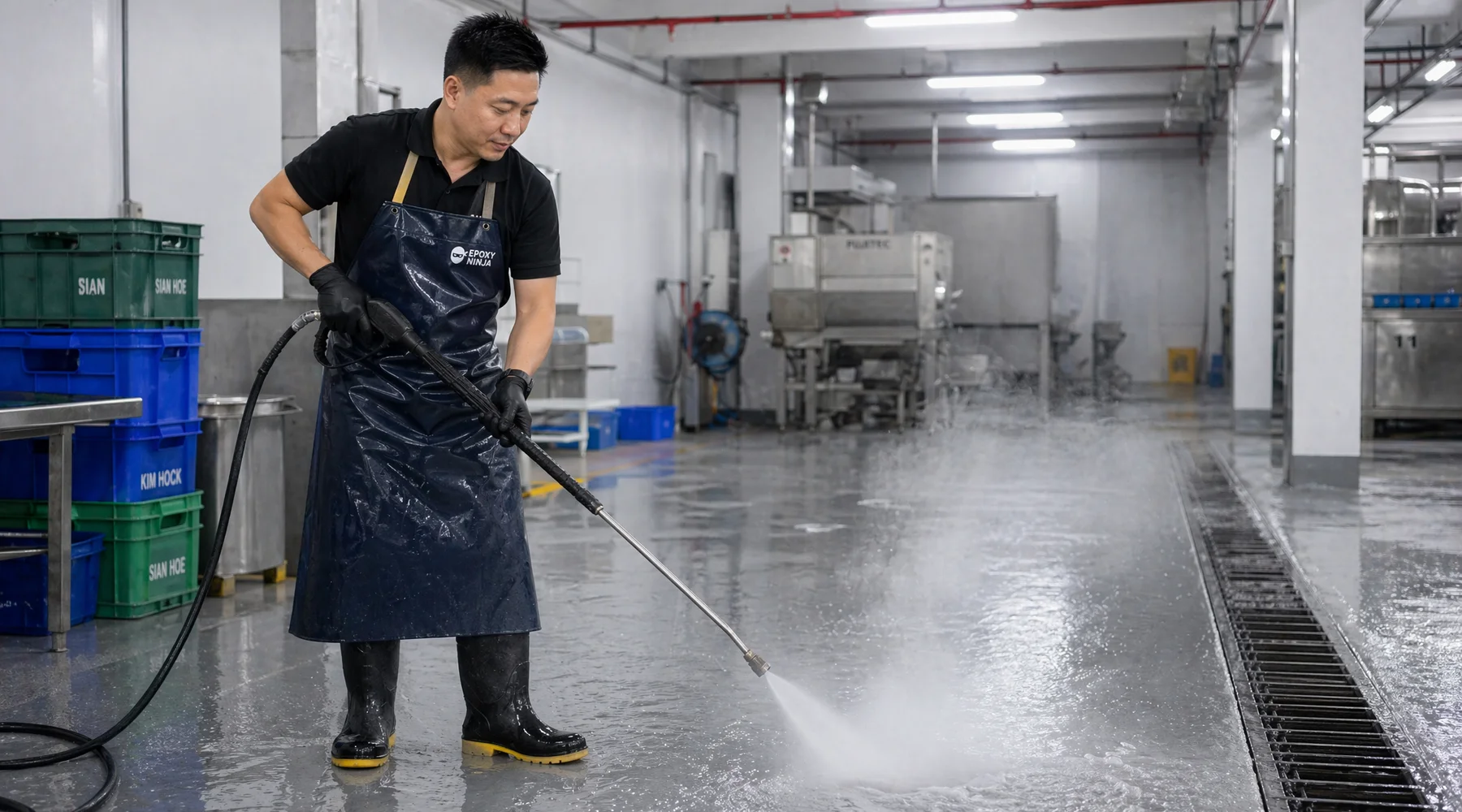
Standard epoxy cannot survive temperatures above 65°C, making polyurethane for steam cleaning the only viable option for hygienic washdowns. We see countless food processing facilities in Malaysia destroy their floors by using boiling water on basic coatings.
The physical limit of a standard two-pack solid epoxy coating sits right around 65°C. Our technicians frequently repair blistering caused when cleaning crews exceed this thermal threshold.
To make the right choice, compare the thermal limits of these two common industrial materials:
| Flooring Material | Maximum Heat Tolerance | Reaction to Steam Cleaning |
|---|---|---|
| Standard Epoxy | 65°C | Softens, blisters, and loses bond |
| Polyurethane (PU) Mortar | 120°C to 140°C | Maintains structural integrity |
We highly recommend installing PU mortar systems like Nippon Paint Ucreed for any zone requiring high-pressure steam sanitisation. This specific material meets strict Hazard Analysis Critical Control Point (HACCP) standards without trapping bacteria.
Our team advises setting up a strict cleaning protocol to avoid localised heat damage. An empirical timing rule prevents operators from holding a steam nozzle over one spot long enough to degrade the surface finish.
Sub-zero to ambient thermal cycling in cold storage anterooms
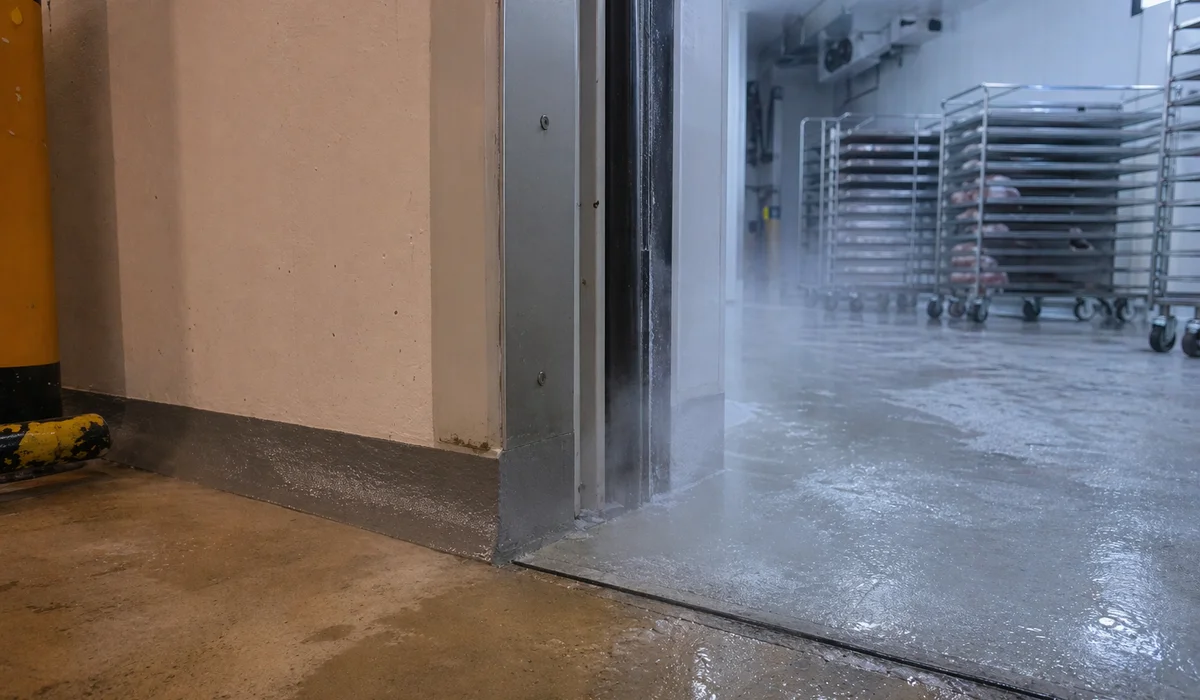
Cold rooms and anterooms require a system that expands and contracts with the concrete, making PU superior to brittle epoxy. We constantly evaluate cold storage facilities in Johor that struggle with severe floor delamination.
The transition zones between freezers running at -30°C and loading bays at ambient temperatures suffer intense thermal shock. Our inspections reveal that traditional floor coatings lose their flexibility and crack under these extreme fluctuations.
A warm forklift tire rolling out of the sun and into a sub-zero freezer creates massive stress on the slab surface.
Why PU Handles Thermal Shock Better
We always specify Polyurethane Modified Cementitious systems for these punishing environments. This material shares a similar coefficient of thermal expansion with the underlying concrete.
Our preferred PU flooring thermal shock formulas remain ductile and flexible even when temperatures drop down to -40°C. These systems absorb the mechanical stress of heavy pallet trucks without fracturing.
We recommend following a few critical guidelines to avoid costly freezer floor failures:
- Install a moisture barrier beneath the slab during the initial construction phase.
- Specify waterborne PU mortar for transition zones and loading docks.
- Ensure the curing process happens under strictly controlled ambient temperatures.
- Schedule heavy forklift traffic only after the resin achieves full mechanical strength.
Proper preparation ensures that the floor will never separate from the concrete base. Our team always conducts a thorough moisture scan before authorising any cold room coating project.
Every facility manager must treat the substrate condition as the deciding factor for long-term durability.
Monsoon humidity and its effect on epoxy cure vs PU tolerance
High humidity introduces moisture during the curing phase, causing epoxy to blush or fail, whereas PU systems tolerate damp conditions significantly better. We see dozens of floor installations fail between July and September when Malaysia experiences intense monsoon humidity.
Moisture in the air condenses on cool concrete surfaces and ruins the chemical reaction required for standard resins to harden. Our flooring specialists know that relative humidity levels above 60% often result in a sticky, cloudy surface known as amine blush.
A poorly cured floor will eventually trap air bubbles and peel away under forklift traffic.
Managing Moisture in Wet Environments
We measure the exact dew point before applying any primer to ensure the substrate is perfectly prepared. Electronic moisture meters like the Tramex CMEX5 provide absolute certainty about the hidden water content deep within the slab.
Our standard operating procedure requires concrete moisture content to sit at 4% or below for traditional coatings. Waterborne polyurethane mortar is the clear winner for a pu vs epoxy wet area comparison because it naturally bonds to damp concrete.
We rely on several strategies to manage humidity when installing a pu flooring vs epoxy wet environment solution:
- Deploy commercial dehumidifiers and fans across the workspace a day before the pour.
- Seal all windows and doors to prevent outside monsoon moisture from entering the facility.
- Monitor ambient temperatures to keep the room between 20°C and 25°C.
- Use moisture-tolerant primers if the sub-slab lacks a proper damp-proof membrane.
Taking these precautions guarantees a smooth, hard-wearing finish regardless of the weather outside. Our installers refuse to gamble with your operations by skipping the fundamental moisture testing phase.
Acid and caustic washdown chemistries where PU wins
Polyurethane handles heavy exposure to organic acids and caustic cleaning agents that easily dissolve standard epoxy surfaces. We frequently visit dairy and beverage plants where lactic or citric acid has eaten right through the existing floor.
A standard resin floor cannot withstand the aggressive chemical assault of daily sanitation routines. Our chemical resistance data proves that polyurethane screed remains stable even when exposed to 30% concentration caustic solutions.
The elastic nature of this flooring system absorbs the shock of heavy dropped objects while resisting corrosive spills.
Protecting Your Processing Zones
We advise facility owners to map out their exact chemical exposures before selecting a floor coating. Food processing zones require a surface that handles both extreme heat and harsh alkaline cleaning agents simultaneously.
Our product recommendations always match the specific organic solvents and acids used in your daily operations. You must avoid thin-film coatings in areas where concentrated chemicals pool or sit for extended periods.
We use the following comparison to demonstrate why PU is the superior choice for chemical resistance:
| Chemical Exposure Type | Epoxy Resistance Level | PU Resistance Level |
|---|---|---|
| Organic Acids (Lactic, Citric) | Poor to Moderate | Excellent |
| Alkaline Cleaners & Caustics | Moderate | Excellent |
| Petroleum Products & Oils | Excellent | Excellent |
Investing in the correct chemical-resistant grade prevents early degradation and keeps your facility compliant with safety regulations. Our team ensures that your wet processing zones remain hygienic, safe, and fully operational for years to come.
For a closer look at related considerations, read our PU Flooring for Cold Storage and Freezer Rooms guide.
What to do next
If you are weighing this flooring decision for your facility, the fastest next step is a free site visit.
We bring a Tramex CMEX5 moisture meter to walk the substrate and accurately document your chemical and thermal exposure.
A professional assessment provides you with a written bill of quantities and honest cost paths for your project.
Our team offers a no-obligation, same-day response across Johor Bahru, Pasir Gudang, Skudai, Senai, and Iskandar Puteri.
The right assessment ensures your production floor can handle the daily workload without costly interruptions.
Our Polyurethane (PU) Flooring service page covers the system specifications in detail.
Fast answers.
At what temperature does epoxy start to fail?
Standard epoxy topcoats soften around 60°C. Steam cleaning at 80°C+ will crack or bubble them within weeks of repeated cycles.
What makes PU better for thermal shock?
PU's elastomer chemistry allows slight flex with temperature change; epoxy's rigid network cracks at the bond line.
Is PU waterproof?
Seamless PU systems are effectively watertight at the floor surface — but proper waterproofing under the slab is still required for below-grade zones.
More in this cluster.
How Long Does Industrial Polyurethane Flooring Last?
Industrial PU flooring lifespan by system type — with abrasion ratings, what shortens life, and recoat vs replace decision points.
Polyurethane Flooring Cost Guide for Malaysia (RM per Square Foot)
Polyurethane flooring prices in Malaysia — standard PU, PU mortar, urethane concrete. RM ranges and what drives quote variance.
PU Flooring for Cold Storage and Freezer Rooms in Malaysia
PU mortar systems for freezer rooms, cold storage, and transition zones. Thermal shock, condensation, and slip resistance covered.
PU Flooring Installation Process and Timeline (What to Expect)
Day-by-day PU flooring install — prep, primer, base, broadcast, topcoat, cure. Return-to-service windows for planning shutdown.
Ready for a real assessment? Free Tramex scan.
Guides are the general case. A site visit gives you the specific answer for your slab, your chemicals, and your operational conditions.