
Epoxy vs Polyurethane: How to Choose the Right System
Epoxy vs PU flooring compared — bond, thermal shock, chemical resistance, cost. Which wins for your factory? Honest answer inside.
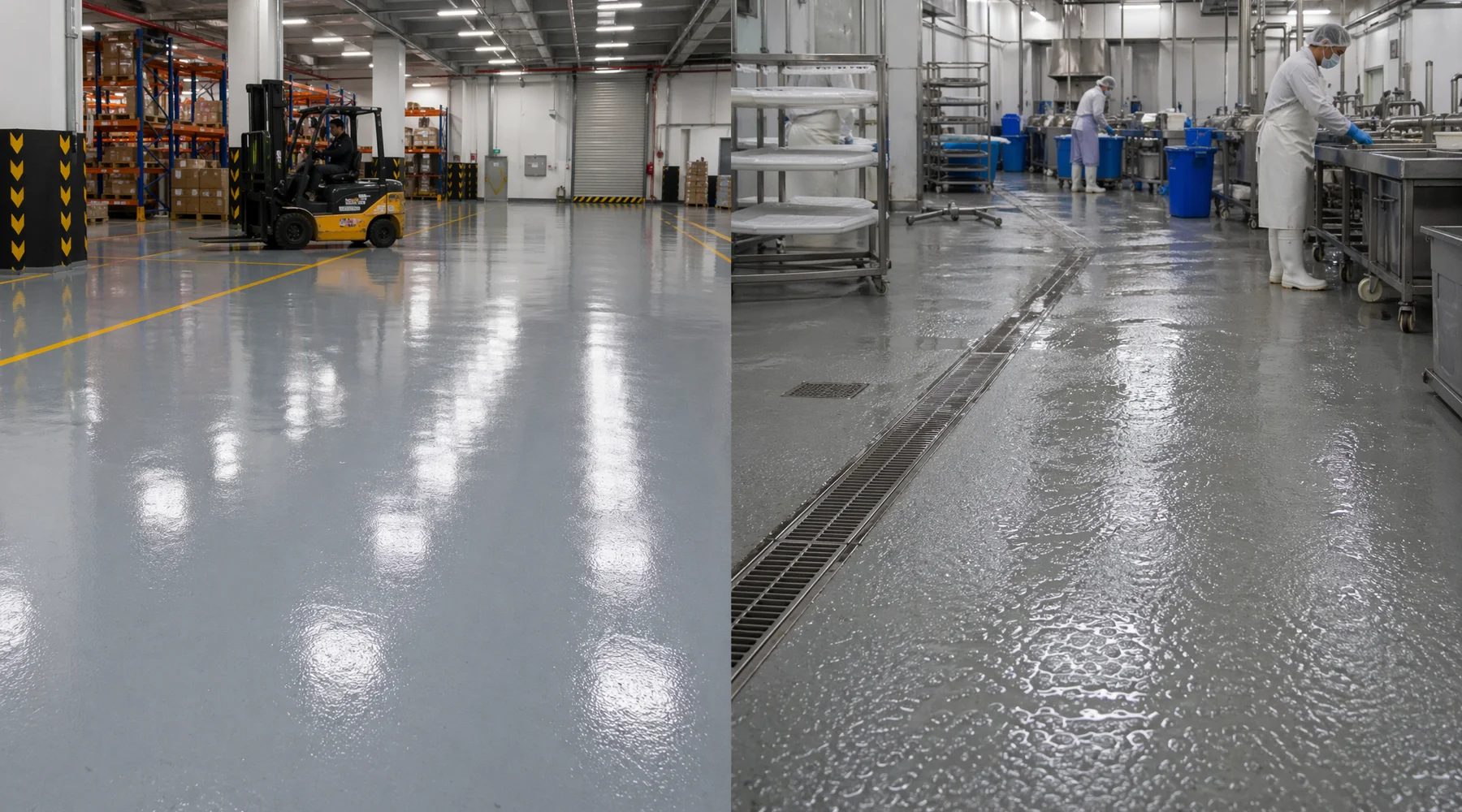
We see this costly mistake happening across Malaysian industrial sites every week. A wrong material choice leads to peeled coatings and massive production downtime. You know how disruptive a single failed area can be to an active assembly line.
Our approach focuses on matching the exact chemistry to your specific daily operations. This guide breaks down how to make that choice based on real data.
For a direct look at the elastomer option, you can explore our polyurethane flooring service to see how this works in practice.
The short answer
Epoxy provides a rigid, high-strength surface ideal for heavy static loads and dry areas. Polyurethane delivers a flexible, thermal-shock resistant barrier built for wet environments and extreme temperature shifts.
We always tell clients that making the right choice comes down to assessing your daily chemical exposure and sub-slab moisture.
A rigid adhesive network like epoxy will crack if the concrete beneath it moves. A flexible elastomer network like polyurethane stretches and absorbs those impacts. Constant forklift traffic and hot water washdowns expose these differences very quickly.
Performance at a Glance
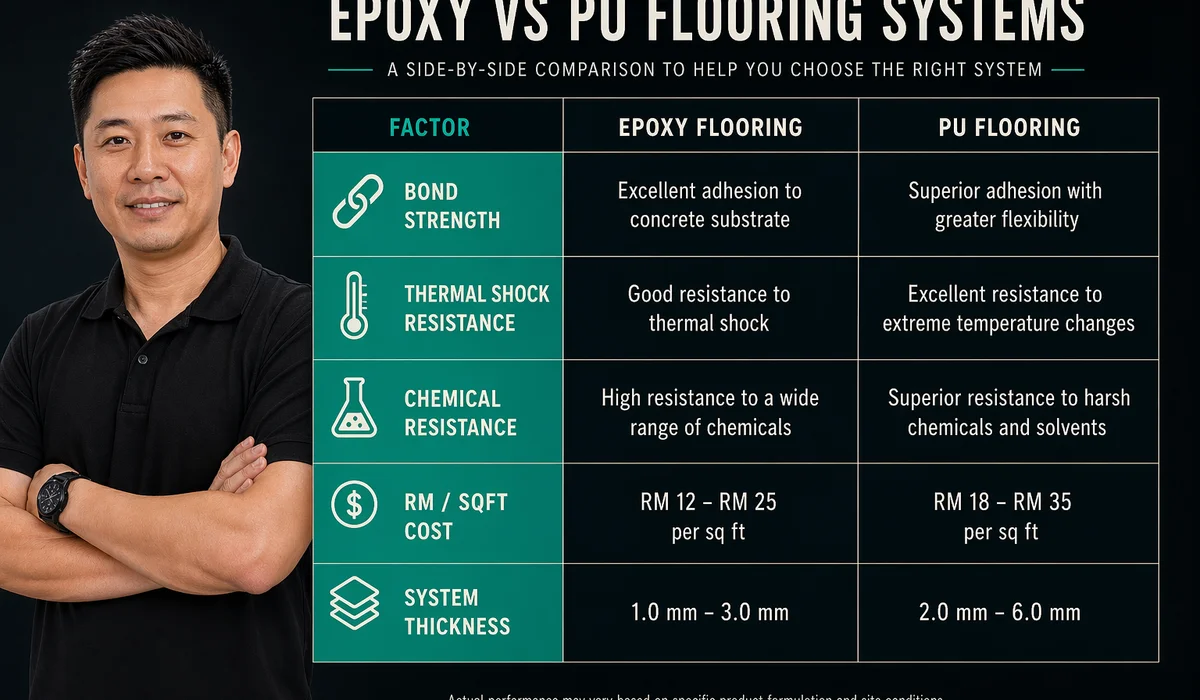
| Feature | Epoxy Systems | Polyurethane (PU) Systems |
|---|---|---|
| Material State | Rigid adhesive network | Flexible elastomer network |
| Impact Handling | High static load strength | Absorbs dynamic forklift impacts |
| Moisture Tolerance | Low (Needs ≤ 4% moisture) | High (Bonds to damp concrete) |
| Typical Lifespan | 5 to 10 years | 15 to 25 years |
What this guide covers
This guide details the specific technical differences between these two industrial coating types. You will find clear parameters for thermal shock limits, chemical resistance ratings, and moisture tolerance.
Our field technicians have compiled these metrics from actual installations across Johor Bahru. The following sections will equip you to match your facility’s exact needs to the correct chemistry.
Here are the core factors driving the decision:
- Baseline chemistry and structural flexibility
- Temperature limits during washdowns or freezing
- Performance in high-humidity or wet conditions
- Reactions to common food acids and industrial solvents
Chemistry basics
Epoxy cures into a highly cross-linked, rigid polymer structure that resists strong inorganic chemicals. Polyurethane forms an elastomeric matrix that flexes with the concrete slab and absorbs heavy kinetic impacts.
We evaluate the concrete substrate carefully because these structural differences dictate how each coating bonds.
A stiff epoxy coat handles heavy, stationary machinery perfectly. The material provides a tough outer shell that protects dry warehouse floors from abrasion. Drops from heavy tools or pallets can cause this brittle surface to chip over time.
Our polyurethane installations behave very differently under stress. The slight elasticity acts like a shock absorber for dynamic loads. Heavy pallet jacks and constant forklift traffic will not shatter a properly applied urethane mortar.
Bond strength vs thermal-shock resistance tradeoff
Facilities using high-temperature cleaning processes must use polyurethane systems to prevent sudden floor failure. A rapid temperature change causes standard epoxy to expand at a different rate than the underlying concrete, leading to instant delamination.
We measure the exact temperatures of your washdown water to prevent this exact issue.
Many food and beverage plants clean their equipment with water exceeding 80°C. Standard epoxy systems begin to soften and fail around the 60°C to 68°C mark. The resulting stress shears the bond line completely.
Our heavy-duty PU mortar systems easily withstand thermal cycling from -40°C in blast freezers up to 120°C near ovens. This thermal matching capability prevents the cracking often seen in commercial kitchens.
The Impact of Rapid Cooling
Placing hot washdown water directly onto a cold floor creates immense tension. A thick application of cementitious urethane acts as a thermal insulator.
This insulation slows the heat transfer to the concrete slab. Reducing this transfer speed stops the floor from tearing itself apart.
Wet vs dry environment decision matrix
Wet processing zones demand polyurethane because it tolerates moisture both during installation and throughout its service life. Dry manufacturing floors benefit from epoxy, provided the concrete slab possesses an internal moisture content below four percent.
We use electronic meters to quantify this invisible risk before pouring any material.
Malaysia’s high ambient humidity dramatically slows down concrete drying times. Trapped vapour underneath an impermeable epoxy layer will eventually cause the coating to blister and peel. A breathable PU cement system allows this moisture vapour to escape safely.
Our teams frequently specify waterborne polyurethane for facilities requiring frequent washdowns. These joint-free installations eliminate the crevices where stagnant water and bacteria typically accumulate. Maintaining a continuous, impervious surface is a strict requirement for modern food safety compliance.
Environmental Checklist
Use this quick reference before making your selection:
- Constant water exposure: Choose PU mortar.
- High sub-slab moisture: Choose breathable PU.
- Climate-controlled dry goods storage: Choose Epoxy.
- Frequent steam cleaning: Choose PU mortar.
Chemical resistance comparison table (acids, caustics, oils, solvents)
Polyurethane excels at resisting organic acids found in food production, while epoxy provides superior defence against harsh industrial solvents. Choosing the wrong barrier for your specific chemical exposure guarantees a rapid breakdown of the floor matrix.
We analyse your safety data sheets to map out the exact corrosive threats in your facility.
Lactic acids from dairy processing and citric acids from beverage plants will quickly eat through standard epoxy. The floor will turn yellow, soften, and eventually dissolve. A specialised PU screed handles these aggressive organic compounds without breaking a sweat.
Our epoxy formulations remain the top choice for battery charging stations or chemical storage rooms. The highly cross-linked structure easily repels battery acid, strong inorganic caustics, and aggressive petroleum solvents.
Chemical Defence Profiles
| Chemical Type | Best Flooring System | Typical Facility Usage |
|---|---|---|
| Organic Acids (Lactic, Citric) | Polyurethane | Dairies, Breweries, Food Plants |
| Strong Solvents (Xylene, Toluene) | Epoxy | Paint Shops, Chemical Plants |
| Hot Cooking Fats & Oils | Polyurethane | Commercial Kitchens, Fryer Lines |
| Inorganic Acids (Sulfuric) | Epoxy | Battery Stations, Laboratories |
What to do next
The fastest way to resolve your flooring chemistry decision is to schedule a free, on-site technical evaluation. An accurate assessment of your slab condition and operating environment removes the guesswork from the process.
We bring specialised diagnostic tools directly to your facility to gather this critical data. The technicians will walk your substrate using a Tramex CMEX5 moisture meter.
This site survey documents your specific chemical exposures and measures the thermal limits of your current washdown procedures.
You receive a written bill of quantities with honest, transparent pricing for the right solution. Our scheduling team provides same-day responses across Johor Bahru, Pasir Gudang, Skudai, Senai, and Iskandar Puteri.
A proper industrial floor is a major investment, so let the numbers guide your choice.
Fast answers.
Is PU flooring more expensive than epoxy?
Yes — typically 15-30% more per sqft, but lifespan in thermal-shock or wet environments justifies the premium.
Can I install epoxy over an old PU floor?
Only after surface abrasion testing and primer compatibility check — incompatibility is a common cause of peeling.
Which chemistry is better for Malaysia's humidity?
PU tolerates high ambient humidity and slab moisture better; epoxy needs tighter moisture control during install.
More in this cluster.
Common Causes of Industrial Epoxy Floor Failure (And How to Prevent Them)
The 5 reasons epoxy floors fail — moisture vapor, poor prep, wrong chemistry, thermal shock, chemical attack. Fixable with proper diagnostics.
How to Choose an Industrial Flooring Contractor in Malaysia
Vet your flooring contractor with 10 questions covering moisture testing, chemistry expertise, BQ transparency, and warranty. Red flags flagged.
Industrial Epoxy Flooring Cost Guide for Malaysia (RM per Square Foot)
Real RM per sqft for industrial epoxy and PU flooring in Malaysia. Ranges by system, factors that drive cost, and how to read a quote.
Professional Site Preparation for Resinous Industrial Flooring
How professional contractors prep a concrete slab for epoxy or PU — grinding, shot blasting, moisture scan, crack repair. What to expect.
Ready for a real assessment? Free Tramex scan.
Guides are the general case. A site visit gives you the specific answer for your slab, your chemicals, and your operational conditions.