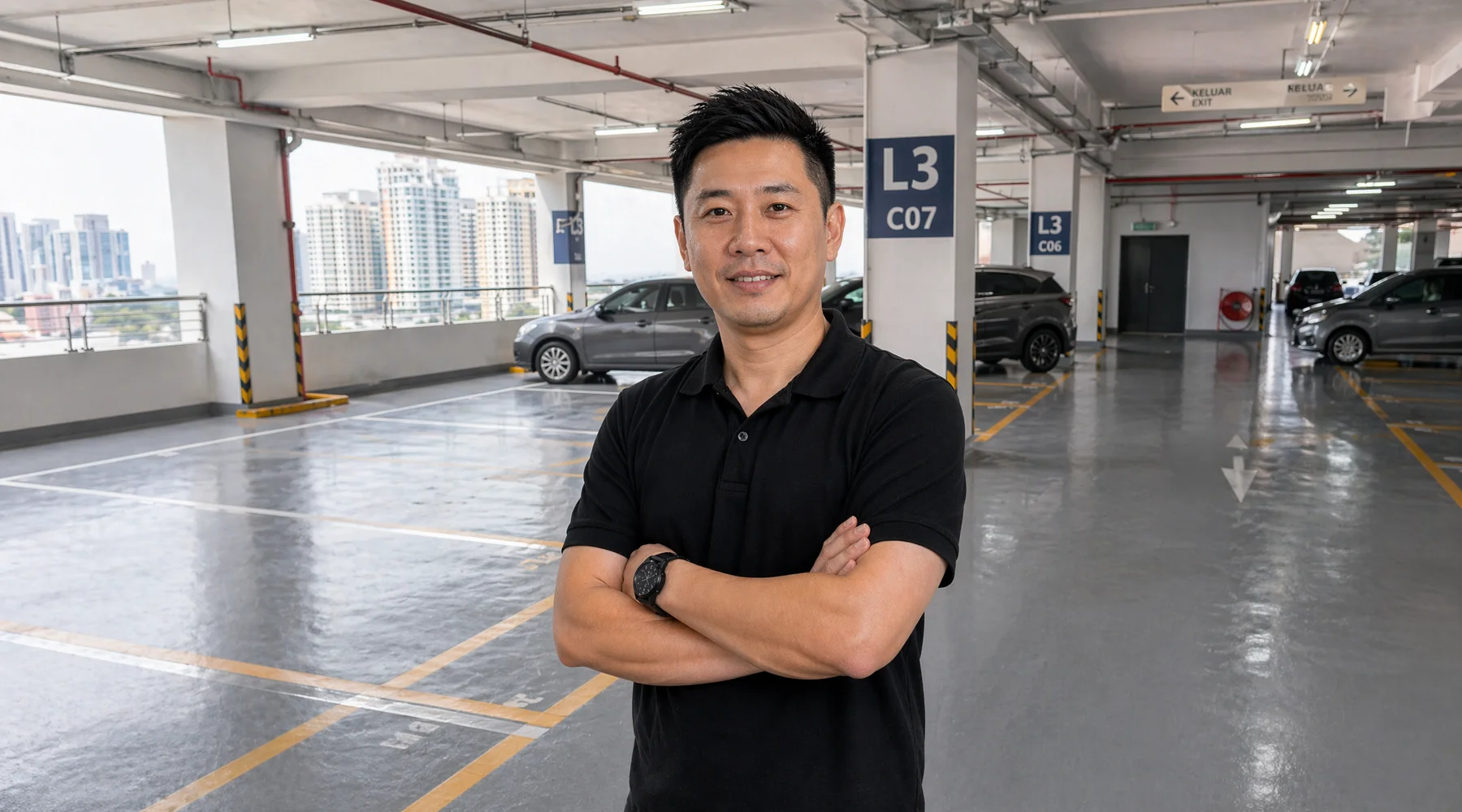
Multi-Storey Carpark Deck Coatings for Malls, Condos, and Commercial Properties
Intermediate-deck, top-deck, and waterproofing-integrated carpark coating systems for malls, condos, and commercial properties.
Multi-storey carparks need system selection matched to the deck type — intermediate, exposed top deck, or mechanical-plant areas each face different chemical, UV, and waterproofing demands. We specify and install thin-film, full-build PU, and waterproofing-integrated deck coatings, and handle the traffic zoning, bay marking, and EV/disabled bay color coding.
Have you ever noticed how quickly a standard factory parking deck starts looking tired and cracked? It happens faster than most facility managers expect.
We see this damage directly all the time here at Epoxy Ninja Johor Bahru. These cracked concrete slabs create massive safety hazards for your daily operations.
Our team fixes failing industrial coatings across Malaysia every single month. Your commercial carpark is the very first thing your clients, vendors, and staff see.
We want to show you exactly how to protect that heavy-duty concrete asset properly. Let’s look at the best ways to set up your epoxy carpark flooring.
Three different floors called one thing
“Carpark flooring” is a loose label. In practice, a multi-storey factory or warehouse carpark has three different deck types. Each area demands its own specific system.
- Intermediate decks: Enclosed areas below the top deck experience moderate humidity and no UV exposure.
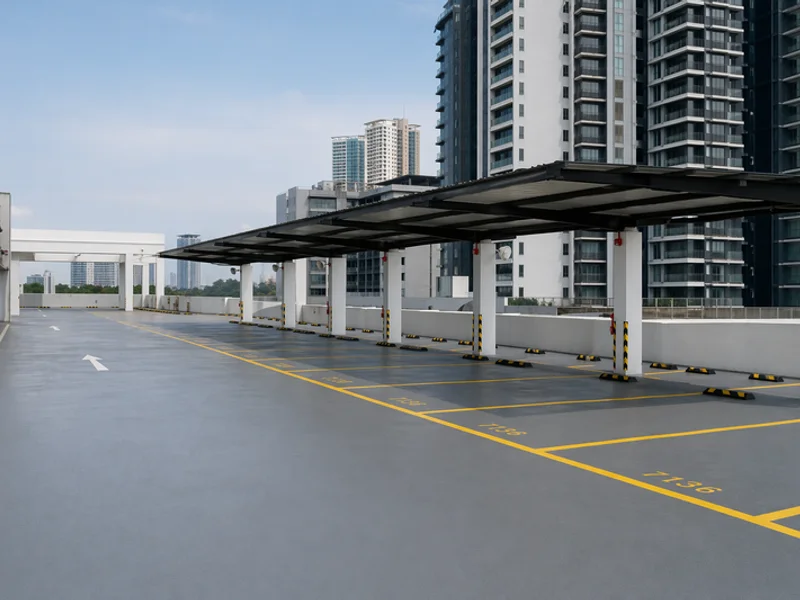
- Exposed top deck: These levels face full weather exposure, including harsh UV rays, heavy rain, and thermal cycling.
- Mechanical plant and entry/exit ramps: These zones handle steep slopes, heavy turning stress, and localized chemical exposure from fuel or oil spills.
Using one generic system across all three areas is a dangerous shortcut. This mistake leads to predictable failure patterns. You will see top-deck chalking under the sun, grease damage on basement ramps, and chemical attacks in mechanical zones.
We always recommend mapping out these zones before buying a single bucket of resin. A targeted approach saves thousands in early repair costs.
Epoxy carpark flooring system selection by deck type
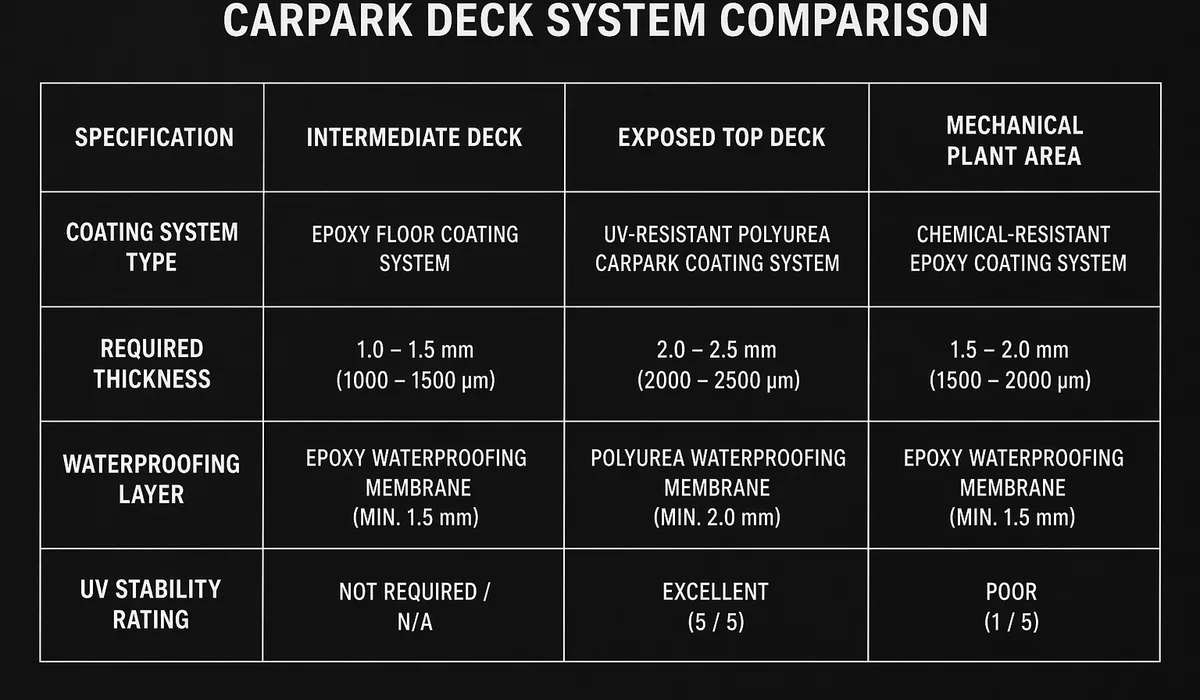
Picking the right chemistry for your specific deck is critical for long-term durability. We rely on proven industrial systems to handle local environmental stresses. Major manufacturers like Sika offer specific product lines built for these distinct challenges.
Here is a quick breakdown of what works best for each area.
| Deck Type | Recommended Coating System | Key Performance Benefit |
|---|---|---|
| Intermediate Decks | Standard Epoxy or 0.5-1.5mm Low-Build PU | Handles typical rolling loads and integrates well with line marking. |
| Exposed Top Decks | 2-4mm UV-Stable Polyurethane (PU) | Resists weather damage and integrates with waterproofing membranes. |
| Ramps & Plants | 2-3mm R10-R11 Anti-Slip PU | Provides maximum grip on slopes and resists aggressive fuel spills. |
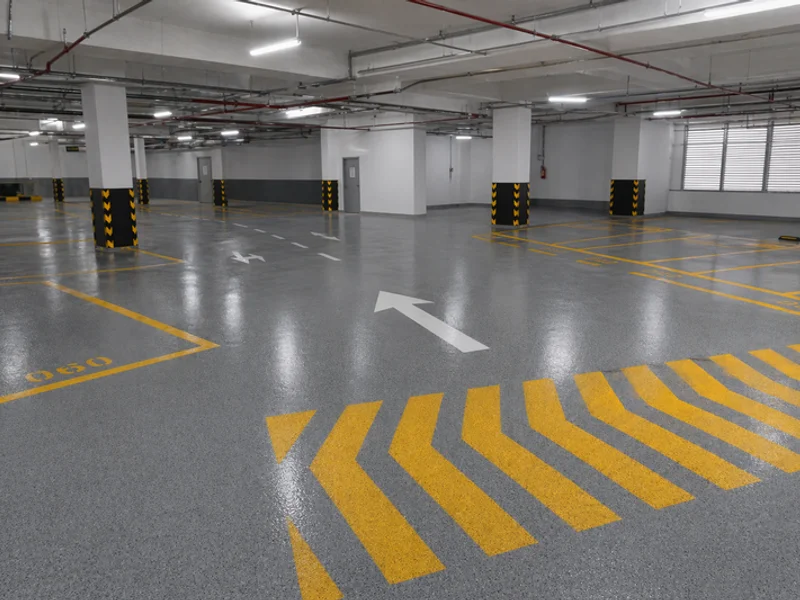
Intermediate decks: A standard epoxy or low-build PU applied at 0.5 to 1.5mm is usually perfect here. This setup uses a colored topcoat with integrated line marking. Typical specifications for mall basements and condo basements use this exact method.
Exposed top decks: You need a UV-stable PU at 2 to 4mm thickness, often with deep waterproofing integration. A chalk-resistant topcoat is absolutely non-negotiable for these upper levels. Rain-cycle tested chemistry is essential since Johor Bahru receives around 2,681 mm of rainfall annually.
Entry/exit ramps and mechanical plant: These high-risk areas require an R10 to R11 anti-slip PU applied at 2 to 3mm. A chemical-resistant topcoat is also necessary to protect against fuel and oil splashes.
Line marking and zoning
The visible output of a carpark coating job is the bay layout. Done well, this layout is highly efficient. Drivers move cleanly, circulation works, and priority bays are immediately visible.
Done badly, it confuses traffic and leaves the client chasing contractors back for a redo.
We take warehouse and factory safety zoning very seriously. Proper color coding aligns with strict local safety guidelines to keep pedestrians safe from forklifts and delivery trucks. Yellow is the universal safety standard for marking physical hazards and caution areas.
Standard output includes the following key elements.
- Full bay grid: Typically 2.5m x 5m bays, adjusted specifically for the site dimensions.
- Directional arrows and speed graphics: Crucial at turning points and entry or exit lanes.
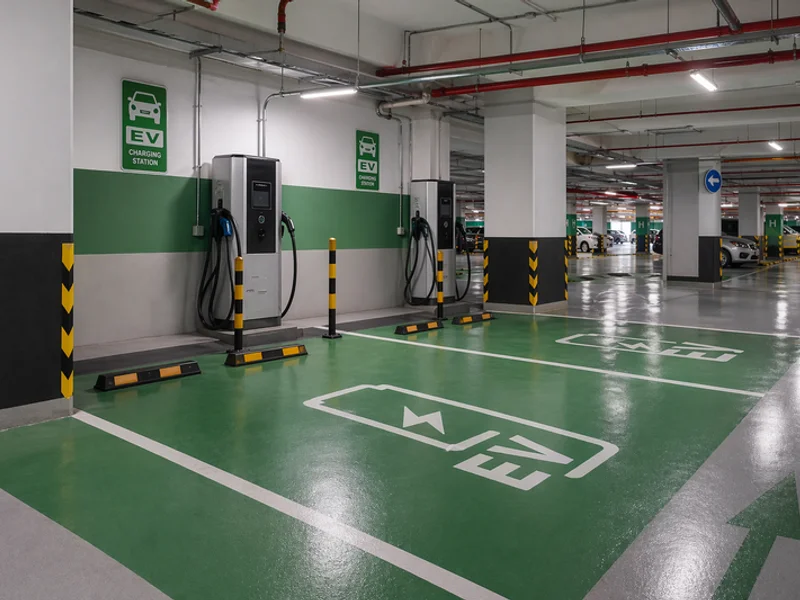
- Priority color coding: EV spots are green, disabled spots are blue, and expectant mothers get pink.
- Traffic-zone delineation: Clearly marks pedestrian walkways and strictly enforced no-park zones.
Our application process ensures these lines stay sharp for years. High-traffic industrial facilities cannot afford fading safety markers.
UV resistance matters on top decks
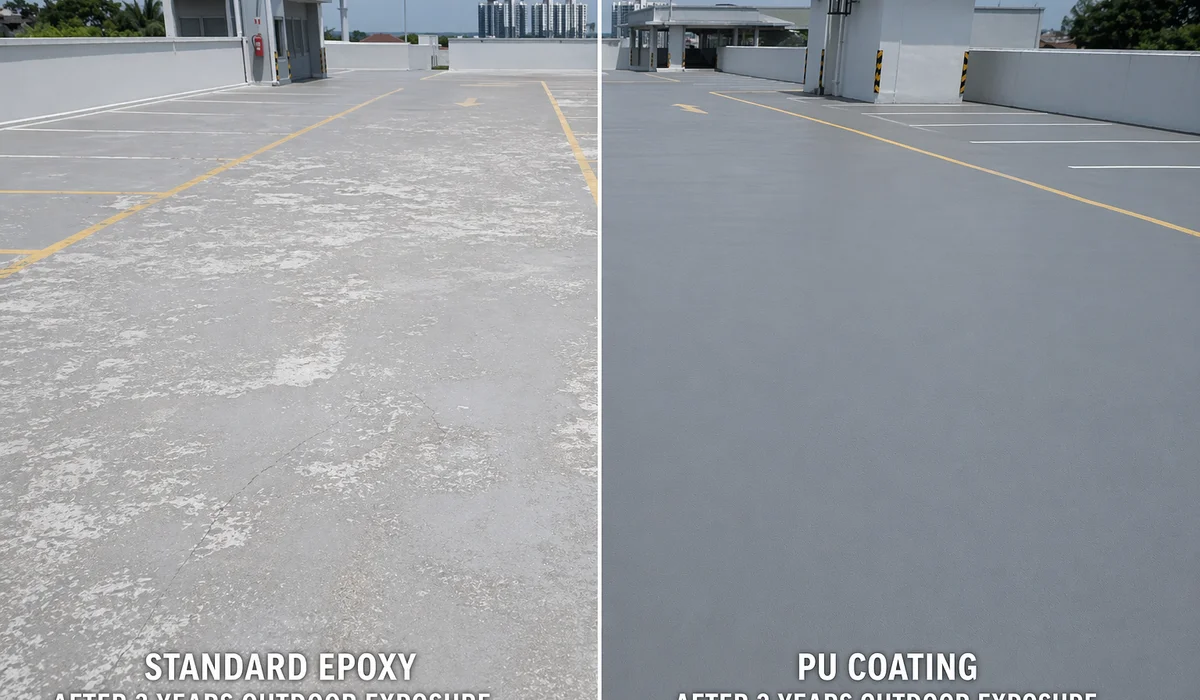
A standard interior epoxy will chalk and yellow within 12 to 18 months under full Malaysian UV exposure. The local UV index frequently hits a hazardous peak of 12 during the hottest months. This intense radiation literally breaks down standard resins at a molecular level.
We strongly advise upgrading to UV-stable PU topcoats for any exposed surface. These advanced formulas hold their color and structural integrity for three to five years or more before needing a recoat. The cost premium for UV stability is usually just 15 to 25 percent.
This small upfront investment prevents that ugly, yellowed top-deck look that immediately degrades your property value.
Cost range
Budgeting for your project depends heavily on the condition of your concrete and the specific zones involved. We always provide a detailed site assessment before finalizing any numbers. Rough estimates help facility managers plan their capital expenditure.
Here are the standard market rates for a professional installation.
- Basement intermediate deck: RM 15 to RM 30 per sqft for thin-film, up to RM 25 to RM 45 per sqft for a full-build PU system.
- Exposed top deck with waterproofing: RM 40 to RM 75 per sqft.
- Line marking and bay layout: Quoted per sqft or per bay based on the design requirements.
Waterproofing condition is the main wildcard on top decks. An intact membrane lets contractors install the coating directly. A failing membrane triggers a mandatory, separate waterproofing phase.
We encourage you to check your top deck for pooling water after a heavy rain. This simple test is the best way to catch membrane failures early. Reach out today if you need a professional eye on your facility’s epoxy carpark flooring.
What you're getting.
Intermediate deck and exposed top-deck system options
Waterproofing-integrated deck coating for roof decks
Full bay layout, directional arrows, speed graphics
EV, disabled, and priority bay color coding
Annual inspection and recoat schedule guidance
Real installs. Real factories.
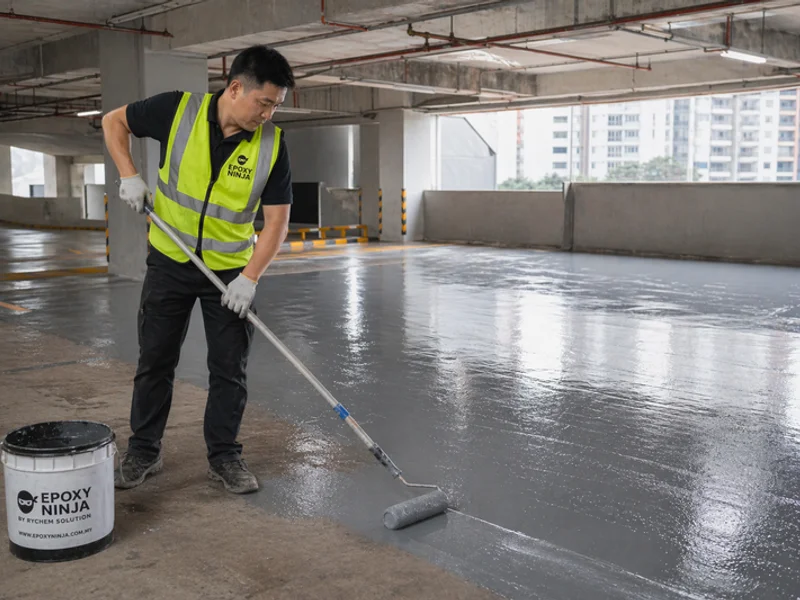
How we install it.
Deck type classification
Intermediate, exposed top deck, or mechanical plant. Each needs different chemistry, UV tolerance, and waterproofing.
Substrate + crack survey
Concrete crack survey. Control joint and movement joint detailing. Existing waterproofing integrity check.
System install
Thin-film, full-build PU, or waterproofing-integrated coating applied to deck spec.
Bay marking
Full bay grid, directional arrows, speed numbers, priority bay color coding (EV green, disabled blue, priority pink).
Handover + recoat schedule
Annual inspection guide, 3-5 year topcoat recoat schedule, wear pattern monitoring protocol.
Free site visit. Tramex scan. Written BQ. No obligation.
We walk the slab, run the moisture readings, and give you a written scope before any commitment. Same-day response across Southern Malaysia.
Deeper on the system.
Guides covering the chemistry, cost, and common questions for this system.
Carpark Deck Coating System Types Compared
Thin-film vs full-build PU, exposed vs sheltered deck, waterproofing-integrated. Which carpark coating system fits your building?
Read guideCarpark Floor Maintenance and Recoating Schedule
Annual inspection checklist, recoat intervals, trigger-based repair signs, and the cost of deferred maintenance.
Read guideCarpark Line Marking and Traffic Safety Zoning
Bay layout, directional arrows, EV and disabled bay marking, speed graphics. Paint types for durability in Malaysian carparks.
Read guideOperators who've worked with us.
5.0★ average from 12 verified Google reviews. No cherry-picking, no edits.
"Superb service by Epoxy Ninja team. Extremely transparent with their work with consistent progress update at all times. It's also worth mentioning that their price point is extremely reasonable for industry standard with quality-finish workmanship. Thank you for the great job well done!"
"We had our flooring done by a company called Epoxy Ninja, and it was an excellent experience. The owner, Michael, who I've known for quite some time, was very attentive to our needs. They listened carefully to what we wanted and worked with great precision. Epoxy Ninja truly delivers high-quality flooring that's durable and impressive. We highly recommend them for any flooring needs!"
"Michael and his team did a great job on my epoxy flooring. They were responsible, professional, and very thorough. The final result looks amazing and high-quality. Highly recommended!"
System questions.
How often should carpark decks be recoated?
Intermediate decks typically need topcoat refresh every 5-7 years. Exposed top decks under UV exposure need recoat every 3-5 years. High-traffic areas (entry/exit ramps, turning circles) wear faster and may need spot recoat every 2-3 years. Annual inspection catches wear patterns before they become structural issues.
Do you handle waterproofing as part of the deck coating?
Yes, for roof decks and exposed top decks. Integrated waterproofing coatings combine the deck protection and waterproofing into one system, avoiding the delamination risks of separate membrane-plus-coating stacks. For basement decks with existing waterproofing, we coordinate with the waterproofing contractor if any repair is needed.
What about EV charging bays?
EV bays are typically marked with green color coding (matching Malaysian convention), with the bay number and charging symbol. For developments anticipating EV fleet growth, we lay out the bay grid with future EV bay conversion in mind. We also handle disabled bay blue coding and priority/expectant-mother pink coding to LPPM standards.
How long will my carpark be closed for the install?
Zone-by-zone install is standard — we close one section at a time while the rest stays operational. A typical basement level takes 5-10 days depending on system and area. Line marking is a separate 1-2 day phase after the deck coating fully cures.
Also worth considering.
Floor Repair & Moisture Mitigation
Failure diagnosis and remediation for peeling, blistering, and delaminating industrial floors, powered by Tramex moisture mapping.
See specSelf-Leveling Epoxy Flooring
2-4mm seamless self-leveling epoxy for warehouses, production areas, showrooms, and workshops where flatness and gloss matter.
See specBook a site visit for this system. Tramex included.
Free Tramex moisture scan and a written BQ with no obligation. Same-day response across Southern Malaysia.