
Anti-Slip Flooring for Wet Processing & Washdown
R12-R13 anti-slip flooring for F&B, meat, seafood, and chemical washdown facilities. Aggregate retention and drainage integration.
The short answer
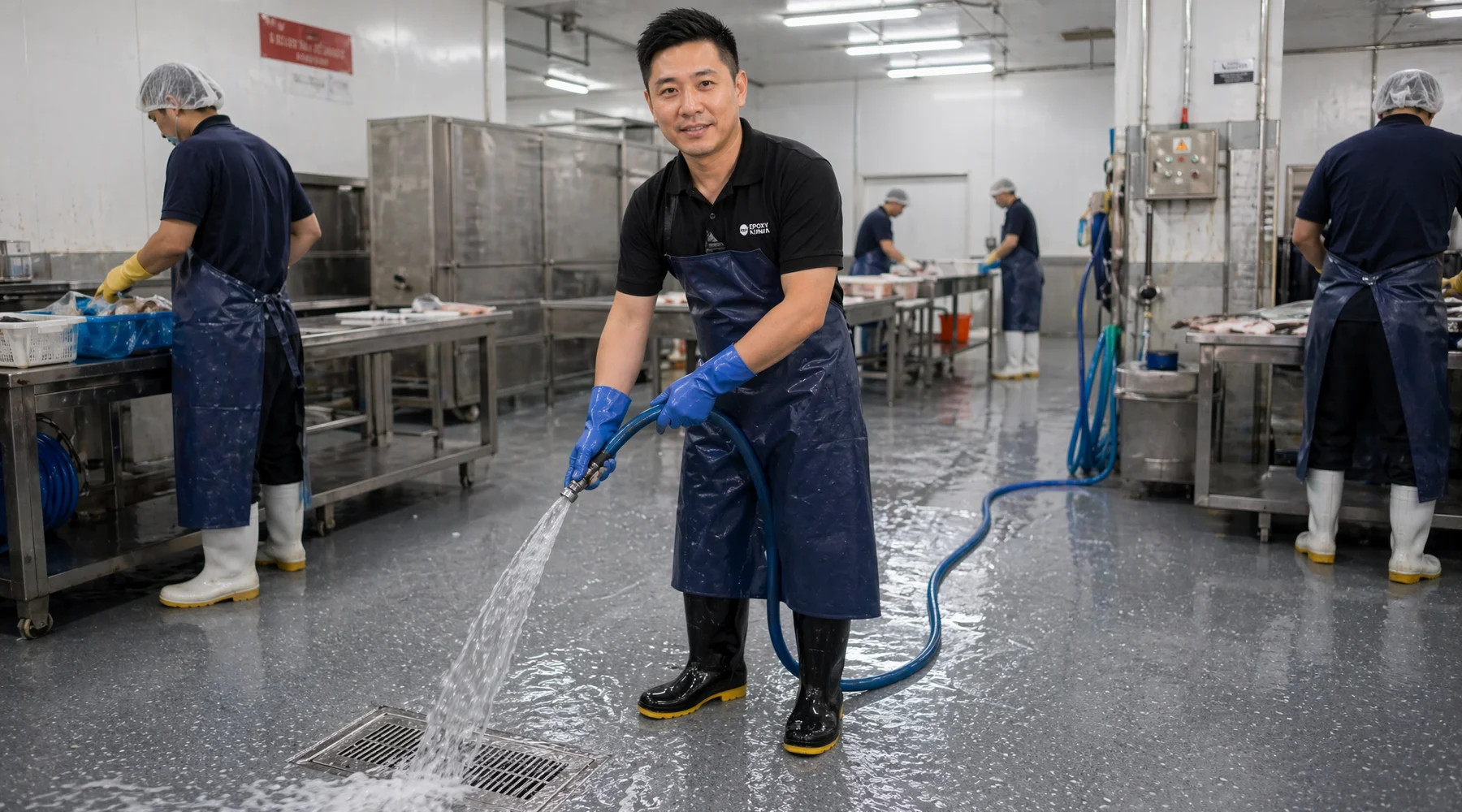
You know how quickly a standard factory floor degrades under constant hot water washdowns and aggressive chemical sanitisers. Installing the specific anti slip flooring wet processing malaysia operators require is a constant challenge for food and beverage facility managers.
That degradation is the main reason plant operators face surprise safety audits and Department of Occupational Safety and Health (DOSH) compliance warnings.
From what I have seen at Epoxy Ninja Johor Bahru, matching your surface texture to your actual daily reality prevents these shutdowns. We find that achieving the perfect balance between aggressive grip and easy cleanability makes all the difference. For a detailed breakdown of what we offer, see our anti-slip flooring service.
What this guide covers
This guide covers the crucial differences between constant-wet and intermittent-wet conditions in industrial facilities. Your choice of materials must directly respond to these specific moisture levels.
We will examine aggregate retention under pressure washing, proper drainage integration, and the exact slip resistance ratings you need. Plant operators often underestimate the impact of thermal shock from hot water cleaning. A polyurethane mortar system can handle temperature differentials up to 80°C without cracking. Standard epoxy formulations typically fail at just 40°C.
Our site inspections across Johor typically evaluate the following critical factors:
- Chemical exposure levels: Identifying organic acids or harsh alkalis used in your daily sanitisation routines.
- Thermal cycling extremes: Measuring the temperature gap between your cold rooms and hot washdown water.
- Traffic load: Assessing the weight and frequency of forklifts moving across the surface.
- Hygiene mandates: Ensuring the system meets the Food Safety and Quality Division (FSQD) requirements for continuous surfaces.
Constant-wet vs intermittent-wet conditions
Treating a constantly soaked production floor the same as an occasionally damp packaging area is an expensive mistake. The practical guidance for factory managers in Malaysia is to always let your actual site conditions dictate the material specification. We start every project with a thorough moisture scan and a physical walkthrough of your process zones. This initial evaluation prevents premature material failures.
“A 2026 industry report highlights that specifying the wrong resin type for wet zones is the leading cause of industrial floor delamination across Malaysia.”
Constant-wet environments demand a heavy-duty polyurethane modified concrete applied at a thickness of 6 to 9 millimetres. These thick systems create an impermeable barrier against both water and the organic acids found in meat seafood processing floor setups. We highly recommend reserving thinner 3-millimetre epoxy coatings strictly for dry or intermittent-wet areas.
Your facility’s thermal exposure is another massive factor in this material decision. Hot washdown routines in constant-wet areas often hit temperatures of 70°C or higher. Our polyurethane installations easily flex with these extreme temperature swings. Standard epoxy systems simply cannot handle that level of thermal shock and will quickly debond from the concrete substrate underneath.
Aggregate retention under pressure washdown
Retaining your anti-slip aggregate under the force of daily high-pressure washdowns requires a specialised locking topcoat. If the aggregate detaches, your chemical washdown anti slip surface quickly becomes a dangerous skating rink. We frequently see facilities struggling with slippery floors because they used an inadequate resin binder. Your cleaning protocols directly dictate the strength of the bond required.
High-pressure Clean-In-Place (CIP) systems regularly blast floors with water pressures exceeding 1,000 PSI. This intense force physically tears loose sand or quartz particles right out of basic paint or thin epoxy films. We use industrial-grade polyurethane mortar because it aggressively encapsulates the aggregate within a dense matrix. This deep integration ensures the textured profile remains intact even after years of daily chemical scrubbing.
The method used to apply the aggregate significantly impacts its lifespan.
| Application Method | Durability Under Pressure | Best Use Case |
|---|---|---|
| Broadcast and Seal (Epoxy) | Moderate. Aggregate can dislodge over time. | Light foot traffic, intermittent wet areas. |
| Trowel-Applied Polyurethane Mortar | Exceptional. Aggregate is locked into the core matrix. | Heavy industrial washdowns, meat and seafood processing. |
A compromised floor surface traps bacteria in the tiny craters left behind by missing aggregate. This bacterial growth immediately threatens your Hazard Analysis Critical Control Points (HACCP) compliance status. We help clients avoid these health violations by installing systems specifically engineered to hold their texture under extreme stress.
Drainage slope integration and coving
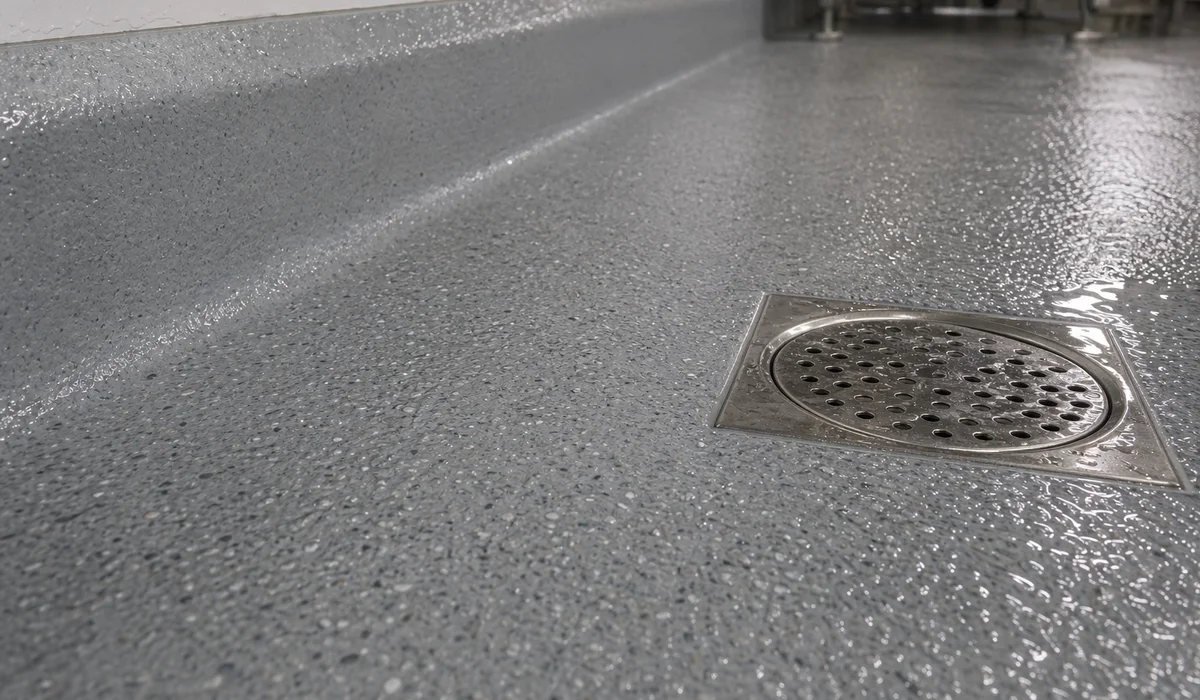
Proper water evacuation requires a minimum 1.5% structural slope directing all liquids into your stainless steel trench drains. Without this precise pitch, stagnant water will pond on the surface and create severe biological hazards. We prioritise drainage geometry before pouring any topcoats. A perfectly textured surface means nothing if the water has nowhere to go.
Standing water quickly degrades the floor and serves as a breeding ground for harmful pathogens like Listeria or Salmonella. Integrating the resin coating directly into the drainage channels using flexible sealants prevents water from seeping under the slab. We always ensure the transition from the concrete floor to the drain edge is completely watertight. This attention to detail stops costly substrate erosion before it can start.
Wall transitions are just as critical for maintaining a sanitary environment.
- Coved Skirting: The floor material must extend 100 to 150 millimetres up the wall to create a curved, joint-free transition.
- Eliminating 90-Degree Angles: Sharp corners trap dirt and are impossible to sanitise properly.
- Regulatory Compliance: The Ministry of Health Malaysia mandates coved skirting in all wet food processing zones to meet GMP standards.
- Wall Protection: This curved base protects the lower walls from damage caused by heavy carts and water spray.
Our technicians carefully shape these coved bases by hand to guarantee a perfect seal. Water and chemicals simply slide down the walls and across the floor right into the collection troughs.
Typical R12-R13 system choices
Industrial flooring safety standards require a minimum R12 slip resistance rating for general wet processing zones. For environments dealing with animal fats or oils, you must upgrade to an R13 rating to ensure worker safety. We base these texture specifications strictly on DOSH guidelines and your specific operational hazards. Getting the rating right prevents accidents while keeping the floor highly cleanable.
Understanding the difference helps you choose the correct profile:
- R12 Rating: Ideal for beverage bottling and dairy plants. Provides excellent grip for wet boots without trapping excessive dirt.
- R13 Rating: Mandatory for meat and seafood processing. Uses a much coarser aggregate to cut through thick grease, blood, and heavy organic matter.
Heavier processing environments require the maximum grip provided by an R13 system. Meat and seafood processing floors are constantly slick with blood, grease, and organic matter. We broadcast a much coarser aggregate into the polyurethane matrix to achieve this extreme slip resistance. While an R13 surface requires more effort to clean, it is an absolute legal necessity to prevent severe slip-and-fall injuries in oily environments.
Choosing between these systems requires a clear understanding of your daily maintenance capabilities. A rougher floor provides better safety but demands aggressive, high-pressure cleaning to remove trapped organic particles.
For a closer look at related considerations, read our Slip Resistance Ratings R9 to R13 Explained guide.
What to do next
If you are weighing this decision for your facility, the fastest next step is to schedule a free site visit with our team.
A professional assessment is the only way to accurately price and specify your new washdown flooring system. We bring a Tramex CMEX5 moisture meter to test your substrate and document your exact chemical exposure levels. This thorough inspection allows us to hand you a written BQ with honest cost paths.
Our crews provide same-day responses across Johor Bahru, Pasir Gudang, Skudai, Senai, and Iskandar Puteri. Providing you with hard data ensures you make the best decision for your plant. Our Anti-Slip Flooring (Wet Process Areas) service page covers the system spec in detail.
Fast answers.
How do I keep aggregate from washing away?
Proper broadcast into wet base coat, fully encapsulated in the topcoat. Washdown doesn't affect aggregate that's bonded, only loose surface particles.
Can I get high slip resistance AND easy cleaning?
Partly — smaller-aggregate R11 balances both. R12-R13 is a compromise where slip safety takes priority over cleaning speed.
What about outdoor wet ramps?
UV-stable aliphatic PU with coarse aggregate at R12+. Interior systems typically aren't UV-rated for outdoor exposure.
Ready for a real assessment? Free Tramex scan.
Guides are the general case. A site visit gives you the specific answer for your slab, your chemicals, and your operational conditions.