FRP and Vinyl Ester Chemical-Resistant Linings for Aggressive Exposure Zones
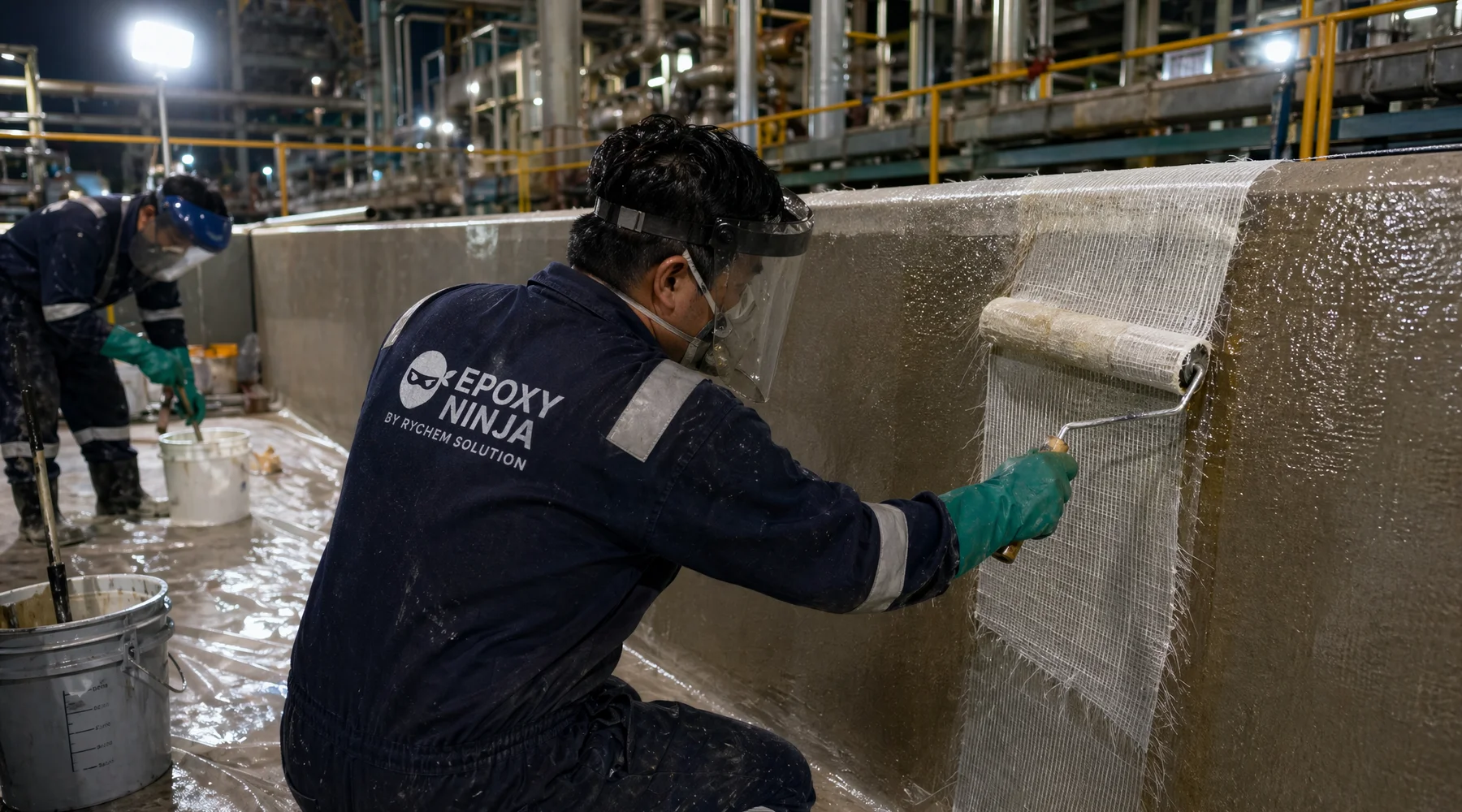
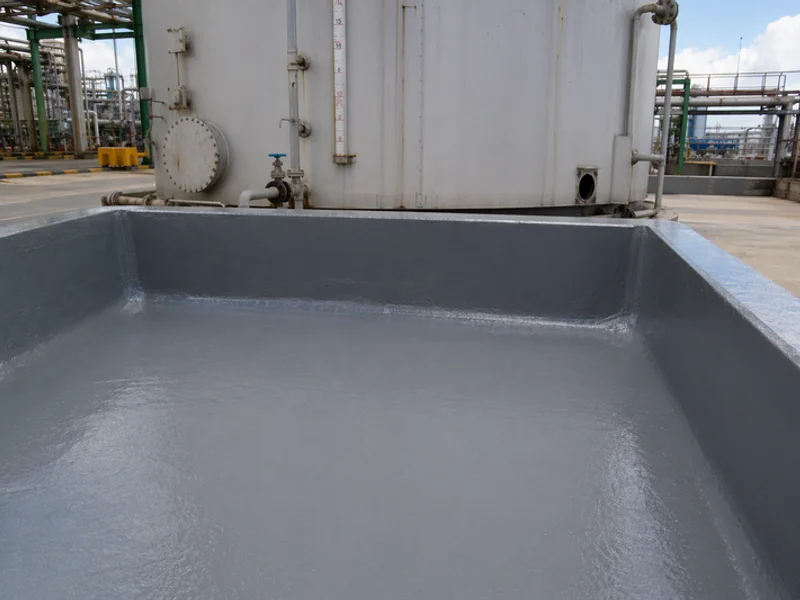
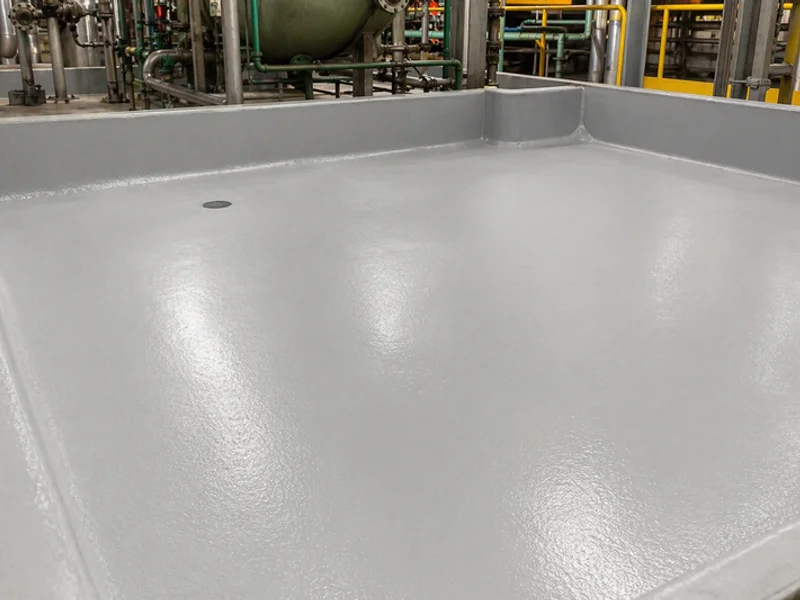
FRP epoxy and vinyl ester chemical-resistant lining for secondary containment bunds, acid/caustic tanks, and aggressive chemical handling zones.
When chemical exposure crosses into the aggressive-acid or aggressive-caustic territory, standard floor coatings simply don't hold. FRP (Fiber-Reinforced Plastic) lining with epoxy or vinyl ester chemistry is the right answer — a laminated, reinforced membrane bonded to the substrate that survives exposures most resin systems can't tolerate.
Have you ever watched standard floor coatings peel away after just a few months of chemical spills? It is incredibly frustrating to spend money on an industrial epoxy floor, only to see it eaten alive by strong acids or harsh solvents.
Our clients in the food processing and petrochemical sectors face this exact headache constantly. They need something much stronger than basic paint.
That is where a proper Chemical-Resistant FRP Lining changes the game entirely.
We are going to walk you through exactly how this heavy-duty barrier works, and why it might be the last floor coating you ever need.
When chemistry gets aggressive, coatings stop working
Standard industrial epoxy handles basic food acids and mild cleaning chemicals just fine. A hygienic polyurethane surface does a great job surviving steam cleaning and common caustics in commercial kitchens.
We know that these standard options hit a wall at the edge of the chemical-resistance spectrum. Heavy-duty coatings degrade rapidly when exposed to petrochemical bunds, acid tank farms, or aggressive solvent handling areas.
Let us look at the main reasons standard coatings fail before introducing the solution:
- Acid Concentration: Standard epoxy breaks down fast when sulfuric acid levels exceed a low threshold.
- Thermal Shock: Sudden temperature changes cause basic paints to crack and lose their bond to the concrete.
- Physical Impact: Heavy drum drops easily chip thin coatings, allowing harsh chemicals to seep under the surface and rot the floor.
Our engineers rely on FRP (Fiber-Reinforced Plastic) lining to solve these exact edge-case scenarios. Fiber reinforcement fabric embedded in multiple layers of epoxy or vinyl ester resin creates a highly durable structural membrane.
This physical barrier survives continuous exposures that standard resins simply cannot tolerate.
Two chemistry options
Choosing the right resin is the most critical step in building a chemical-resistant barrier. We match the specific chemistry of the FRP lining to the daily hazards your facility faces.
This precise matching process ensures you do not overspend on materials while guaranteeing absolute protection. Here is a quick comparison to help you choose the right path:
| Feature | Epoxy FRP | Vinyl Ester FRP |
|---|---|---|
| Best For | Moderate acids & caustics | Concentrated acids & aggressive solvents |
| Temperature Resistance | Good (Up to 60°C) | Excellent (Up to 100°C+) |
| Common Application | Food processing floors | Petrochemical tank bunds |
Epoxy FRP: This provides highly cost-effective chemistry for moderate acids, caustics, and everyday solvents. Our installation crews frequently apply this system in food-industry caustic cleaning bunds and light pharmaceutical handling zones.
This setup works beautifully for moderate-chemical workshop floors where occasional spills happen. It offers excellent mechanical strength and resists water penetration far better than standard polyester resins.
Vinyl ester FRP: This delivers premium chemistry for the most aggressive chemical exposures imaginable. We actively specify industry-standard materials like Derakane™ vinyl ester resin for these extreme environments.
This upgraded resin handles highly concentrated sulfuric acid up to 70%, aggressive hydrochloric acid, and strong oxidisers that eat right through basic epoxy. Our teams install this premium lining in petrochemical secondary containment areas, acid tank farm bunds, and highly corrosive electroplating facility pits.
Where Pasir Gudang drives most of our FRP work
Pasir Gudang holds over 2,500 factories, with at least 250 operating as heavy chemical-based industries. This massive concentration of petrochemical, lubricant blending, and shipping facilities generates most of our FRP lining scope in Johor.
Our team understands the strict legal requirements factory owners face in this industrial hub. Under the Environmental Quality Act 1974, the Malaysia Department of Environment (DOE) strictly regulates how hazardous scheduled wastes are stored.
Here are the critical DOE compliance factors your bund must meet:
- 110% Capacity Rule: The containment area must hold 110% of the volume of the largest stored container.
- Leak-Proof Barrier: There can be zero cracks or openings where toxic liquids might escape into the soil.
- Chemical Compatibility: The lining material must withstand the specific chemical stored without degrading.
- Weather Protection: Outdoor bunds require proper grading and sumps to manage rainwater separation effectively.
Secondary containment compliance requires fully intact chemical barriers for stored hazardous chemicals. We install FRP lining because it serves as the ultimate code-compliant solution for bunds and containment pits.
Cost range
Chemical exposure levels and regulatory compliance requirements dictate the final material specification. We price our installations based on the exact resin required and the physical geometry of your containment area.
Exact quotes provide a transparent breakdown of all materials and labor involved. Here is the estimated pricing for 2026:
- Epoxy FRP floor lining (2-layer): RM 60-120/sqft.
- Vinyl ester FRP floor lining (3-layer): RM 120-220/sqft.
- Floor + wall integrated bund lining: priced per project based on bund geometry.
We typically ask for your complete chemical inventory and any specific regulatory compliance documentation before quoting accurately. Sharing these details helps us build a highly accurate proposal that guarantees long-term protection.
Reach out to our team today with your facility details, and let us secure your chemical storage zones.
What you're getting.
Epoxy-FRP (moderate acids/caustics) and vinyl ester (aggressive) systems
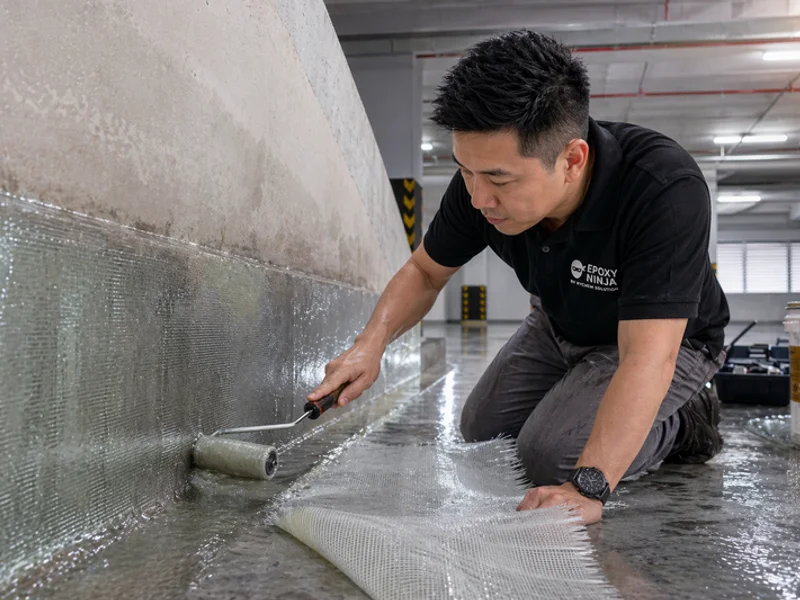
Multi-layer laminated construction with fiber reinforcement
Bund lining, tank lining, and floor/wall integration
Coved corner and joint detailing for continuous barrier
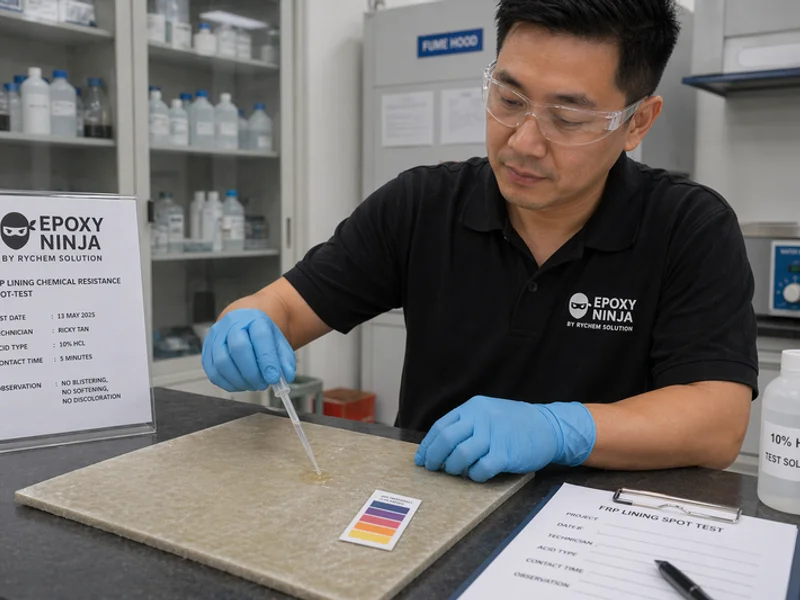
Chemical resistance matrix matched to client's exposure profile
Real installs. Real factories.
Free site visit. Tramex scan. Written BQ. No obligation.
We walk the slab, run the moisture readings, and give you a written scope before any commitment. Same-day response across Southern Malaysia.
Operators who've worked with us.
5.0★ average from 12 verified Google reviews. No cherry-picking, no edits.
"Superb service by Epoxy Ninja team. Extremely transparent with their work with consistent progress update at all times. It's also worth mentioning that their price point is extremely reasonable for industry standard with quality-finish workmanship. Thank you for the great job well done!"
"We had our flooring done by a company called Epoxy Ninja, and it was an excellent experience. The owner, Michael, who I've known for quite some time, was very attentive to our needs. They listened carefully to what we wanted and worked with great precision. Epoxy Ninja truly delivers high-quality flooring that's durable and impressive. We highly recommend them for any flooring needs!"
"Michael and his team did a great job on my epoxy flooring. They were responsible, professional, and very thorough. The final result looks amazing and high-quality. Highly recommended!"
System questions.
When do I need FRP lining instead of standard PU?
When your chemical exposure includes aggressive acids (below pH 2), aggressive caustics (above pH 12), solvents, or heavy oxidisers, and when the consequence of containment failure is environmental or regulatory. Standard PU covers most industrial exposure, but FRP is the honest answer for petrochemical bunds, acid tank farms, and anywhere failure means a leak.
Epoxy FRP vs vinyl ester — how to choose?
Epoxy FRP handles moderate acid/caustic exposure and most solvents cost-effectively. Vinyl ester is the premium spec for aggressive acid exposure (sulfuric, hydrochloric, nitric at elevated concentrations) and for oxidising environments. We review your actual chemical matrix and recommend the chemistry that fits — no upselling to vinyl ester if epoxy FRP will do the job.
Do you handle wall lining as well as floor lining?
Yes. FRP systems are often installed as floor-plus-wall continuous linings for bunds and containment pits. The floor-wall transition is coved for a continuous chemical barrier. This is standard for secondary containment compliance in petrochemical and chemical handling facilities.
Also worth considering.
Polyurethane (PU) Flooring
Full-depth polyurethane systems engineered for wet, hot, and chemical-heavy industrial environments where epoxy fails.
See specHeavy-Duty Mortar Flooring
6-12mm heavy-duty mortar systems — epoxy mortar, PU mortar, and urethane concrete — for impact-intensive loading bays, foundries, and heavy processing floors.
See specFloor Repair & Moisture Mitigation
Failure diagnosis and remediation for peeling, blistering, and delaminating industrial floors, powered by Tramex moisture mapping.
See specBook a site visit for this system. Tramex included.
Free Tramex moisture scan and a written BQ with no obligation. Same-day response across Southern Malaysia.