
Epoxy Mortar vs PU Mortar vs Urethane Concrete
Three heavy-duty mortar systems compared — bond, thermal, chemical, cost. Which wins for loading docks, F&B, or foundries?
The short answer
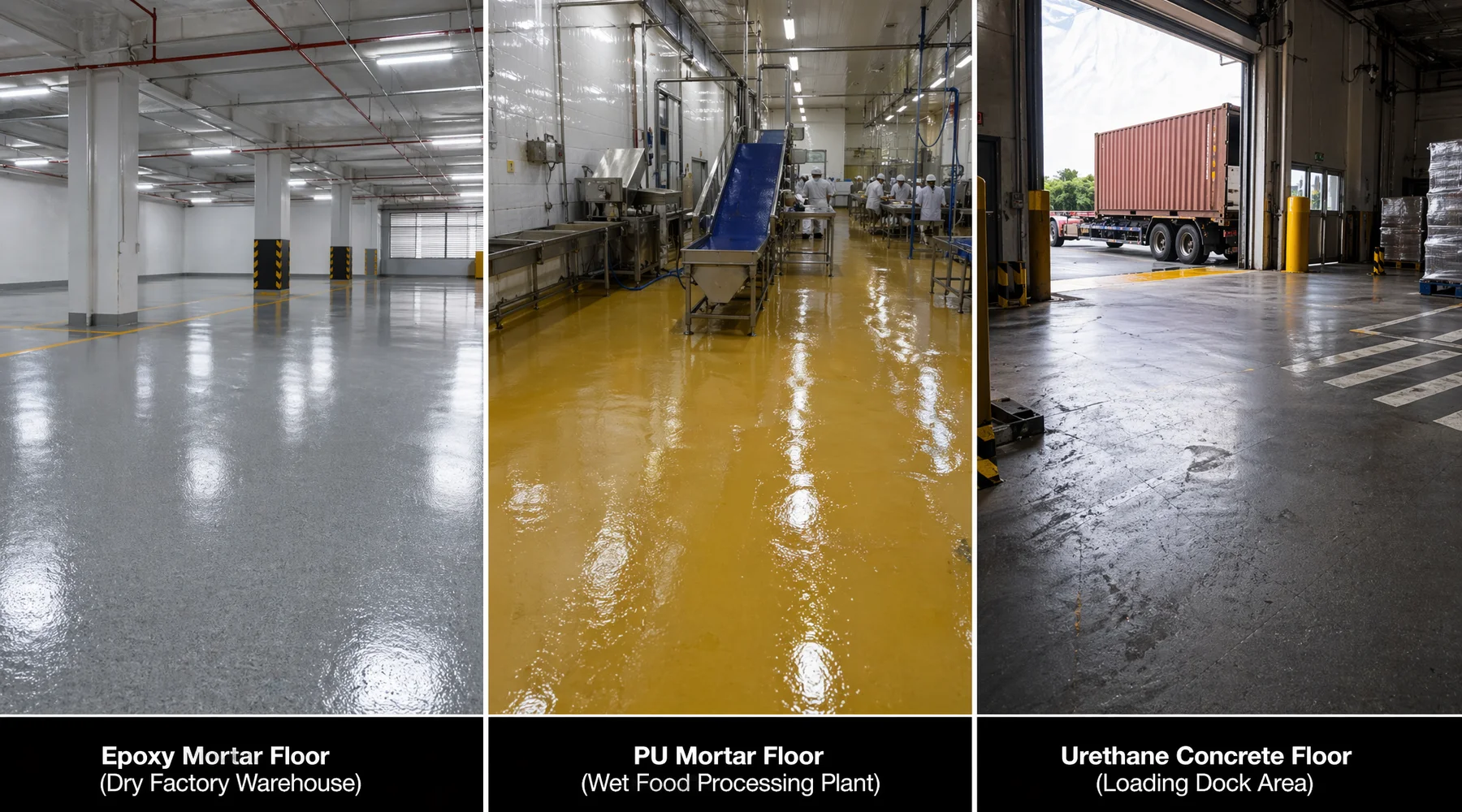
When evaluating epoxy mortar vs pu mortar vs urethane concrete, the fastest way to resolve the choice is to match the resin directly to your daily operational stress.
Epoxy mortar dominates in dry warehouses, while polyurethane (PU) mortar, also known as urethane concrete, is the only choice for wet, high-temperature food processing areas.
For a direct look at how our team applies these systems, you can explore our mortar flooring service.
What this guide covers
You know how concrete slabs in Malaysian facilities always seem to sweat.
We see this trapped moisture ruin standard resin floors in local factories every single week. As the team at Epoxy Ninja Johor Bahru, we set the standard for reliable industrial flooring by preventing these exact premature failures.
The key takeaway from the data is that picking a floor based on price alone usually guarantees a costly replacement. Let’s look at the data, what it is actually telling us, and then explore exactly how to choose the right chemistry.
Bond strength
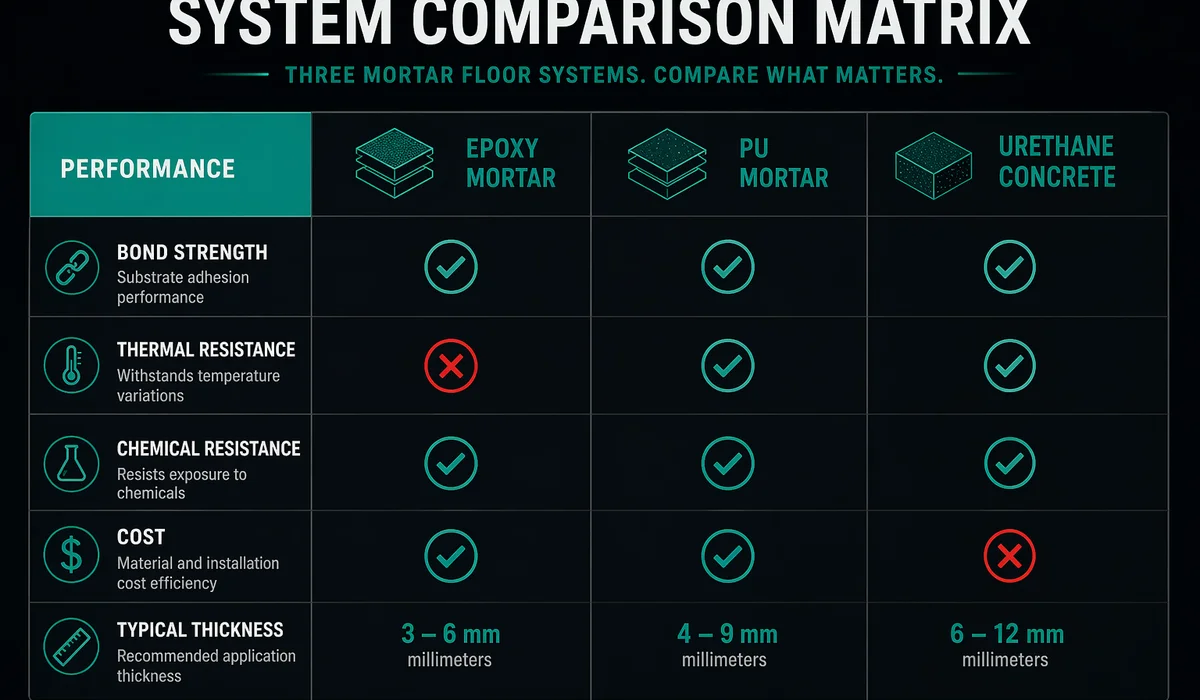
Epoxy mortar provides the highest dry bond strength at over 3.0 MPa, but polyurethane (PU) mortar wins on wet slabs. You must evaluate your substrate moisture before choosing.
We always test the bare concrete before recommending a system. If you are wondering which mortar for loading dock areas makes sense, epoxy is ideal for those dry, high-traffic zones. The cost delta or decision threshold here depends heavily on the slab condition and the installer’s discipline.
Our technicians frequently measure moisture vapour transmission exceeding 8% on ground-floor slabs. This high moisture causes standard epoxy to peel and delaminate within months. Polyurethane mortar solves this by bonding aggressively to damp concrete without trapping the vapor.
- Epoxy mortar wins on dry: It creates a massive 3.0 MPa to 5.0 MPa tensile bond on properly prepared, dry concrete.
- PU on wet: Urethane concrete tolerates high residual moisture and prevents blistering.
Thermal-shock ceiling
When weighing pu mortar vs urethane concrete, understand they use similar chemistry, but thick-troweled urethane concrete survives extreme temperature swings up to 120°C. Epoxy mortar softens and fails when exposed to temperatures around 50°C.
We walk through these thermal exposure areas on every site visit. Rapid temperature changes cause thermal shock, which violently expands and contracts the flooring material. Urethane concrete expands at the exact same rate as the concrete beneath it, preventing any cracking.
Our crews often replace failed epoxy floors in food and beverage facilities. These failures happen because daily hot water washdowns exceed the basic epoxy threshold.
Here is how the thermal limits break down for industrial environments:
- Urethane concrete >120°C: Handles direct steam cleaning and boiling water spills safely.
- PU mortar ~80°C: Excellent for standard hot water washdowns in medium-duty zones.
- Epoxy ~50°C: Strictly limited to climate-controlled or ambient temperature areas.
Chemical resistance matrix across the three
Polyurethane mortar easily withstands harsh organic acids found in food processing, while standard epoxy breaks down. You must match the floor to the exact chemicals your facility handles daily.
We analyse your specific chemical exposure before writing any specification. This is one of the crucial areas that drives 60 to 80 percent of your floor’s actual service life. Getting this call right the first time prevents massive operational headaches down the line.
Our data shows that organic acids cause the most damage in local slaughterhouses and beverage plants. Lactic acid from dairy products and acetic acid from vinegar will literally eat through a basic epoxy coating. Urethane concrete ignores these acids entirely.
Common Industrial Chemicals vs Flooring
| Chemical Exposure | Epoxy Mortar | PU Mortar / Urethane Concrete |
|---|---|---|
| Motor Oil & Lubricants | Excellent | Excellent |
| Lactic Acid (Dairy/Meat) | Poor (Softens) | Excellent |
| Acetic Acid (Vinegar) | Poor (Degrades) | Excellent |
| Strong Alkalis (Cleaners) | Good | Excellent |
If you run a commercial kitchen, the choice is already made for you. Strict hygiene regulations and organic waste dictate a heavy-duty urethane system.
Cost delta (typical Malaysian RM/sqft ranges)
Heavy-duty epoxy mortar typically costs between RM 15 and RM 30 per square foot in Malaysia. Polyurethane mortar ranges from RM 25 to RM 40 due to its advanced thermal and chemical properties.
We provide honest cost paths so factory owners can budget accurately. A proper heavy duty mortar comparison reveals that investing slightly more upfront often saves thousands in replacement costs. The decision threshold here is not generic, as it depends on your required thickness and the existing slab condition.
Our estimating team sees many clients try to save money with thin-coat epoxy in wet areas. Those cheap floors inevitably fail, forcing the facility to pay for removal, downtime, and a completely new urethane concrete installation. A 6mm thick PU mortar floor might cost RM 35 per square foot, but it will last twenty years.
Upfront Cost vs Lifespan
- Epoxy Mortar (4mm - 6mm): RM 15 to RM 30/sqft. Best for dry logistics warehouses.
- PU Mortar / Urethane Concrete (6mm - 9mm): RM 25 to RM 40/sqft. Mandatory for wet food processing.
- Maintenance: Epoxy requires occasional resealing, whereas urethane concrete is virtually maintenance-free.
For a closer look at related considerations, read our Mortar System Thickness, Cure Time, and Traffic Ratings guide.
What to do next
If you are weighing this decision for your facility, the fastest next step is a free site visit.
We bring a Tramex CMEX5 moisture meter to accurately assess your bare concrete. Your operational environment gets thoroughly documented for chemical and thermal exposure limits. Our team will then hand you a written BQ with honest, transparent pricing.
You get a same-day response across JB, Pasir Gudang, Skudai, Senai, and Iskandar Puteri.
Our Heavy-Duty Mortar Flooring service page covers the system specification in detail.
Fast answers.
Which mortar handles hot process best?
Urethane concrete — engineered for steam cleaning, hot wheels, and thermal cycling up to 120°C+.
Is epoxy mortar cheaper than PU mortar?
Typically yes — 10-20% cheaper. But in wet or thermal zones the short lifespan erases the savings.
Can I mix mortar systems in one facility?
Yes — zoning by process is common. Epoxy mortar in dry production, urethane concrete in cook line, PU mortar in washdown.
More in this cluster.
Heavy-Duty Flooring for Loading Docks and Impact Zones
Heavy-duty mortar for loading docks, intake bays, and impact zones. Forklift point load, dock edge, transition ramp detailing.
Mortar System Thickness, Cure Time, and Traffic Ratings
Thickness bands, cure schedules, and traffic return-to-service for epoxy, PU, and urethane concrete mortars.
Ready for a real assessment? Free Tramex scan.
Guides are the general case. A site visit gives you the specific answer for your slab, your chemicals, and your operational conditions.